
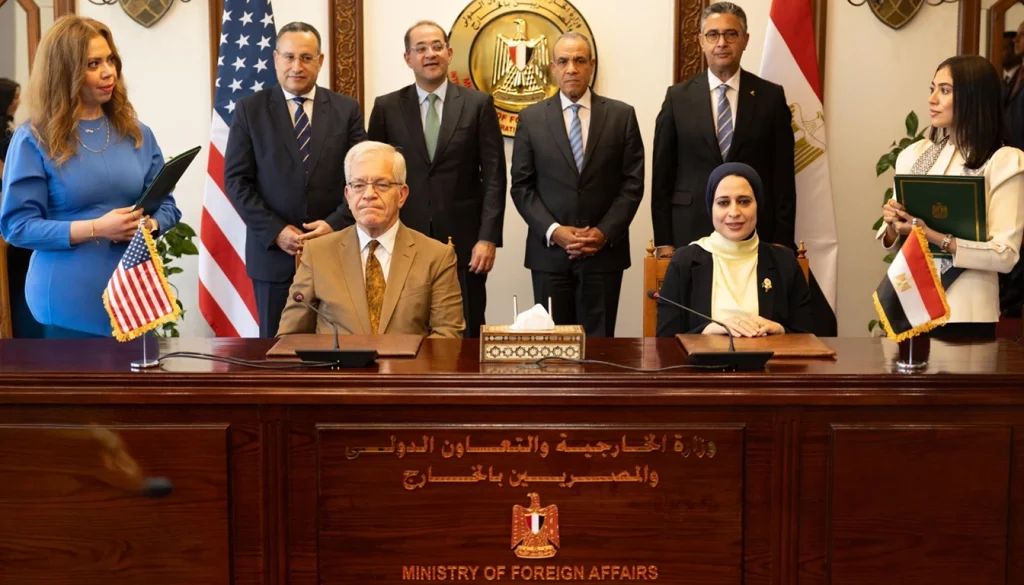
Egypt and Washington have put pen to paper on a new economic partnership. The Egypt-US framework agreement, signed on Wednesday in the New Administrative Capital, could see up to $625 million flow into the country over five years.
What Was Signed
The deal sets out “Strategic Objectives” for shared prosperity. Deputy Foreign Minister Samar Al Ahdal signed for Egypt, while US Chargé d’Affaires Robert Silverman signed for Washington. Foreign Minister Badr Abdelatty and ministers of finance, supply and higher education attended.
The first round commits $125 million in grants. Silverman described it as the first of what the US hopes will be yearly agreements, and said he hopes it will open new doors for American private investment, especially in high-tech sectors.
Where the Money Is Aimed
Egyptian officials say the focus is on practical needs. Priority areas include water management, energy, artificial intelligence and food security through science-based farming. The agreement also targets education, health and governance, with the goal of building skilled Egyptian staff and creating jobs.
That list will matter to ordinary people. Water scarcity worries farmers along the Nile, and power costs hit households and small businesses alike. Young graduates, meanwhile, want jobs in tech.
A Familiar Figure, A New Format
The headline number looks big, but context helps. The US embassy has previously described $125 million as its yearly economic assistance to Egypt, delivered through USAID-run projects. Over five years, $625 million simply matches that level. Egypt also receives about $1.3 billion a year in US military aid, which is a separate stream and has been since 1979.
So the real change is in how the money is packaged and what it targets, with a stronger push toward technology and private-sector links.
What Comes Next
Frameworks are promises, not projects. The test will be whether water systems get built, whether energy plans move, and whether Egyptians see jobs. Other African governments will be watching closely, since many are also trying to turn aid into investment and skills rather than one-off handouts.
Read More
Sudan Military Alliances: Inside Al-Burhan’s Network of Egypt, Turkey and Eritrea
Sisi Saudi Defence Statement: Egypt Draws a Line Between Protecting and Attacking
Egypt Saudi Arabia Relations Tighten as Cairo Offers Backing Against the Houthis
FPT Africa Office in Cairo: Why Vietnam’s Tech Giant Picked Egypt as Its Gateway to the Continent
Egyptian Deported to Equatorial Guinea: US Judge Orders His Return
