
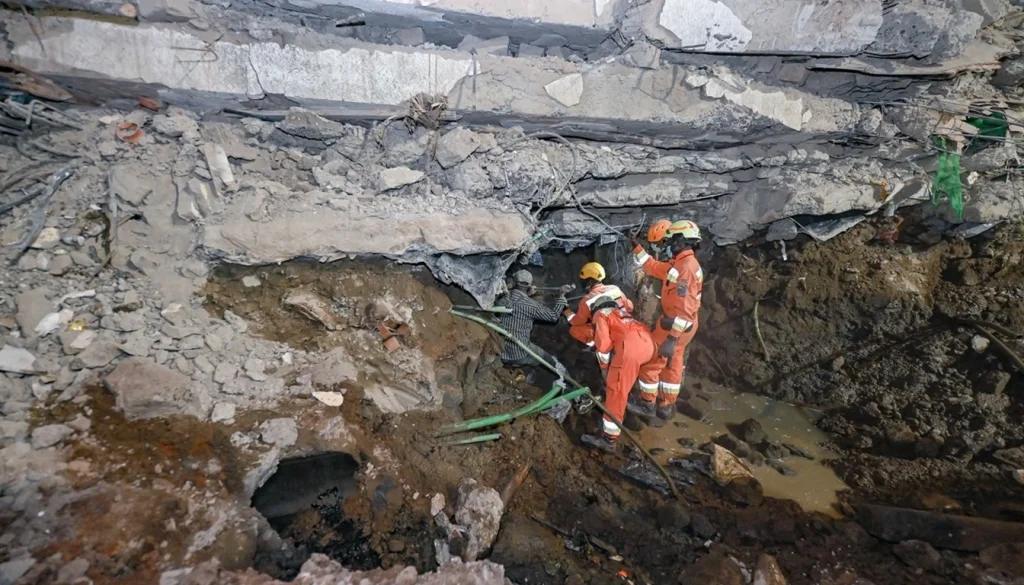
Dust was still hanging over Eastleigh on Friday afternoon when the first rescue teams pushed through the crowds. The Nairobi building collapse, which happened at about 1:40 p.m. on October 23, left several people feared trapped inside a multi-storey block that was still under construction.
A Busy District Turns Into a Rescue Zone
Eastleigh never really sleeps. It is one of Nairobi’s most crowded commercial and residential areas, famous for its trade and its large Somali community. The Kenya Red Cross confirmed that emergency crews were sent to the scene. Videos shared online showed the structure folding to the ground and a thick cloud of dust rolling over the street.
The Nairobi rescue operation was far from smooth. Large crowds gathered around the rubble, and police reportedly fired tear gas to push people back so rescuers could reach the debris. There were also reports of looting. The number of people trapped or hurt is still unclear, and accounts of the building’s height vary, with some claiming it had as many as 18 floors. The cause has not been established.
Shops Below, Builders Above
Local media reported that shops and rental units were trading on the lower floors while work continued above. If that is confirmed, it is exactly the kind of overlap that makes Kenya building safety such a pressing question. Ordinary shoppers and tenants may have been standing under an active building site without knowing it.
This is also not a one-off. Four people were trapped when another Nairobi building came down in January. Cairo lost at least six people in a five-storey collapse on October 15, and Morocco recorded at least nine deaths in May. Each case adds weight to the argument that construction safety Africa-wide needs firmer attention.
What Needs to Change
Nairobi’s skyline is rising fast, and that growth is something to be proud of. But every new tower needs honest inspections, approved plans and strict control over who is allowed inside while builders are at work. For families waiting near the collapsed building Kenya has seen today, those are not abstract ideas. They are the difference between a livelihood and a tragedy.
Investigators will want to know who approved the project, what checks were carried out and why people were allowed to work and trade beneath it. Kenyans deserve those answers, and they deserve them quickly.
Read More
NCBA Nedbank Deal: How a Nairobi Lender Just Reshaped African Banking
Oil Prices Retreat: Why a Small Drop in Crude Matters From Lagos to Nairobi
Asian Stocks AI Jitters: Why a Chip Sell-Off in Seoul Matters in Lagos and Nairobi
Ebola Reaches Kenya: What Nairobi’s First Death Means for East Africa
Why a Falling Euro in Frankfurt Can Hit Your Pocket in Lagos, Abidjan and Nairobi
