
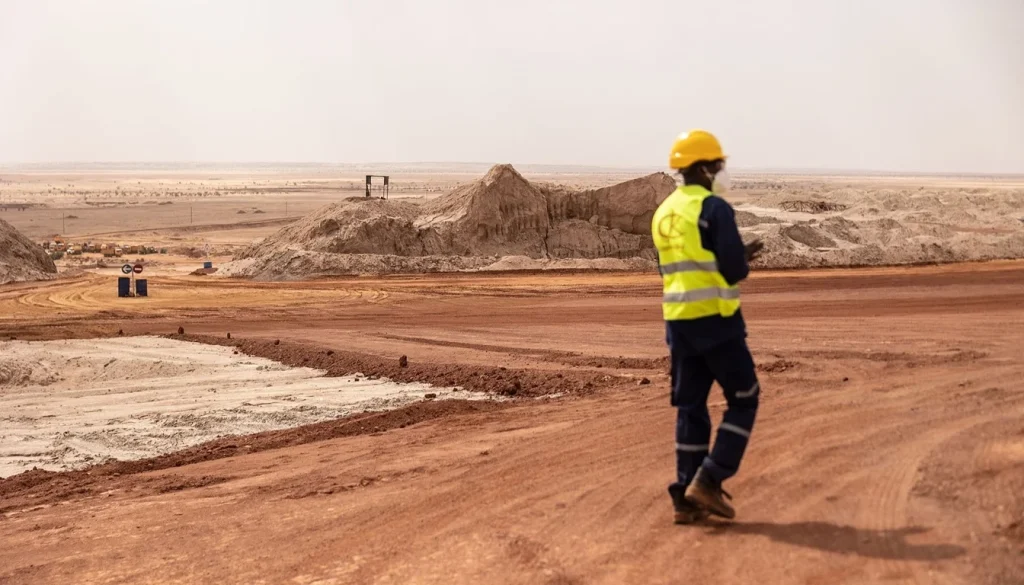
Niger has entered into a new deal with Australian uranium mining company Atomic Eagle that would see the Madaouela Uranium Project be relaunched after years of dispute over the mining project in the northern part of Niger.
Under the deal, Niger’s government is going to have a 40% stake in the project compared to the previous 20%, while Atomic Eagle retains 60% ownership and management of the project.
This deal comes as a new development in the project, which had been tied up by Niger’s efforts to have more government control over its mineral resources after the 2023 military coup.
What Is the New Deal for the Madaouela Project?
The mining convention was signed in Niger’s capital, Niamey, on September 23, 2026, between Niger’s Mines Minister Abarchi Ousmane and Atomic Eagle CEO Phil Hoskins.
Niger’s share of 40% consists of a 15% free-carried interest and a 25% interest that contributes funds. Atomic Eagle shall be responsible for the operations of the project under the agreed governance structure. Furthermore, the convention shall make provisions for the legal, fiscal, and regulatory regimes that are meant to increase certainty in development and financing.
How Did the Dispute Arise?
The dispute is traced back to the year 2024 when the government of Niger annulled the mining rights held by GoviEx Uranium, which was eventually renamed Atomic Eagle. Consequently, the Madaouela mine was reverted to government property, leading to the commencement of international arbitration by the corporation.
The parties have suspended the arbitration in 2025 while attempting to reach an agreement. The present convention has provided a basis for resolving the dispute, with Atomic Eagle undertaking to take measures to discontinue the historical arbitration proceedings.
Why Does the 40% Share Mean for Niger?
It means an increased stake for the government in an important uranium development project while letting a foreign investor operate it.
The Nigerien government added that the agreement contains an upfront payment of $10 million, along with the development of the mining sector administration and local development undertakings. Also, it envisages the creation of approximately 1,000 jobs for young Nigeriens.
Atomic Eagle can now restore its position in Madaouela and at the same time gain clarity on the ownership and regulation of operations. According to the company, it plans to continue working on the technical side of the business, namely verifying and optimizing resources, with the target of reporting JORC-compliant mineral resources by the end of 2026.
Why Is Uranium So Important For Niger?
Niger has been producing uranium for more than five decades, and its commercial exploitation has been in operation since the early 1970s. Madaouela mine is situated in the Agadez region, which is part of the uranium-producing areas in Northern Niger.
In the meantime, Niger’s military government is trying to renegotiate its mining relationships and increase state involvement in strategic minerals. In addition, another uranium project, Dasa, recently attracted interest in financing from the US International Development Finance Corporation.
What Happens Now?
The near-term priority will be technical evaluation, financing, permitting, and development planning. Atomic Eagle will continue to review technical information about Madaouela from its past history before deciding how to proceed.
For Niger, this deal creates a means of bringing increased government participation while maintaining private sector operations. For Atomic Eagle, it ensures continued access to an excellent uranium property after a period of two years of legal and political doubt.
Africa’s Mineral Wealth Is Drawing Global Attention
What Is Driving Africa’s Minerals Race?
Uncover the latest copper, lithium, and graphite deals reshaping Africa’s mining sector.
Why Are Nigeria And US Collaborating?
Find out why Nigeria and the US are strengthening mining cooperation.
Why Are Nigeria’s Lithium Deals Growing?
Explore why Nigeria’s lithium and Malawi’s graphite are attracting global interest.
Why Is Germany Eyeing Nigeria’s Minerals?
Check out Germany’s interest in investing across Nigeria’s gas and minerals sectors.
What Happened To Nigerian Gold Miners?
Go through the reported deaths, detention facility events, and presidential orders.
