
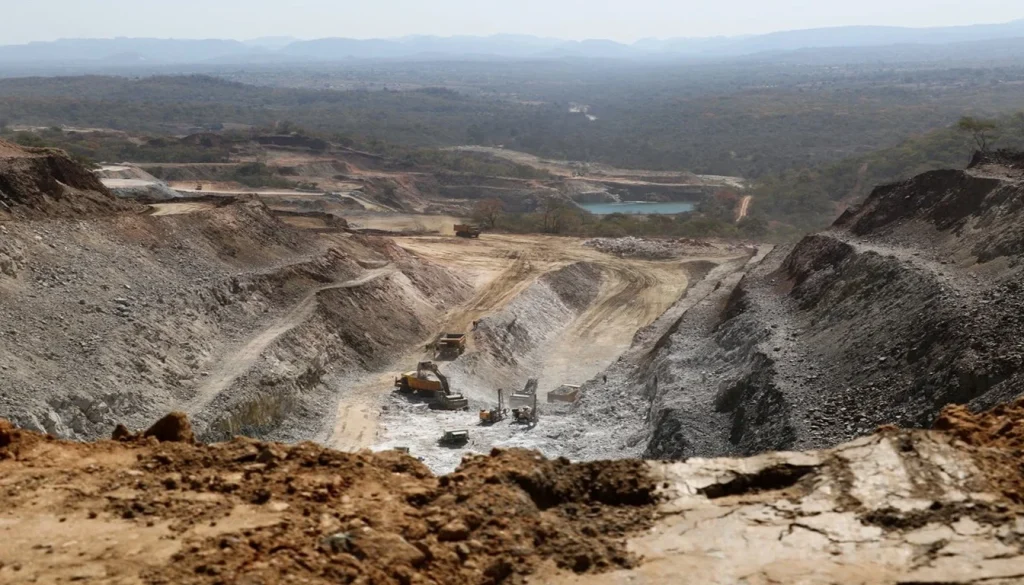
Nigeria’s lithium deposits and Malawi’s graphite mines are receiving increasing attention due to the ongoing race for critical minerals in the world.
There is increased demand for lithium and graphite due to an increase in electric cars, battery production, and the shift to clean energy. In Africa, the chance for resource producers is now not just mining but processing and refining materials.
Why Is Nigeria’s Lithium Getting Global Attention?
Nigeria is becoming one of Africa’s best-watched lithium markets due to the presence of high-quality lithium deposits in several states of the country.
Nigerians are trying to avoid making their country yet another exporter of raw minerals. There are export restrictions for unprocessed minerals.
Lithium processing plants in China have already made large investments in excess of $1.3 billion. The objective behind this is job creation, an increase in government revenue, and the development of a local battery-minerals industry.
Malawi’s Graphite Reserves Attract Investors
Malawi is attracting similar attention owing to its graphite deposits, especially the Kasiya Rutile-Graphite Project.
The Kasiya Rutile-Graphite Project is regarded as one of the most important sources of natural rutile and flake graphite. The development of such projects has put Malawi at the heart of graphite diversification from traditional producers.
There has been involvement of Australian mining companies in the development of Malawian projects, whereas Western governments and investors have become increasingly interested in Malawi, as they look for alternative critical-minerals supply chains.
US vs China in Africa’s Mineral Resources
Mineral resources of Africa have also become the subject of growing US-China strategic rivalry.
China has a head start through many years of investments into mining and processing infrastructure in Africa. The US, on the other hand, is looking to build alternative supply chains and diversify from Chinese-controlled minerals processing.
As a result, Nigeria and Malawi have more negotiating leverage in terms of international governments and firms trying to gain access to their minerals.
More Than Raw Mineral Exports from Africa
Another key difference is in how beneficiation has come to play a bigger role.
It is not about simply exporting lithium or graphite but having industrial-scale processing plants that would produce higher value-added products and create industrial jobs.
For Nigeria and Malawi, this means that the current critical-minerals rush provides an opportunity to develop industries instead of being stuck in extraction activities only.
Conclusion
As such, Nigeria’s lithium and Malawi’s graphite put both countries firmly on the map as critical-mineral producers. With the US, China, and international mining firms vying for a piece of the pie, African countries have a chance to get more out of it economically.
The question now is whether it will be just another raw material extraction cycle or industrial development.
What’s Shaping Africa’s Economy Today?
What New Minerals Deals Matter Most?
Check out the latest copper, lithium, and graphite agreements reshaping Africa’s mineral sector.
Which Mineral Agreements Are Driving Growth?
Discover the newest deals strengthening Africa’s critical minerals industry this week.
How Is Rail Powering Africa’s Boom?
Find out how Traxtion’s $210 million rail investment could support Africa’s mineral expansion.
How Are Korea And Africa Collaborating?
Explore how the Korea-Africa Summit is deepening cooperation on essential minerals and development.
What’s Behind Shoprite’s Earnings Surge?
See how Shoprite’s 12.2% earnings growth could impact South African consumers and businesses.
