
Sudan’s war is no longer simply a domestic fight for power. Turkey Sudan relations now sit at the centre of a wider geopolitical contest, one that draws in Gulf money, Egyptian security fears and Ankara’s appetite for influence on the Red Sea. Since April 2023, the Sudanese Armed Forces (SAF) and the Rapid Support Forces (RSF) have been locked in a conflict that has gutted cities and displaced millions. The question for Africans is whether Turkey’s growing role is calming that war or feeding one side of it.
Ankara’s Quiet Bet on the Army
Turkey officially insists on neutrality. The evidence points the other way. Reports say Turkey has supplied the SAF with over $120 million worth of drones, including eight TB2s and hundreds of warheads. In May 2026, Chatham House examined these reports while noting Ankara’s denial of direct deliveries.
The relationship is also political. In August 2026, Sovereign Council member Yasser al-Atta held talks in Ankara with Turkey’s defence minister. Visits like this give the army’s leadership legitimacy and leverage, and they make it hard for Ankara to pose as an honest broker.
The Drone War That Changed the Map
Drones are the heart of this story. Since receiving Bayraktar drones in December 2024, SAF fighters have reportedly pushed the RSF out of key territory in eastern Sudan and the capital region. Turkish Bayraktar TB2 and Akıncı drones have reportedly become part of the army’s expanding aerial arsenal, alongside Iranian Mohajer-6 systems, while the RSF flies Chinese-made models.
The reach of these weapons keeps growing. A strike inside Chad has shown how hard it is to contain the war within Sudan’s borders. Proving who supplied what, and who fired which strike, is difficult. Serial numbers vanish, routes shift, and every government involved has reasons to deny. Anyone claiming certainty about individual attacks should be treated with caution.
Why the Red Sea Matters to Ankara
Sudan’s coastline explains much of Turkey’s interest. Back in 2017, Erdoğan became the first Turkish president to visit Sudan, saying Turkey had been temporarily granted part of Suakin to rebuild it as a tourist site and a pilgrim transit point. Sudanese officials also spoke of a naval dock, and the island’s Ottoman past gives the project symbolic weight in Ankara.
Suakin is not a Turkish monopoly, though. Sudan and Qatar announced a USD 4 billion agreement to jointly develop and manage the port. Control of ports, shipping lanes and maritime partnerships could shape trade across the Red Sea for decades, which is why Egypt and Saudi Arabia watch Turkish moves so closely.
Money Follows Influence
Military ties rarely travel alone. A Sudanese Investment Ministry report once put Turkish investment at $2 billion, with 288 Turkish-funded projects underway. Those figures predate the war, but they show the commercial base Ankara built in farming, construction and trade.
Reconstruction could deepen that stake. With Khartoum’s infrastructure in ruins, Sudan urgently needs investment. A country rebuilt largely by one partner’s companies tends to listen to that partner on political questions too.
A Crowded Contest for Sudan
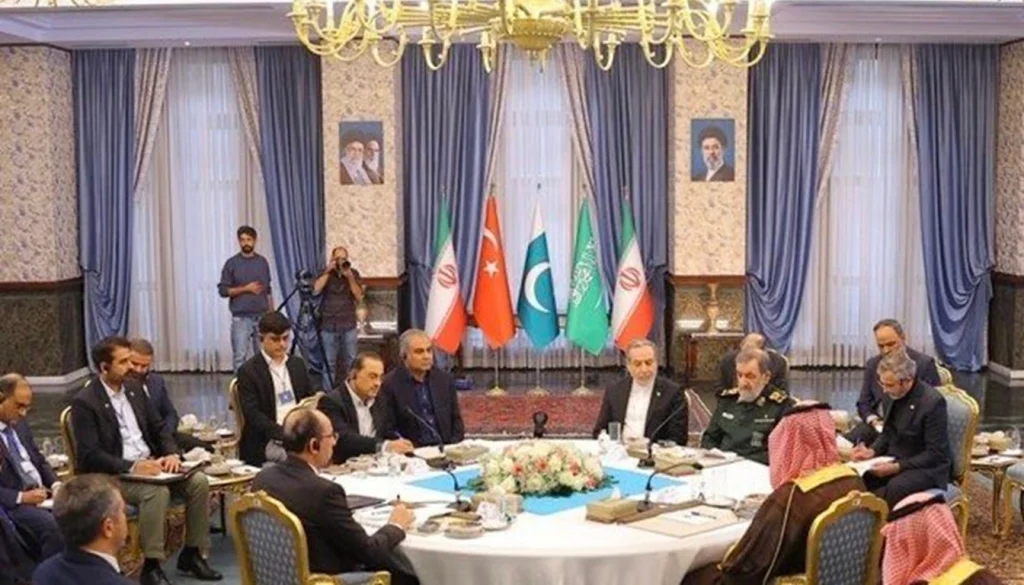
Turkey is one player among many. Egypt backs the army and worries about its southern border. The UAE has repeatedly denied backing the RSF, though analysts widely say the allegations deserve scrutiny, and the evidence is stronger on some claims than others. Le Monde reported that Riyadh has financed Turkish drones and Pakistani weapons for the SAF. Qatar, Iran and Saudi mediators each have their own calculations.
That tangle undermines peacemaking. The Quad of the US, Egypt, Saudi Arabia and the UAE agreed in principle to pressure both sides and cut off external military flows. Yet several of those same capitals also protect interests in Sudan. Powers seeking to keep their economic spheres intact may hesitate to apply real pressure.
Civilians Pay the Bill
Behind every strategic map are people. UN figures show drones accounted for more than 80% of conflict deaths in Sudan in the first four months of 2026. Families are displaced, clinics are hit, and food and aid struggle to reach those who need them most.
Foreign weapons do not cause a war, but they can lengthen it. The UN Security Council has extended Sudan’s arms embargo through October 2026, yet concerns persist that deliveries continue through networks that dodge enforcement. Each shipment that arrives gives a commander less reason to compromise at the table.
Can Turkey Be Part of the Solution?
Ankara does hold real cards. It has the army leadership’s ear, defence contracts that matter to Port Sudan, and a diplomatic reputation built on past mediation elsewhere. It could press the SAF to accept a ceasefire and join credible talks.
But that would require something Turkey has not yet shown: willingness to trade a partner’s battlefield advantage for a political settlement. A country that supplies one side cannot easily ask that side to stop. If Ankara wants to be taken seriously as a peacemaker, it should accept transparency on its arms trade, back humanitarian access and support talks that include Sudanese civilians, not just generals.
Influence Without Peace?
The pieces fit together. Turkish drones have sharpened the army’s edge, ties with its leadership have given Ankara a seat at the table, and ports and contracts promise a long-term stake. Meanwhile, regional rivals compete across Sudan’s territory while its sovereignty weakens.
The central dilemma remains. Can outside powers help shape Sudan’s future without becoming part of what prolongs its war? Turkey now has more influence in Khartoum and Port Sudan than at any point in years. But influence over a conflict does not automatically become influence for peace, and Sudanese civilians are the ones waiting to learn which Ankara chooses to be.
Read More
Sudan Military Alliances: Inside Al-Burhan’s Network of Egypt, Turkey and Eritrea
Breaking the Embargo: Turkey’s Role in Sudan’s Escalating War
Why Is Sudan’s War so Hard to Resolve? The Regional Powers Involved in the Crisis
Iran’s Drone Diplomacy in Sudan: Unraveling a Complex Alliance
