
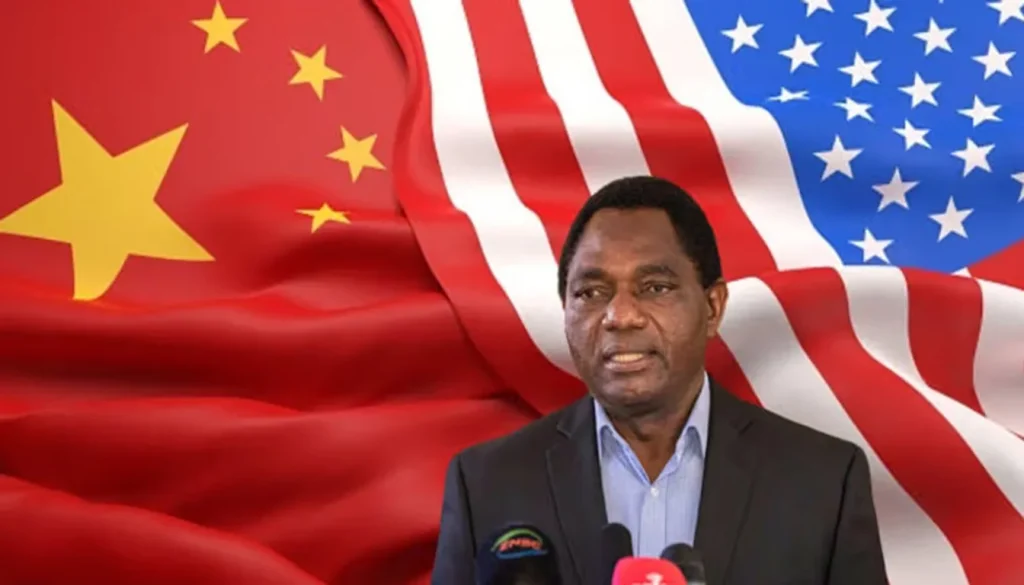
It is not only about the re-election of the current president, as the next year’s election may have great consequences for the biggest copper producer in Africa, its relations with China, and its growing strategic importance for the United States.
The president of Zambia, who managed to become president in 2021 after failing several times, got a country full of economic issues. Now, under Hichilema, Zambia has restructured debts amounting to more than $12 billion. Inflation rates have dropped, and the local currency has become stronger.
However, most people in the country do not think that improvements in economic indicators have brought any relief from the cost of food, energy, and living expenses.
Copper Crucial to Zambia’s Future Prospects
The role that copper plays in Zambia’s future economic growth cannot be overstated.
Zambia is a major producer of copper in the world, and President Hichilema has put an ambitious target of producing 3 million metric tons of the metal by 2031 – three times the current level of output.
This is due to the rising importance of copper in the world, which is needed for power transmission, electric cars, electronics and renewable energy infrastructure.
Therefore, there is no doubt that Zambia is of strategic value at a time when global economic powers compete for sources of critical minerals.
Already, China is a major player in the Zambian mining industry, especially in the production of copper and cobalt.
Why the U.S. Cares
But Washington is also getting increasingly interested in Zambia’s mineral wealth.
The Trump administration is focusing on critical minerals as a way of reducing dependency on China for industrial minerals.
And now Zambia finds itself at the centre of the rivalry between the world’s two superpowers.
Zambia had, in the past, accused the United States of tying access to its minerals with a proposed $2 billion health pact, an accusation that was denied by the US.
Thus, the person who wins the election is supposed to navigate relationships with both countries and also protect the economy of Zambia.
Economic Recovery vs. Cost of Living
The best reason why Hichilema should be re-elected is because of his economic performance.
Since Hichilema came to power, there have been major improvements in terms of debt restructuring and macroeconomic stability. But unfortunately, the benefits have not been evenly spread out.
Issues like the cost of food and electricity continue to be major issues for many people, especially those who earn low income.
The government plans to invest more money in health facilities, education, roads, and power supply.
For many voters, the question is whether the improving economic numbers will help improve their standard of living in the long run.
Democratic Challenges From the Opposition
The opponent for Hichilema is Brian Mundubile from the Tonse Alliance, one of the opposition groups along with others running for president.
This means that the elections will also be putting the reputation of Zambia as one of Africa’s most stable multiparty democracies on trial.
Stay informed with the week’s biggest developments shaping Zambia, Ghana, and Zimbabwe.
Is Ghana More Stable Now?
Check out why analysts see Ghana as relatively steadier while Zambia faces rising currency concerns.
Why Are Kwacha And Cedi Struggling?
Find out how the weakening Kwacha and Cedi could affect businesses, prices, and consumers this week.
Why Did Zambia Fire Judges?
Why Is Zambia’s Election Important?
What Happened In Lake Kariba?
Dive into the latest updates on the Zimbabwe Lake Kariba ferry disaster and the rising death toll.
What It Might Mean for Africa
A second Hichilema administration would ensure that there is continuity in the debt restructuring process as well as Zambia’s plans to dramatically increase the production of copper.
On the other hand, an opposition win could mean changes in Zambia’s approach to foreign and economic policy.
Either way, the elections in Zambia will have repercussions beyond its borders. Zambia is located at the nexus of Africa’s mining boom, China’s foreign policy and US efforts to secure critical minerals.
With millions of votes on the line, the outcome of the elections will not only determine Zambia’s future, but its role in the global scramble for the minerals that will drive future technologies.
