
Increasing costs of fertilizers have become a big problem for farmers in Africa due to disruptions in their supply chains and increasing fertilizer import costs.
African farmers fertilizer prices, More farmers are increasingly adopting sustainable agricultural methods, which involve farming without expensive fertilizers to grow healthy crops.
Agricultural experts believe that there is a great need to adopt such practices for future food security in Africa.
1. Adopt Integrated Soil Fertility Management (ISFM)
One of the best ways to reduce costs is through the application of Integrated Soil Fertility Management (ISFM), which involves applying small amounts of fertilizer along with organic fertilizers.
It would help farmers reduce costs as well as improve the quality of the soil.
Experts have claimed that ISFM is cost-efficient and maintains stable yields.
2. Convert Agricultural Wastes to Organic Compost
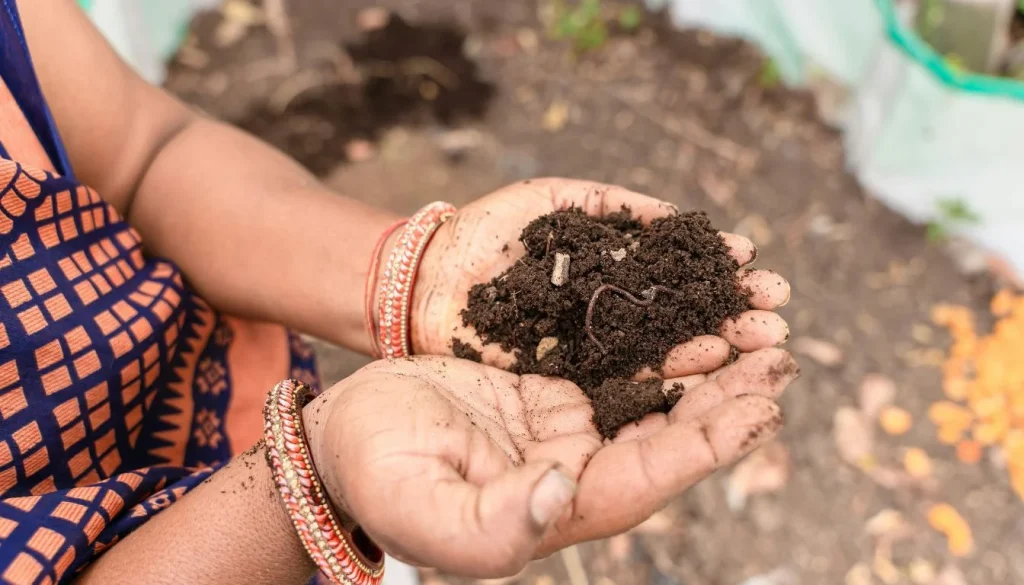
Farmers are now engaging in the production of compost from:
- Animal wastes,
- Crop wastes,
- Market wastes,
- And even domestic organic wastes.
Vermi-composting, where worms are used to break down the organic material, is gaining popularity among farmers in some parts of the world.
The organic compost enhances soil nutrients without the need to buy expensive artificial fertilizers.
3. Grow Nitrogen Fixation Crops
Crops such as cowpea, velvet beans, and lablab naturally fix nitrogen levels in the soil.
The plants get nitrogen from the air and deposit it back into the soil through biological nitrogen fixation.
Growing cover crops in off-season periods can greatly minimize the nitrogen fertilizer requirements during planting seasons.
4. Fertilize Using Micro-Dosing
Micro-dosing is another cost-effective way of farming, gaining popularity in Africa.
Rather than spreading the fertilizer on the entire field, the farmers spread small quantities around seedlings and plant roots.
This approach can minimize the requirement for fertilizer application by almost half.
5. Practice Crop Rotation and Agroforestry
The experts in agriculture also encourage farmers to practice crop rotation rather than cultivating the same crop year in year out.
Cultivation of cereals with legumes will ensure that there is balanced soil fertility and fewer pests.
Some farmers have also opted to plant ‘fertilizer trees’ like Faidherbia albida among other crops.
This is because these trees add nutrients to the soil through nitrogen fixation and leaf litter.
6. Join Farm Cooperatives for Bulk Buying
Individual small-scale farmers find it difficult to negotiate low prices when buying fertilizers.
Through forming farmer cooperatives, farmers will be able to buy agricultural inputs in bulk at reduced prices.
The cooperatives can also offer their members training services, financing, and farming programmes.
Conclusion
As the price of fertilizers continues to rise around the world, many African farmers are finding alternative ways of protecting their yields and livelihoods.
From composting, crop rotation, micro-dosing, and cooperative buying, these practices have proved beneficial to many small-scale farmers.
More Stories You Shouldn’t Miss
What drives Lagos fintech billions growth?
Explore why Lagos fintech startups are attracting massive global investments and shaping Africa’s financial future.
Which mobile wallets rival M-Pesa Africa?
Discover the top M-Pesa alternatives leading Africa’s mobile wallet wars in 2026 and beyond.
How FLEX zero fee payments impact?
Check how FLEX is transforming Nigeria’s mobile payments with zero fees and disrupting traditional systems.
Which African businesses deliver highest profits?
Explore the most profitable business opportunities across Africa for entrepreneurs and investors today.
Who are South Africa’s youngest entrepreneurs?
Discover the top young entrepreneurs in South Africa making waves and redefining success early.
