
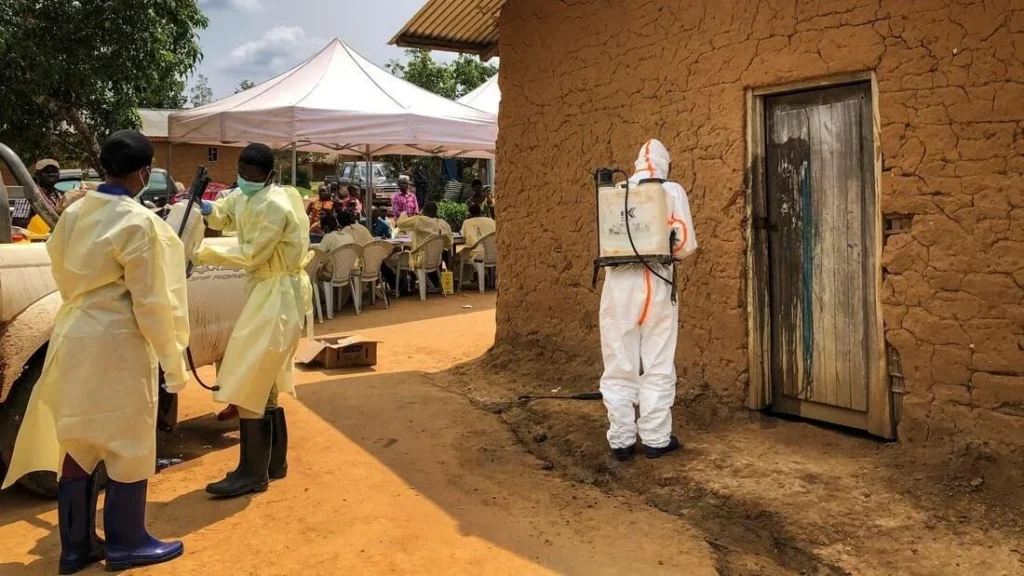
Uganda has been given experimental Ebola antibody treatment from the United States as health officials brace themselves for more infections emanating from the outbreak currently happening in the Democratic Republic of Congo (DRC).
The treatment called MBP134 was supplied to the Ministry of Health of Uganda on August 27, coincidentally the same day the WHO officially declared Uganda free from the current Ebola outbreak.
This development follows a situation where the DRC is still struggling to contain an outbreak that is spreading fast due to Bundibugyo virus, which is a rare strain of the Ebola virus. The case count in the DRC has exceeded 6,000.
Why Uganda Was Given the Experimental Ebola Treatment
The US provided Uganda with the MBP134 treatment in the form of vials.
As stated by The Independent Uganda, the treatment will be ready to use if another case of Ebola infection emerges in Uganda.
The delivery is part of a wider strategy by which Uganda is going to improve its preparedness for the epidemic as the DRC outbreak is still ongoing.
In addition, since Uganda borders the DRC, people may easily cross the border, especially because they frequently move between the two countries due to their economic activities.
Thus, having the experimental treatment in advance might allow Ugandan officials to have another treatment option should another patient emerge in the country.
Uganda Was Declared Ebola-Free on August 27
The delivery came at a very timely moment for the country as it has managed to reach a great step in its fight against Ebola.
Uganda was declared Ebola-free on August 27, 2026, following a 42-day period during which there were no new confirmed cases of the virus.
An outbreak resulted in 20 confirmed cases and 2 deaths.
This means that Uganda is not regarded as having any ongoing Ebola outbreaks.
Nevertheless, health authorities are still conducting surveillance due to the state of affairs in DRC.
DRC Ebola Outbreak Crosses 6,000 Cases
The state of affairs in the DRC is much more severe.
The ongoing outbreak is caused by the Bundibugyo species of the Ebola virus, and this is a different species compared to the Zaire species behind many other Ebola outbreaks.
According to WHO situation reports, the outbreak is rapidly spreading, and at the moment the number of confirmed cases exceeds 6,000.
Due to the rapid expansion and size of the outbreak, there is an increasing amount of pressure on health authorities to detect the cases better, trace the contacts, prevent infections, and conduct cross-border surveillance.
It is also more challenging for the DRC to control such an outbreak in its difficult conditions.
What Is MBP134?
MBP134 is an experimental monoclonal antibody drug for the treatment of Ebola virus disease.
It should be noted that unlike vaccines, which are designed for prevention, antibodies are used to fight the infection.
The fact that MBP134 is available in Uganda does not imply that the treatment has been approved by the country as an official Ebola treatment drug. Rather, the vials are being stockpiled as a contingency measure in case a new case is reported.
This is because the country has been declared free from the Ebola virus infection.
Why Cross-Border Health Cooperation Is Important
The Uganda/DRC border is especially critical at this time of the outbreak.
Even though the Uganda outbreak may have come to an end, continued movements of people between the two countries will mean that health officials can’t relax until there are no new infections in DRC.
Health preparedness will involve surveillance of travelers and at borders, improved laboratory facilities, and health workers’ ability to detect the disease.
Disease control strategies have to be balanced against the need for health trade.
Ebola Free Declaration by Uganda Does Not Mean End to Regional Threat
Uganda’s declaration is a great milestone in terms of public health, but it does not mean that the threat posed by the Ebola virus has been eliminated in the wider region.
MBP134 arriving on the same day that Uganda declared itself Ebola-free means Uganda faces an unusual situation: while they have managed to contain their own outbreak, they are also preparing in case infections from the active outbreak next door are brought into the country.
Uganda and other neighboring countries must work towards detecting any infection early because this will prevent community transmission of the disease.
Related Ebola Updates You Shouldn’t Miss
Is the New Ituri Strain Vaccine-Resistant?
Check out the latest insights on Ebola vaccines, symptoms, travel advisories, and Africa CDC guidance.
Why Are DRC Ebola Cases Still Rising?
Find out why Uganda’s outbreak declaration may not mean the wider regional risk is over.
Why Are Ebola Health Workers Striking?
Uncover how unpaid workers and delayed contact tracing could affect outbreak containment in DR Congo.
How Fast Is DRC’s Ebola Epidemic Growing?
Browse the latest case figures and discover why the outbreak is spreading at an alarming pace.
Could This Become Ebola’s Deadliest Outbreak?
Reveal why the WHO is warning about the potentially devastating scale of the DR Congo crisis.
