
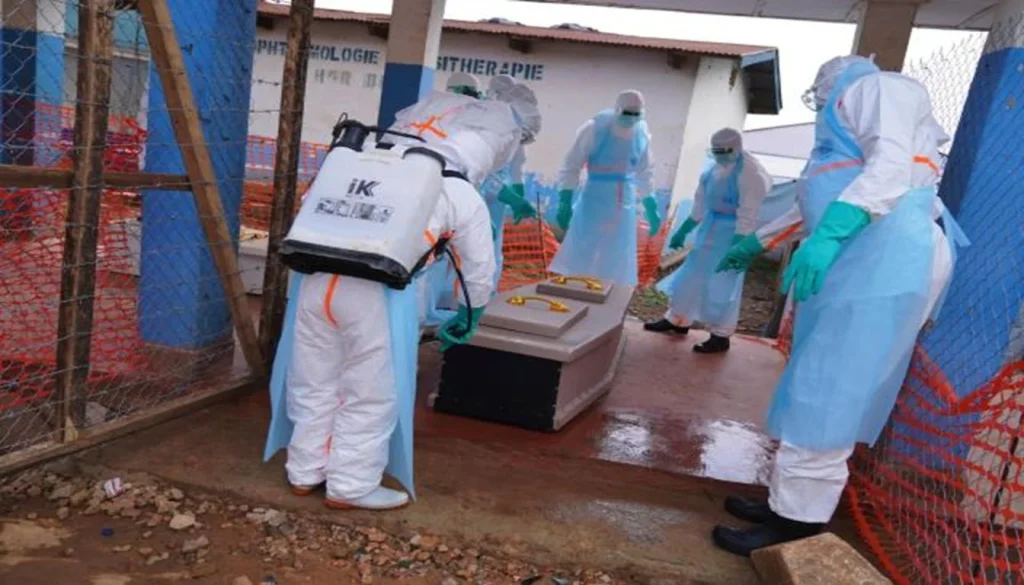
The latest Ebola outbreak, the fastest-spreading one to date in the Democratic Republic of Congo, is encountering yet another obstacle amid unpaid health workers, under-resourced surveillance teams, and temporary closures of treatment centers.
Community health workers in eastern Congo are continuing their efforts to trace people at risk of infection in this latest Ebola outbreak.
Unpaid Health Workers
In Nizi, Gédéon Banga Ngbape, who coordinates the contact-tracing efforts, noted that health workers have not been paid in more than three months.
Health workers investigate the suspected cases, trace people possibly exposed to the disease, and try to spot signs of infection before the affected individuals can spread the virus.
However, mobility constraints make the task more difficult for them. Ngbape has cautioned that any further deterioration in the surveillance may affect the entire Ebola response efforts.
The crisis has taken an unprecedented turn in the current week after health care workers at Nizi Treatment Center went on strike, thus putting the facility on hold temporarily.
This challenge emerges at a time when health care teams are already struggling with an exponentially growing outbreak amid tough circumstances.
Continued Ebola Outbreak
According to government data, the number of confirmed cases amounts to 4,381 people, while the total number of fatalities is 2,011.
The outbreak itself was announced officially on May 15; however, genetic sequencing has revealed that the virus started spreading in February.
What worries the health authorities is the rate of the outbreak’s growth. Thus, for example, it took nine weeks for the number of fatalities to reach 1,000 people, while for the following three weeks, it doubled.
The fast outbreak growth puts tremendous pressure on contact tracing, testing, and treatment facilities.
At the Nizi Treatment Center alone, there have been about 60-70 alerts reported by surveillance teams per day.
Field Workers Short of Essential Supplies
It’s not just the unpaid wages that present challenges.
Community health worker Ana Ndroy Kasime in Nizi goes door to door educating people about Ebola and cases of suspected infection. “In many instances,” she added, “workers on the frontlines lack essential supplies to do their job effectively.”
That presents yet another level of danger for a force that is asked to enter places where the spread of Ebola may have been occurring.
Health officials may find it hard to detect infections quickly enough without adequate manpower, means of transportation, protective equipment and funding.
A Tough Virus in Tough Conditions
This particular epidemic is due to the Bundibugyo strain of Ebola virus, an uncommon strain for which there are currently no vaccines or drugs. Clinical trials are, however, being conducted to find effective solutions to combat the disease.
Medical challenges are further complicated by the volatile situation in eastern Congo.
The threat posed by rebel groups may limit movement, as well as making some regions difficult or dangerous to access for health teams.
At the same time, years of conflict have led to distrust in local populations.
Misinformation has also played its part, as there are people who continue to deny the existence of Ebola.
How Has DR Congo’s Ebola Crisis Escalated?
Could Ebola Become DR Congo’s Deadliest?
Check out why WHO warns the outbreak could reach unprecedented levels.
Is DR Congo Facing Its Deadliest Outbreak?
Find out why the Ebola crisis may become historically severe.
How Has Ebola Death Toll Surged?
Uncover the affected provinces and ongoing health authority response.
Why Are Ebola Cases Rising Fast?
Browse the latest figures as the epidemic continues accelerating.
What Comes After 3,000 Ebola Cases?
See what the growing outbreak could mean for DR Congo.
Why Contact Tracing Is Important
Contact tracing is one of the key mechanisms of containing the spread of Ebola.
Health officials should be able to trace people who were in contact with Ebola victims, monitor them, and place them under quarantine if needed.
This process is crucial for detecting cases, and any significant lag in this mechanism means opportunities for the Ebola virus to spread unnoticed.
In this context, the current strike and funding difficulties are especially troubling.
If health officials cannot be provided with salaries, necessary equipment, and transportation to affected regions, surveillance will be even further behind the outbreak.
In this way, the immediate challenge for DR Congo is not just the treatment of patients with Ebola.
