
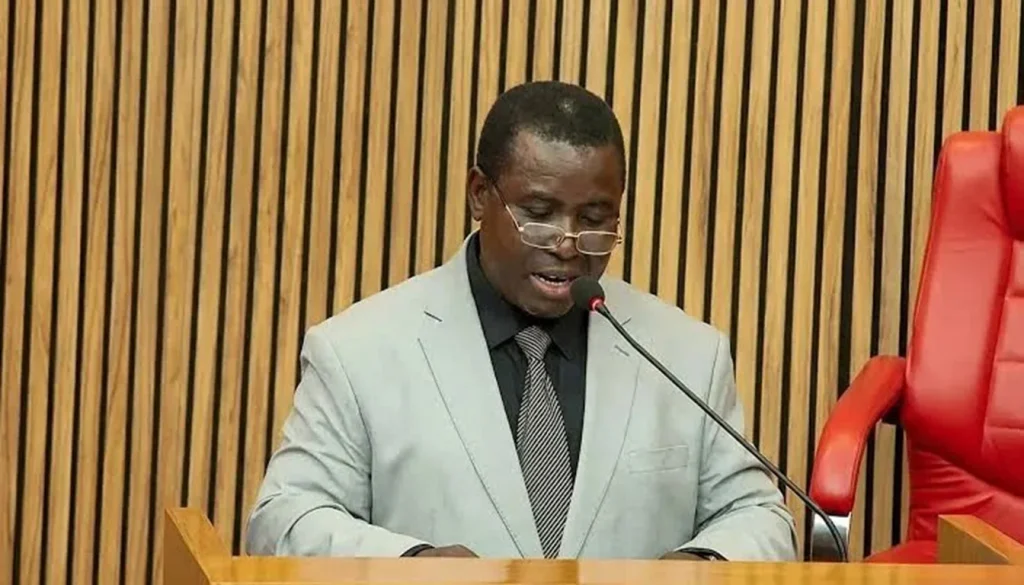
The Independent National Electoral Commission (INEC) of Nigeria warns that the development of disinformation using Artificial Intelligence may prove to be one of the major threats to the credibility of the country’s 2027 General Election.
The statement was made yesterday by INEC Chairman Professor Joash Amupitan in his speech, which was read on his behalf by the National Commissioner Sani Adams (SAN) during the 13th Annual International Conference of ACSPN in Abuja.
The conference was dedicated to how media and technologies influence elections in Africa.
According to INEC, the credibility of the 2027 election will depend not only on the integrity of the ballot, the accreditation technology and the result sheets, but also on whether Nigerians can make sense of the information about the elections.
Why AI Disinformation Poses a Severe Threat to 2027 Nigerian Election
It has become much easier through generative AI to produce believable fake videos, audio clips and images.
INEC expressed concerns that fabricated political materials might reach millions of Nigerians via social media even before journalists, fact-checkers, and election authorities could have enough time to confirm them.
However, the problem is not only related to totally fabricated content.
Amupitan mentioned the issue of algorithmic microtargeting whereby different voter groups receive contradictory political messages depending on their online behavior.
Thus, it will become increasingly hard for voters to agree on some common facts related to candidates, the voting process, or election results.
Moreover, Nigeria had previously faced such manipulation of political information in previous election campaigns, including in the 2023 presidential election.
While BVAS was developed in order to provide electronic accreditation of voters and enhance security in terms of preventing electoral fraud, IReV enables results in polling units to be viewed online.
Still, issues encountered during the election of 2023 gave rise to concerns about the reliability of the technologies used.
According to INEC, technologies meant to increase trust may work exactly the other way round if they do not function effectively, operate inconsistently or are not understood by voters.
Now the commission claims that the legitimacy of the voting process is based on the reliability of the technology used and on transparent reporting of any issues.
INEC To Conduct Technology Audit Before 2027 General Elections
According to INEC, a comprehensive audit of the technology used for elections will take place before the next general elections.
System redundancy, penetration testing and disaster recovery planning are among the issues to be included in the review.
Also, a mock presidential election may be held before 2027 as part of the system audit.
Such an exercise would allow for the testing of voter accreditation, electronic results transmission, and access to the results.
Taking into account that in 2027 Nigerians will rely more heavily on smartphones and social media as sources of election-related information, INEC believes that the scale and speed of the challenge will become significantly larger.
What Happened With BVAS and IReV in 2023?
INEC deployed technologies including the Bimodal Voter Accreditation System (BVAS) and the INEC Result Viewing Portal (IReV).
Moreover, the ICT team at the commission has also initiated talks with the manufacturers concerning new accreditation devices in order to provide replacements for the equipment that was either lost or damaged during the past election cycle.
INEC Needs a Quicker Reaction to Electoral Lies
INEC has listed five approaches to tackle the emerging threat to information security.
The commission intends to integrate communication and technology and set up the ability to respond rapidly to false statements within the same news cycle in which they were made.
It also hopes to initiate proactive communication about known technical weaknesses and the measures taken in response.
Furthermore, the commission has called for increased collaboration between itself, media organizations, fact-checkers, technology platforms and communication academics, along with increased efforts for media literacy.
The commission believes that its strategy will involve providing accurate information quicker, rather than limiting journalism and criticism.
Why Young Nigerian Voters Are Likely to be Vulnerable
The youth in Nigeria’s 2027 voter base are expected to be more tech-dependent than past voters have been.
For many of them, the smartphone will provide all the information needed on candidates, the political process, and election results.
There is opportunity in this, but also danger.
While digital communication can give INEC rapid access to millions of citizens, misinformation can also flow through these media much more rapidly.
The challenges created by linguistic diversity, lack of equal access to the internet, and varying levels of trust in institutions will only increase the difficulty of dealing with manipulated information.
It is for these reasons that INEC says that no international solution is transferable into Nigeria without modification to the local technological and social context.
What’s Shaping Africa’s Politics, Football & Security?
Could Religion Shape Nigeria’s 2027 Vote?
Check out how an interfaith forum aims to address religious tensions ahead of Nigeria’s 2027 elections.
Why Are Fani-Kayode and Omokri United?
Uncover why two unlikely political allies are joining forces against the prospect of a northern president in 2027.
What Does CAF’s Infantino Feud Mean?
Dive into how FIFA and African football leaders’ support for Infantino could affect African football.
Why Did Nigeria’s Football Chiefs Resign?
Find out what the failed World Cup and Women’s World Cup campaigns mean for Nigeria’s football leadership.
Who Were the Kenya Crash Victims?
Reveal the identities and backgrounds of those killed in the Kenya helicopter crash, including five Americans and Ecuador’s intelligence chief.
