
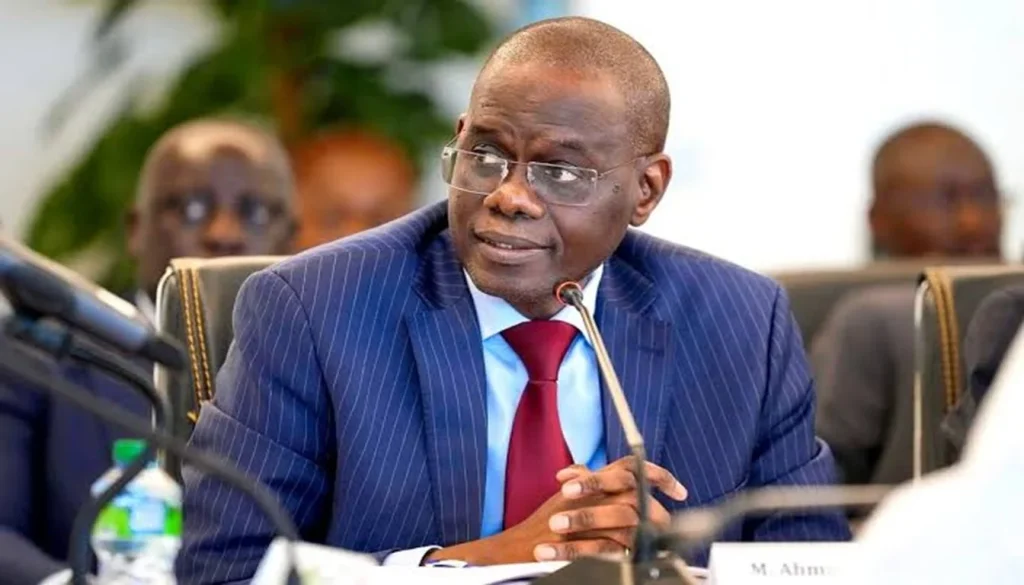
Following the revelation of concealed borrowings, Senegal is looking towards restructuring its debts after pushing its public debt level to about 132% of the GDP by the end of 2024. The government has now signed an agreement with the International Monetary Fund (IMF) for a $2.2 billion program spread out over three years while at the same time preparing to apply for debt restructuring through an enhanced G20 structure.
The deal may prove to be critical for President Bassirou Diomaye Faye’s government as it could give it access to more funding sources.
How Did Senegal’s Hidden Debt Crisis Begin?
The problem of debt arose because of the discovery made by the new government that came to power in 2024. As reported by the IMF, Senegal has hidden over $11 billion in debt. Some sources suggest that the real number may be close to $13 billion.
This situation forced the IMF to suspend an earlier approved $1.8 billion lending programme in 2024 and ask for further actions prior to considering another loan programme. This significantly increased the debt level of Senegal.
By the end of 2024, the total public debt was estimated to equal 132% of the gross domestic product of Senegal. There are around $3.5 billion in Senegal’s arrears, and Prime Minister Ahmadou Al Aminou Lo says they may affect business and employment negatively.
What Does the $2.2 Billion IMF Deal Imply?
This deal is an Extended Credit Facility for 36 months that equals around $2.2 billion. Nevertheless, this is not the final decision on giving a loan. The agreement at the staff level needs the approval of IMF management and the Executive Board, as well as additional measures regarding the past misreporting.
In this context, it should be noted that Senegal has decided to adopt an “enhanced” G20 Common Framework for addressing its debt problem. It is stated that “the World Bank announced on September 15 that it is ready to assist Senegal with moving through the process quickly”.
The government’s approach to the debt problem is debt reprofiling, which means actions such as maturity extension and interest rate negotiations, but not traditional restructuring, which implies reductions in principal amount.
Nevertheless, changes to the initial conditions can be treated by investors as restructuring.
What Economic Reforms Will Follow?
As was mentioned above, it is supposed that the IMF programme will make Senegal follow the path of better fiscal management and transparency, as well as strict control of expenditures. At the same time, the authorities of Senegal are currently reconsidering government expenditures and are negotiating about 30 mining deals.
It is important to avoid damage to economic activities and the basic needs of the population. It has been said that fiscal discipline and transparency are required in order to avoid a new crisis in reporting Senegal’s debts.
For the investors, the debt process is equally significant. The creditors’ consortium, including at least eight fund managers, has already appointed White & Case as their legal advisor, which suggests that the negotiations with the bondholders will be an important element of the process.
Why the Deal Is Politically Sensitive
The IMF agreement was made in light of the conflict within the ranks of the political leadership of Senegal. In May 2026, President Faye fired Sonko from his office as prime minister, and Sonko became the head of the National Assembly.
Earlier, Sonko had attacked the IMF’s initiative of debt restructuring as a blow to national dignity. This means that the position of Sonko within the parliament will have to be considered while the government implements the reforms.
Currently, the President is visiting Washington, where he will meet with IMF Managing Director Kristalina Georgieva on September 15 to discuss the economic condition and reform programme of Senegal.
Senegal in Focus: Politics, Economy & Football
Why Are Senegal’s IMF Policies Controversial?
Check out why lawmakers are challenging the government’s economic decisions.
How Could IMF Loan Affect Senegal?
Find out what the $2.2 billion deal means for jobs and debt.
Why Were TikTok Influencers Jailed?
Uncover why three influencers faced jail over posts targeting President Faye.
What Could Senegal’s Mali Visit Mean?
Dive into the key discussions shaping Senegal-Mali relations and West Africa.
Who Could Replace Senegal’s Coach?
Reveal the potential candidates to replace Pape Thiaw after the World Cup exit.
