
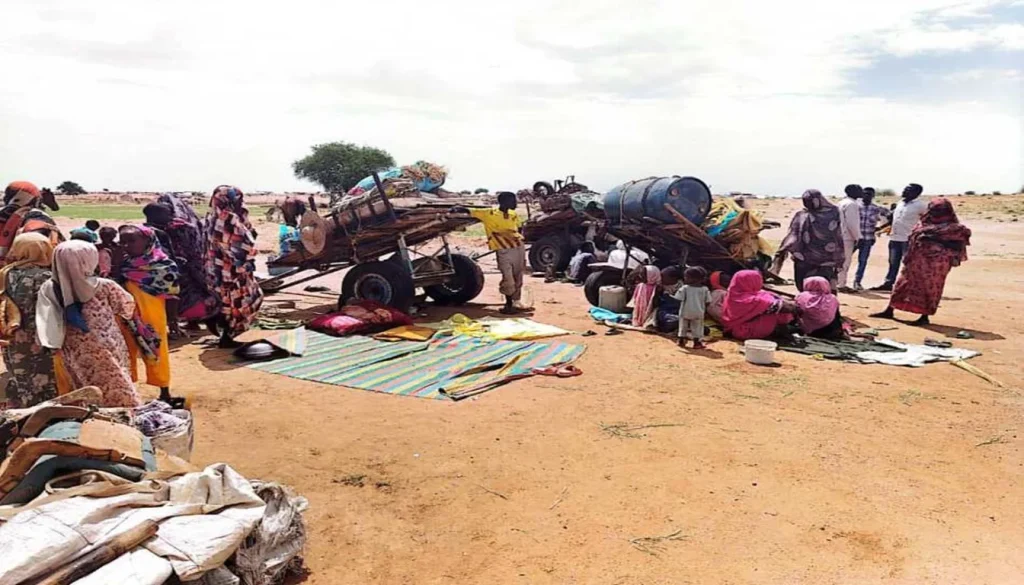
Sudan’s war has caused the displacement of 14 million people, and almost 20 million are suffering from hunger. At the same time, there is a severe shortage of international funds that threatens to collapse humanitarian activities in the country.
This comes in the wake of continuing reductions in global humanitarian aid. The World Food Programme (WFP) reports that the funding for Sudan has been reduced to only $206 million this year against $645 million last year. The agency is in need of about $300 million in order to carry on humanitarian activity in Sudan.
Humanitarian Aid Pipeline In Sudan Runs Short
The International Organization for Migration (IOM) warns that the Common Humanitarian Pipeline, which supplies humanitarian organisations in Sudan, is running out.
According to IOM, $15 million is required to operate the pipeline for the rest of the year. Otherwise, the pipeline would lack some essential supplies and thus become unable to support the humanitarian partners with aid delivery to displaced populations.
IOM Director Amy Pope has claimed that the humanitarian system could collapse within weeks without any further funding. This happened after three years of ongoing conflict between the army and the Rapid Support Forces (RSF).
Reduction in Food Aid Is Already Underway
Currently, the funding problem has resulted in a reduction in food aid.
The World Food Programme (WFP) has reported that 20 million people are suffering from hunger, while a lack of resources has made the organization pay attention only to the 5 million most vulnerable individuals. Out of them, 4 million can currently be assisted; however, only partial food rationing was implemented for them.
Additionally, the problem of famine remains relevant in Sudan. According to WFP estimations, there will be 825,000 children under five who will suffer from severe acute malnutrition in 2026. At the same time, 19.5 million people suffered from crisis-level or higher food insecurity this year.
Funding cuts will not just reduce the scale of aid but put pressure on humanitarian agencies to select which communities they can reach out to.
Another Shock for Healthcare
Sudan’s health sector is facing another shock in the form of a reduction in international aid.
Cutbacks in aid have led to the closure of 36 health clinics serving over 473,000 people, say aid groups. Years of fighting have severely damaged hospital infrastructure and primary health care services, while lack of medicines and medical staff has left the existing facilities unable to function.
However, the effects go beyond injury from fighting. Outbreaks of disease such as cholera, malaria, and measles, among others, have been reported due to displacement as communities are cut off from health care, clean water, and sanitary conditions.
Humanitarian Crisis Spills Over to Neighboring Countries
The humanitarian crisis in Sudan is also putting pressure on neighboring countries hosting refugees from the conflict.
Countries like Egypt, Chad, and South Sudan have hosted thousands of people fleeing the conflict despite having their own economic and humanitarian issues.
A reduction in aid inside Sudan could drive even more movement as people search for food, shelter, and medical facilities.
Inside Sudan’s Escalating Crisis
How Are Sudan’s Power Cuts Worsening?
Check out how electricity shortages are disrupting daily life.
Why Are Thousands Fleeing Kordofan?
Find out how fighting is pushing civilians toward El Obeid.
Why Is Sudan’s War Hard To Resolve?
Uncover the regional powers shaping Sudan’s ongoing crisis.
How Did A Drone Attack Kill 35?
Browse the deadly Sudan court attack and its wider impact.
Why Is Ceuta Facing A Growing Crisis?
See how crossings from Morocco are straining the Spanish city.
