
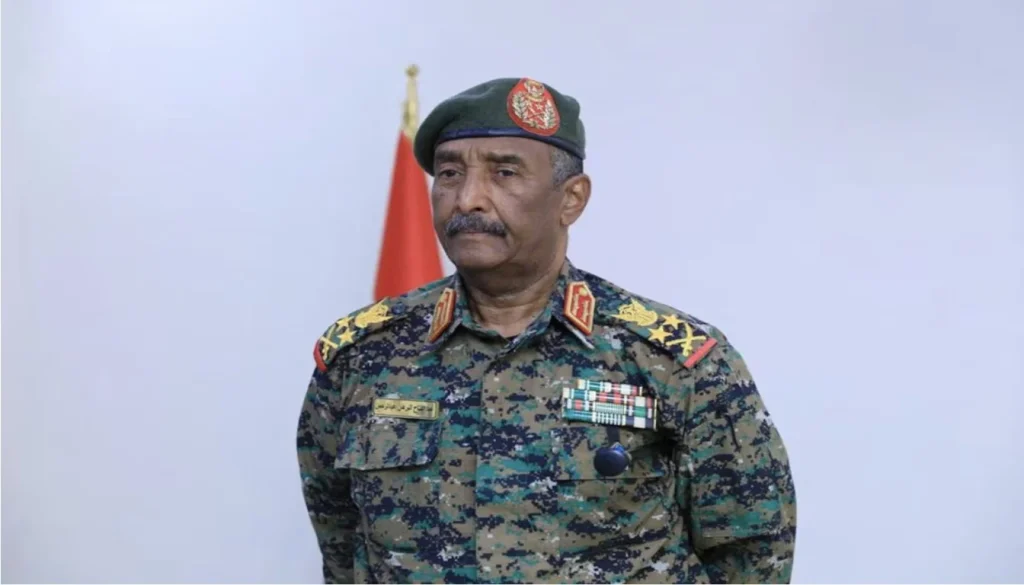
The United States is applying their decision to deny entry to Sudanese army chief Abdel Fattah al-Burhan to the United Nations General Assembly to expand its diplomatic row over Sudan’s conflict into a broader test of Washington’s strategy to combat the war in the south.
The visa reportedly was tied to a proposed 90-day humanitarian ceasefire which was offered by the U.S. Senior Adviser for Arab and African Affairs Massad Boulos. The Sudanese government dismissed the condition, saying a temporary cease was a chance for the Rapid Support Forces (RSF) to “re-group”. The stated visa condition has thus grown to be inextricably linked with the broader discussion on how to temporarily suspend and finally settle the conflict.
The dispute coincides with the UN General Assembly in New York, home to the world’s governments, as well as with Washington calling for a resolution of the conflict between the Sudanese Armed Forces (SAF) and the Rapid Support Forces (RSF), which erupted in April 2023. It also prompts questions about the UN’s readiness to grant access to diplomats and how far Washington is prepared to go with diplomatic pressure to steer the course of the war.
Why the Al-Burhan Visa Dispute Is Linked to the 90-Day Ceasefire
The immediate problem is the state of the U.S. situation for Burhan’s trip to New York, as reported. The reports in Washington indicated that a three-month ceasefire to allow humanitarian operations was linked to the issuance of a visa to Burhan.
It was said to have been put forward by U.S. senior adviser for Arab and African affairs Massad Boulos. Sudan’s military government refused the offer, saying that if the truce was respected, the RSF would be able to regroup and attack again.
Burhan has also been critical of ceasefire proposals from outside groups. According to the information available, his job is to say that externally imposed peace deals may not be able to solve Sudan’s conflict.
Washington, on the other hand, has called for a humanitarian truce and inclusive political talks, with the hope that this could pave the way for a civilian government.
The visa issue has therefore now become linked to the divergent ideas on how the conflict should be resolved. The Sudanese military regime has stressed the security dangers which it interprets as being linked to the temporary ceasefire, while Washington is pressuring to push for a humanitarian ceasefire and political talks.
US Position on Sudan’s Warring Parties Changes the Diplomatic Picture
The visa debate has been taking place in parallel with a hardening stance of the U.S. public on the two parties contesting the war.
State Department spokesman Tommy Pigott said the Sudanese Armed Forces and the Rapid Support Forces and their leaders were not a legitimate constitutional government of Sudan. He added that Washington was ready to negotiate peace with a serious partner and would try to make all parties and those who profit from the conflict pay a higher price for continuing the conflict.
The declaration brings both of the factions into focus, not as Washington’s preferred government.
The vacancy in the position comes at the same time Sudanese Prime Minister Abdalla Hamdok is in New York for a series of events during the UN assembly. Hamdok is going along with some of his non-military anti-war group.
He brings a civil aspect to the diplomatic talks on Sudan. As a parallel to the military conflict, talks are underway internationally about the potential for a political process with civilian participation.
The difference between military leadership and civilian actors in politics is therefore more and more noticeable at the UN General Assembly meetings.
UN Access Dispute Adds Another Layer to the Visa Standoff
The visa problem has also taken a turn toward Sudan’s involvement with the UN General Assembly.
Sudan’s UN ambassador is said to have appealed to UN Secretary-General António Guterres “to intervene” as he could not get a visa for the General Assembly, meaning the Sudanese leader was unable to attend in person.
The UN chief was “very concerned about the situation,” and was talking with Washington on the matter, a UN spokesperson said.
Sudan authorities have also resurrected the 1947 UN Headquarters Agreement, saying the denial of the entry permit would infringe on commitments linked to access to the UN Headquarters. The reports provided do not constitute a legal finding, but rather are statements by Sudanese authorities and diplomatic sources claiming this.
The issue is not just Burhan’s attendance, though. It questions the connections between the United States as host nation of the UN headquarters and the attendance of representatives of member nations in the UN General Assembly.
As per the reference material, Burhan was previously granted access to the UN forum twice since the war started, which made the visa issue a significant change in his access to the forum.
What the Visa Dispute Means for Sudan’s Wider Diplomatic Track
The immediate result is linked to the unfulfilled ceasefire offer for 90 days, but the diplomatic row is playing out amid a harsh humanitarian situation.
As per the provided reference material, the conflict has forced almost 14 million to flee their homes. Some 9.3 million people are internally displaced in Sudan, and some 4.4 million have crossed the border into neighbouring countries.
The UN Office for the Coordination of Humanitarian Affairs estimates that 33.7 million people will need humanitarian assistance in 2026.
The larger context of the ceasefire discussion is provided by those figures. There might be restrictions on help being provided due to a temporary ceasefire humanitarian break or both sides may still be arguing about the impact of the ceasefire.
The U.S. reported that Washington’s visa decision is part of a campaign of diplomatic pressure to try to push for a ceasefire and a political dialogue. The conflict has raised worries for Sudan’s military authorities over external involvement, and the security risks of an interim ceasefire.
The UN General Assembly episode therefore raises several unanswered questions: Will the suggested 90-day ceasefire be accepted, will there be more negotiations due to the diplomatic pressure, and will the UN deal with the multiple stances on access to its headquarters?
The visa issue is therefore intertwined with the broader international discussion concerning the Sudanese war, the involvement of the warring forces, the possibility for civilian political involvement, and the efforts to find a humanitarian and political solution to the conflict.
Sudan Crisis: The Forces Shaping Its Future
How Is Iran Shaping Sudan’s Conflict?
Uncover Iran’s drone diplomacy and its role in Sudan’s complex alliance.
What Drives Al-Burhan’s Sudan Diplomacy?
Find out how Al-Burhan navigates diplomacy amid Sudan’s ongoing crisis.
Why Has Sudan’s War Persisted?
Explore the regional powers influencing Sudan’s prolonged conflict.
What Does the Saudi Customs Trail Reveal?
Look into questions surrounding a military-modified vehicle linked to Sudan.
Can Sudan Peace Talks Deliver Results?
Track down the key sticking points facing renewed ceasefire negotiations.
