
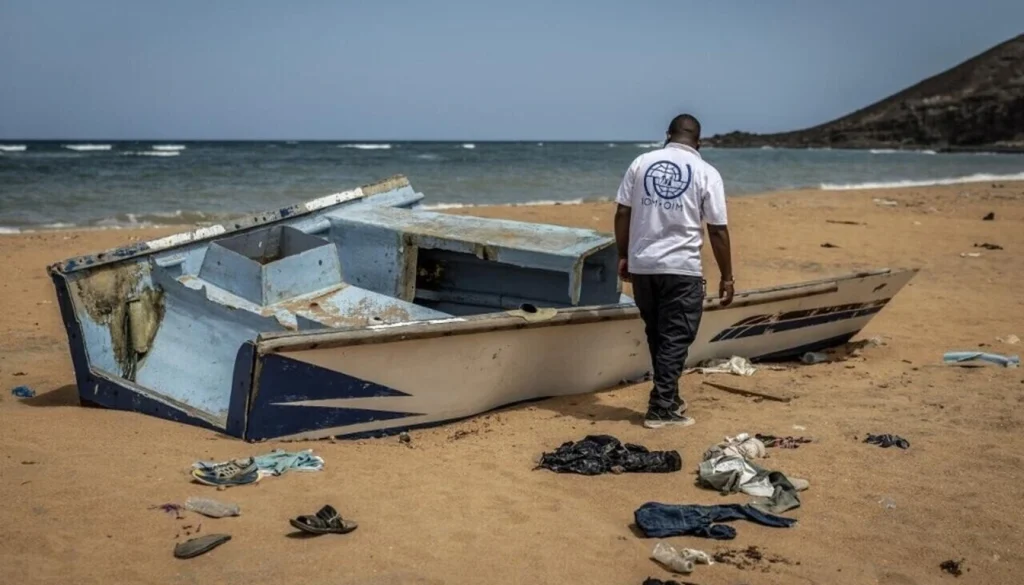
A boat packed with more than 300 people went down off the coast of Djibouti this week. The Djibouti migrant boat capsize is now one of the deadliest on record along the Eastern Route, and the toll may still rise.
What happened
The IOM says at least 139 migrants have died and 84 remain missing, after a boat carrying 305 people sank near Guehere, north of Obock, on the night of 8 to 9 October. About 82 people survived. The vessel was heading from Djibouti toward Yemen. The IOM’s chief of mission in Djibouti said it sank soon after departure, mainly because it was overcrowded. At least 15 of the dead were children.
The 139 figure only counts bodies buried by Djiboutian authorities. Others were buried by the migrants themselves and cannot be added until officials verify them. Search and recovery efforts are continuing.
Why people still make this journey
Every year, tens of thousands of people from Ethiopia, Somalia and across the Horn of Africa walk for days to reach Obock and pay smugglers for a place on a boat. They are chasing work in the Gulf. Many know the risks. The IOM director general put it bluntly: nobody boards a boat like that unless they believe there is no safer way.
The crossing now runs through an even more dangerous setting. Fighting in Yemen has pushed displacement figures from 76,000 in mid-September to 200,000, and more than 3,700 people have fled Yemen by sea to Djibouti. Djibouti is receiving refugees on one shore while migrants leave from the other.
What happens next
Survivors are being treated at the IOM’s Migrant Response Centre in Obock, which offers healthcare, food, shelter and psychosocial support. Families across Ethiopia and Somalia will spend the coming weeks waiting for news that may never be good.
The IOM has appealed to governments and donors to act before another boat goes down. For African governments, the question is not only how to police smugglers but how to give young people credible options at home. Until that changes, the Gulf of Aden will keep taking lives that deserve better.
Read More
Ceuta Migrant Crisis Forces EU to Step Up Border Security Measures: Here’s What They’re Considering
South Africa Anti-migrant Protest Turns Violent: What Led to the Violence and What Happens Next?
Ceuta Migrant Crisis Takes Dark Turn as Women Report Sexual Harassment
Rwanda in Talks With Italy to Host Irregular Migrants: What We Know
