
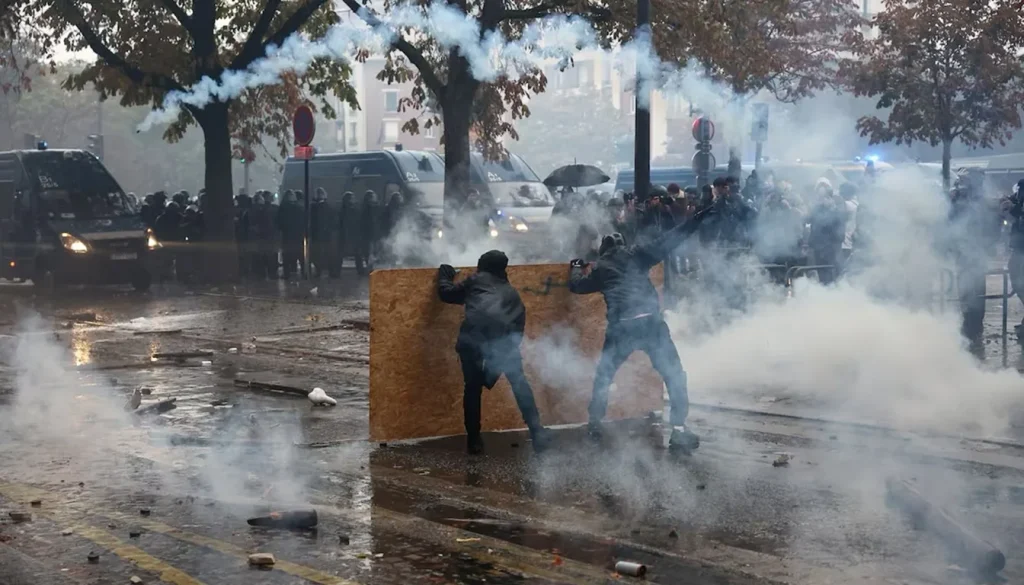
From Paris to Tirana, students have left their classrooms and university halls to take to the streets, turning local grievances into a wave of demonstrations across Europe. The European Student Protests of October 2026 have drawn backing from an organisation whose own record is now under political scrutiny: the Forum of European Muslim Youth and Student Organisations, known as FEMYSO. Its statements of support, issued over ten days, show how an established Brussels-based network can attach itself to a youth movement, and why that is raising eyebrows in the European Parliament.
Who Is FEMYSO?
FEMYSO was founded in 1996 and is based in Brussels. By its own description, it is a network of 32 Muslim youth and student organisations across 22 European countries. It presents itself as a voice for Muslim youth that promotes an inclusive and cohesive Europe.
Critics see something different. On 8 October 2026, the European Parliament adopted a resolution on countering “Islamist entryism” and the influence of the Muslim Brotherhood network. It passed with 381 votes in favour, 167 against and 15 abstentions. The text names FEMYSO as one of the structures that EU institutions should check more carefully before engaging. MEPs also called for organisations allegedly linked to the Brotherhood, including FEMYSO, to be excluded from EU institutional meetings.
The label has a longer history. A letter from 33 MEPs, citing a 2025 French government report, described FEMYSO as the youth branch of the Council of European Muslims, which they called the keystone of the Brotherhood in Europe. FEMYSO rejects the characterisation, and the allegation has not been tested in court. It does help explain why the group’s protest statements are being read closely.
October 9: Solidarity With France and Belgium
The sequence begins on 9 October 2026, the day after the Strasbourg vote. FEMYSO published a statement expressing “firm solidarity” with students in France and Belgium who were demanding better educational conditions and adequate funding.
The statement framed education as a basic right that cannot be realised when schools lack resources. It also turned quickly to policing. FEMYSO said it “unequivocally condemns police brutality” against protesters, most of them minors, and pointed to reports of young people in France suffering life-altering injuries, including the loss of limbs and damage to eyesight. It urged authorities to investigate misconduct independently and to meet students with dialogue rather than force.
Nothing in the text is explicitly religious. It speaks the language of rights, funding and accountability, which is part of why it travelled easily into a wider student movement.
October 15: EMF Calls Students Onto the Streets
The next link in the chain is French. Étudiants Musulmans de France, or EMF, is the “Muslim Students in France” organisation and a FEMYSO member. On 15 October it published a communiqué titled “This 17 October, alongside mobilised youth.”
EMF traced the movement to marginalised areas, noting that high school students in Mayotte began protesting on 31 August over their study conditions, followed by Cayenne on 7 September. It listed grievances including teacher shortages, collapsing roofs, pests in classrooms and student poverty. It also criticised the Parcoursup admissions platform and a decree it called discriminatory.
The statement then went further than solidarity. EMF cited more than 6,800 police custody placements between 28 September and 14 October, 86 percent of them involving minors. It called on students, education staff and workers to join the 17 October demonstrations, and said it would keep working “to build a balance of power” for accessible education. That makes EMF an organiser of the street action, not merely a commentator on it.
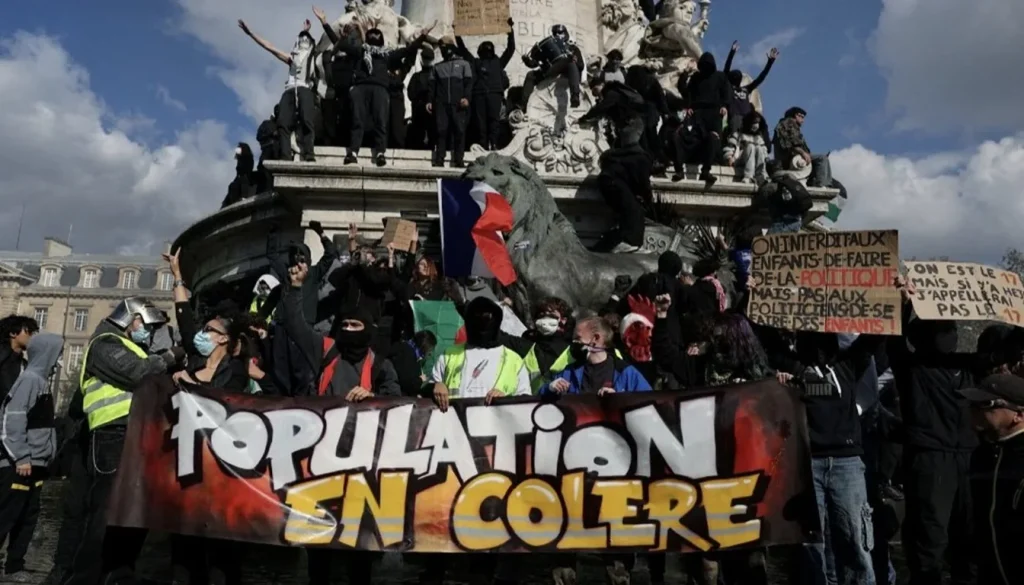
October 18: The Message Goes Cross-Border
The day after the French demonstrations, FEMYSO widened its focus. On 18 October it issued a statement backing students in Albania, who it said had been protesting corruption and government policies for more than 140 days. It described a 19-year-old protester who was allegedly dragged by police while appearing unconscious, and footage of officers using pepper spray on protesters and worshippers at a mosque.
The same statement extended the message to two other countries. It noted that Greek students were protesting the rising costs of education and accommodation, and that young people in Spain were demanding solutions to the housing crisis. While their circumstances differ, it said, their right to express concerns must be respected. It closed with a line that sums up the approach: “Students must not be met with violence when demanding a better future.”
Laid side by side, the three statements show a pattern. Within ten days, one network had spoken on France, Belgium, Albania, Spain and Greece, and its member organisation in France had directly called for participation in the demonstrations.
How the Network Amplifies the Message
The pattern is worth examining because of how it works. FEMYSO sits at the top of a federation, and groups like EMF sit below it. A national affiliate mobilises people on the ground, while the umbrella body supplies an international frame and a statement that can be shared across borders. For a movement that began in neglected school districts, that is a significant boost in reach and credibility.
Critics argue this is the point. Supporters of the Parliament resolution say Brotherhood-linked networks use causes that enjoy broad public sympathy, such as education, discrimination and police violence, to widen their influence. French-focused analysts have raised similar concerns about political Islam in Europe for years.
It would be wrong to overstate what the public record shows. The statements prove solidarity and, in EMF’s case, a call to mobilise. They do not prove that FEMYSO directed or coordinated the demonstrations.
The Other Side of the Argument
FEMYSO and its defenders see the Muslim Brotherhood label as a way of discrediting a legitimate civil society group. An EUobserver commentary argued that “Islamist entryism” has become a way to criminalise Muslim participation in civil society and politics. An Al Jazeera opinion piece noted that the resolution is not binding and that member states do not have to implement it. FEMYSO has also stated that it receives no operating, structural or other grant directly from the EU.
There is also a plain point that cuts the other way. Students in France, Albania, Greece and Spain are protesting real grievances about funding, housing and policing, and they would have taken to the streets without any network’s blessing.
Why Readers Across African Continent Should Pay Attention
African audiences know how quickly a youth-led protest can become a contest over who speaks for it. Kenya’s Gen Z demonstrations showed how fast a movement can grow, and how many political actors then try to claim it or discredit it. The question in Europe is similar: when a student protest attracts organised outside backers, how much weight should their involvement carry?
For readers across Africa and the diaspora, the story also bears on large Muslim and African-origin communities in France and Belgium, where debates about identity, policing and education are closely linked. Many of the students in these streets come from those communities.
What Comes Next
The European Parliament resolution is non-binding, but it signals a harder line on groups it associates with the Brotherhood, especially over EU funding and access to institutions. FEMYSO’s visible role in the European Student Protests will likely feed that debate. Supporters will cite it as evidence of an influence network at work, while FEMYSO’s defenders will cite it as ordinary advocacy for young people being injured and detained.
What is certain is the timeline. On 9 October FEMYSO backed students in France and Belgium. On 15 October its French member called people onto the streets. On 18 October it extended its support to Albania, Spain and Greece. How that sequence is interpreted will depend on whether readers see a youth network defending students or a Brotherhood-linked network using a popular cause.
Read More
Student Group Accused of Muslim Brotherhood Links in Ben Ferguson’s NewsNation Segment
Muslim Brotherhood on the EU Terrorist List: Europe’s Political Debate Intensifies
Europe Widens Its Scrutiny of Muslim Brotherhood Networks as Florida’s Legal Fight Tests State Power
Sudan’s Islamist Networks and SAF: What Do We Know about the Muslim Brotherhood in the War?
