
European governments are asking new questions about the Muslim Brotherhood, and most of them have little to do with violence. They concern money, mosques, schools and associations, and whether any of it adds up to political influence. Meanwhile, Florida has opened a separate fight over whether a US state can label an organisation terrorist without the federal government doing so first.
These are not the same story. Europe is arguing over how to identify and respond to alleged networks. Florida is arguing over the limits of state power, and a federal court is already involved.
Europe’s debate moves past violence
A report from EU Reporter argues that European scrutiny is shifting away from an exclusive focus on violent extremism and towards what officials call long-term networks of influence. It points to developments in Dublin, Paris, Berlin and Brussels involving funding, mosques, associations, schools and charities.
The shift matters because the worry is often not an accusation of violence. The question is whether organisations linked to the movement can shape political, religious or social life. These claims are contested and vary from country to country. Groups accused of Brotherhood ties reject the label, while some politicians say the public deserves more transparency about organisational structures and funding. A security assessment that an organisation belongs to a network is not a court finding that it committed a crime.
France and “Islamist entryism”
France is probably the most prominent arena. According to the European reporting reviewed for this piece, the National Assembly adopted a non-binding resolution in January 2026. It asked the European Commission to consider placing the Muslim Brotherhood and its leaders on the EU terrorist list. That was a parliamentary request, not an EU decision.
In May, the Senate passed a bill aimed at what supporters call “Islamist entryism”, meaning alleged attempts to gain influence in education, sport and associations. The bill went on to the National Assembly. At the time of the reporting, it was not yet law.
French authorities have also leaned on a government-commissioned report on the Brotherhood and political Islam in France. It identified what it called links between the movement and a number of Muslim places of worship and schools, and those findings now feed the wider political argument.
The difficulty is obvious. Any policy aimed at specific groups has to separate legitimate religious and civic life from activity the state can show to be unlawful or hostile to democratic institutions.
Germany and “strategic Islamism”
Germany has also moved beyond conventional terrorism. The EU Reporter account says German constitutional-protection authorities have warned about “strategic Islamism”, an approach said to seek long-term political and social influence without relying mainly on violence.
Brandenburg’s Interior Minister, Jan Redmann, has spoken publicly about the issue. His ministry argued that the Brotherhood’s alleged strategy could involve social work and participation in political structures as a slow way of building influence.
Again, these are judgments by political and security officials. They are not a blanket legal finding that everyone accused of association with the Brotherhood is involved in crime. A separate 2026 analysis of Brotherhood organisations in Germany, reviewed by CERIF, looked at alleged leadership structures, funding and European links. It is an open-source analysis, not a court ruling, so its conclusions are assessments rather than established fact.
Brussels and the funding question
The argument has reached Brussels too, where questions about EU money and civil-society groups have drawn political attention. One organisation at the centre is the Forum of European Muslim Youth and Student Organisations (FEMYSO). Critics allege it is close to Brotherhood networks. FEMYSO rejects that and says it has no affiliation with any political party, group or ideological movement, according to the EU Reporter report.
In September, French MP Constance Le Grip submitted a written parliamentary question about alleged EU funding for projects in which FEMYSO took part. The French parliamentary record says the question cited concerns about the organisation’s alleged Brotherhood links and asked what the French government knew about direct or indirect EU funding. Similar questions have surfaced in the European Parliament, along with criticism from some politicians about how transparent EU funding is.
The European Commission has given a counterpoint. In a July 2026 reply on EU-funded organisations and terrorism safeguards, it said EU funding is subject to legal, financial and operational checks meant to stop money reaching people or entities under restrictive measures or involved in terrorism. So allegations about particular groups should not be read as proof that EU institutions knowingly financed a terrorist organisation.
Ireland joins the conversation
Ireland has entered the discussion as well. The EU Reporter report cites Assistant Garda Commissioner Michael McElgunn, who spoke at a Dublin conference about what he called “hidden political Islam” and raised concerns about groups including the Muslim Brotherhood. His remarks came amid broader talk of violent extremism, terrorism and social integration.
The Irish example shows the same distinction. Authorities can look into ideological networks or possible influence without claiming that every individual, mosque or community group in the conversation is a terrorist threat. In democracies, freedom of religion, association and political expression stay protected.
What the EU has and hasn’t done
One point needs to be stated plainly. The European Union has not designated the Muslim Brotherhood as a terrorist organisation. The French National Assembly’s January resolution was a political request. Debates in the European Parliament are not legal decisions either.
Countries can run their own investigations and pass their own laws, but the EU has its own procedures for terrorist listings. A national resolution, a government report or a politician’s statement is not the same thing as an EU designation, and reporting should not blur the two.
Florida: a separate fight over CAIR
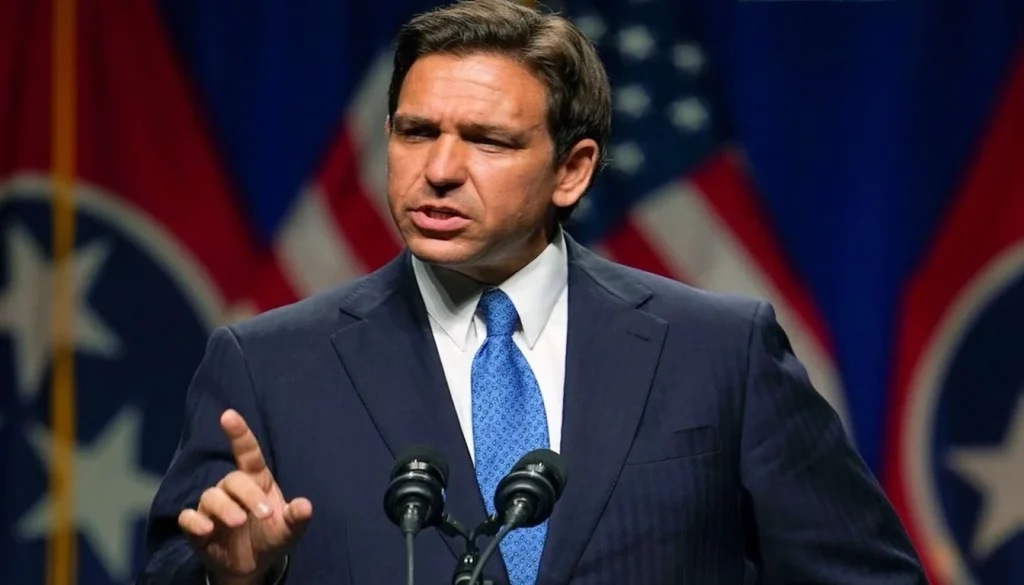
In Florida, Governor Ron DeSantis has pursued state-level designations targeting the Council on American-Islamic Relations (CAIR) and the Muslim Brotherhood. In December 2025, he signed an executive order labelling both “foreign terrorist organizations” under Florida policy. CAIR sued in federal court, arguing the governor had overstepped his authority and violated constitutional protections.
On March 4, 2026, U.S. District Judge Mark E. Walker granted CAIR a preliminary injunction. Florida could not enforce the order against CAIR while the case went on. The ruling leaned heavily on the First Amendment, including the state’s attempt to pressure third parties with threats of government consequences for supporting CAIR.
The decision was narrow. It did not declare that the Muslim Brotherhood poses no security threat. It addressed whether the governor could use the order to impose specific penalties on CAIR. DeSantis appealed to the U.S. Court of Appeals for the Eleventh Circuit.
A new state framework, and a new lawsuit
The fight did not stop there. In April 2026, DeSantis signed a law creating a state process for designating domestic terrorist organisations. Reuters reported that civil-liberties groups raised concerns about free speech and due process.
On July 1, Florida said it intended to designate CAIR, the Muslim Brotherhood and other organisations under the new framework. The governor said designation could mean limits on public funding, contracts and other state support. Then came another legal challenge. By July, officials said no designation would be made until implementing regulations were finished, and CAIR and CAIR-Florida filed a fresh federal lawsuit against the framework.
As of late September 2026, the litigation was still going. The ACLU said it represents CAIR and CAIR-Florida in challenges to both the original executive order and the newer designation system.
Why the two stories matter together
The two disputes sit in different legal systems, but they reflect a shared argument about how governments should treat groups accused of operating within Islamist or Brotherhood-linked networks. In Europe, the focus has fallen on funding, institutions, education, religious bodies and alleged political influence. France and Germany have been especially active, and the funding questions have pulled Brussels in.
Florida raises a different question: how far can a sub-national government go in branding an organisation terrorist and restricting what it can do? That question is now before the federal courts, where constitutional protections sit at the centre.
So the two stories should not be read as one coordinated international legal campaign. They are different national and institutional responses to a contested issue that touches national security, political Islam, civil society, free expression and government oversight.
A debate that isn’t going away
Europe’s debate is unlikely to end with one policy decision. Governments will keep facing pressure to probe groups they believe belong to wider influence networks, especially where funding, foreign ties or political activity are involved. Civil-society groups and critics will keep insisting that officials separate real security threats from lawful religious, political or advocacy work.
The central challenge is evidence. Claims about affiliation, ideological influence or covert activity need careful verification. Political statements and security assessments can shape public opinion, but they are not legal findings.
For Europe, the question is how to address alleged networks without treating an entire religious or political community as suspect. In Florida, the courts must decide how far official power can reach when a state tries to attach a terrorist label to organisations operating inside the country.
Both debates come back to the same tension. Governments that want stronger tools against perceived extremist networks still have to work within the legal and constitutional limits of a democratic society.
Exploring Florida, Sudan & Islamist Networks
What Does Florida’s New Framework Change?
Check out how Florida’s new terrorism designation framework works.
Could Florida’s Designations Reshape Terrorism Policy?
Find out more about the Muslim Brotherhood and CAIR designations.
What Role Does Sudan’s Brotherhood Play?
Uncover what is known about Islamist networks and the SAF.
How Are South Africa’s Connections Shaping Policy?
Browse the links involving Qatar, ANC, religious groups, and Israel.
Why Does Sudan’s Designation Matter Globally?
Explore how the designation could affect Red Sea security.
