
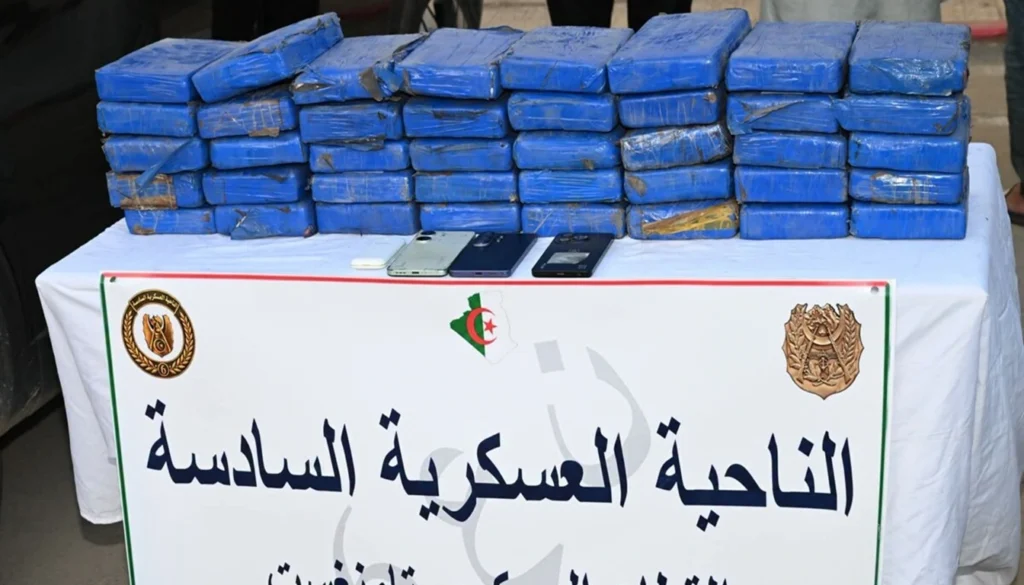
Algeria’s president has raised the stakes in his country’s fight against narcotics. Algeria drug traffickers now face a warning that goes beyond the border, after President Abdelmadjid Tebboune said on Sunday that his government could act against drugs at their source. He made the remarks in an address at the Algerian Supreme Court.
A “War” With the Army on the Front Line
Tebboune did not name Morocco. Algiers, however, has long blamed its neighbour for drugs crossing their shared border. He described the trafficking as a war declared against Algeria and said the army would naturally be on the front line. If necessary, he added, Algeria could go as far as the places where drugs are produced, in what he called legitimate self-defence.
The speech followed a show of force. On Thursday, Algerian authorities said they had destroyed nearly 10 tonnes of recently seized cannabis resin and 33 million psychotropic pills. Where those drugs came from was not made clear.
Old Tensions, New Language
Relations between the two North African neighbours have been tense since Algiers cut diplomatic ties in 2021. Last month Tebboune described drug trafficking into Algeria as part of a “hybrid war” waged by saboteurs, again without naming anyone. The Algerian defence ministry regularly announces large seizures, and its statements often say the drugs came from Morocco. Rabat’s response was not part of the reporting.
What It Means for the Region
For ordinary Algerians, especially young people in border towns, the story is not only about geopolitics. Pills and cannabis resin feed addiction, crime and family heartbreak. For the wider Maghreb, talk of cross-border action raises an uncomfortable question about how far a counter-narcotics campaign can go before it becomes a military one.
Words like “legitimate self-defence” carry weight in a region already stretched by conflict and migration pressure. Whether this is tough rhetoric for a domestic audience or a signal of real policy change will become clearer in the coming weeks. Neighbours, and the African Union, will be listening.
Read More
Africa’s Digital Transformation Is Being Built on Partnerships, Not Going It Alone
Zambia Copper Boom: Billions Pour In, but Do Ordinary Zambians Feel It?
Cape Verde Presidential Election: Islands Vote as First Woman Challenges the Incumbent
Vinicius Jr Sudan: A Football Star’s Message Lifts a Boy Who Lost His Legs
