
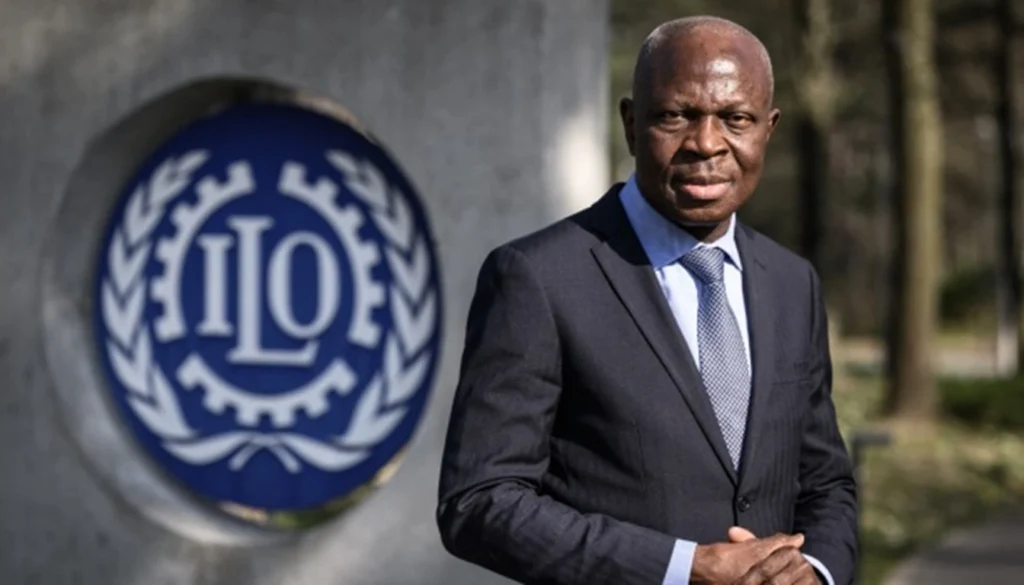
A Togolese leader will keep shaping how the world thinks about work. Gilbert Houngbo re-elected as director-general of the International Labour Organization (ILO) on Monday, earning a second five-year term that starts on October 1 next year. The former Togolese prime minister took 51 of 56 votes at the ILO governing body in Geneva, with five abstentions.
A Race Settled at the Last Minute
The contest ended before it really began. Spain’s Labour Minister, Yolanda Diaz Perez, withdrew just before the vote, saying she did not want to split the trade union movement. Peru’s former foreign minister, Javier Gonzalez-Olaechea, the only other declared candidate, had already left the race on November 4.
Diaz Perez did not leave quietly. She said the current leadership had pushed the organisation into the deepest financial crisis in its history. She also said much of the global union movement had been denied the freedom to vote.
A Tight Budget and a Technology Test
Houngbo, 65, returns to an agency under strain. Falling international funding, particularly from the United States, has forced reforms that include job cuts. Founded in 1919, the ILO has 187 member states. It is unusual in the UN system because governments, employers and workers all hold seats.
Looking ahead, Houngbo said nothing may be more decisive than artificial intelligence. He argued it opens new possibilities but also raises hard questions about jobs and skills. Technology, he said, must stay in the service of humanity.
Why This Matters Across Africa
For a continent with one of the youngest populations on earth, these are not distant debates. Millions of young Africans are entering job markets where informal work is common and where automation could change which skills pay. The rules the ILO helps write on wages, safety and social protection shape the lives of market traders, factory workers and gig drivers from Lomé to Lagos.
Having an African at the top of that table is symbolic, but it also gives the continent a familiar voice in the room. Houngbo will need to steady the agency’s finances and win back sceptics in the union movement. Those tasks will define his second term, and many Africans will be watching closely.
Read More
Africa’s Digital Transformation Is Being Built on Partnerships, Not Going It Alone
Zambia Copper Boom: Billions Pour In, but Do Ordinary Zambians Feel It?
Cape Verde Presidential Election: Islands Vote as First Woman Challenges the Incumbent
Vinicius Jr Sudan: A Football Star’s Message Lifts a Boy Who Lost His Legs
