
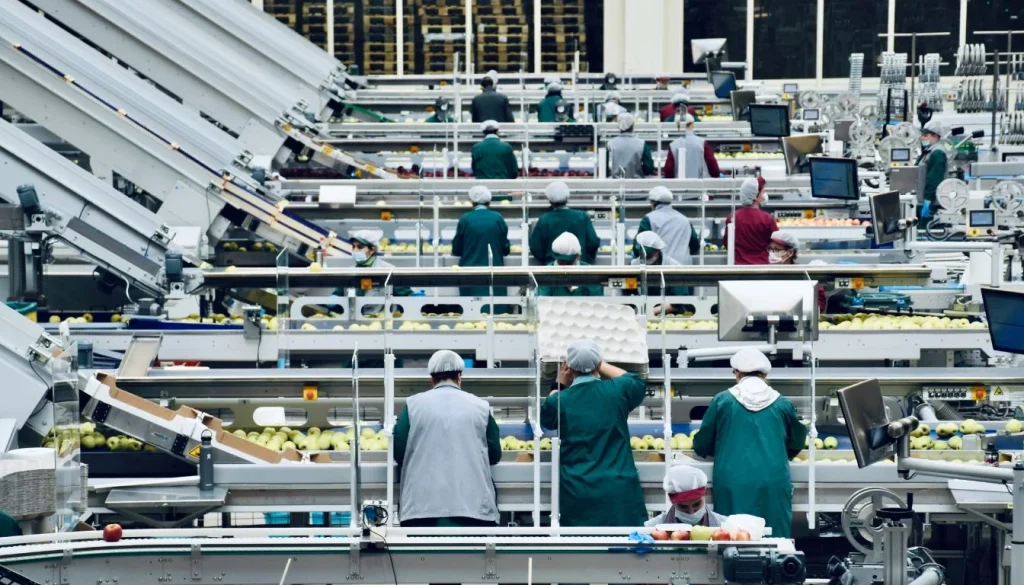
The manufacturing industry of Africa is entering an era of growth through various changes that include industrial policies, investment, infrastructural developments, and export market expansion. Africa manufacturing industry growth, Besides the well-established manufacturing powers of the continent, the emerging economies are making huge investments in automotive manufacturing, the textile industry, renewable energy generation, electronics, and value-added agricultural products.
Morocco has become the most industrialized country in Africa as per the Industrialization Index of the African Development Bank, surpassing South Africa with its fast growth in automotive manufacturing, aerospace, and renewable energy. At the same time, other countries like Egypt, Kenya, Ethiopia, Nigeria, Ghana, and Rwanda have also positioned themselves as manufacturing centers.
Let’s see which African countries are becoming manufacturing powerhouses in 2026.
Morocco as the Leader of the African Industrial Revolution
Morocco has become one of the most powerful manufacturers in Africa because of its investments made over the years.
It is one of the major centers of automotive manufacturing in Europe and internationally. It has also developed its aerospace industry, while large-scale investments into renewables and battery plants have attracted many foreign companies.
Various major industrial developments and construction projects, which include the establishment of electric vehicle battery plants and various green manufacturing programs, further solidified Morocco’s position as Africa’s manufacturing leader.
South Africa Remains an Industrial Colossus
While Morocco is currently number one on the Industrialization Index, South Africa still boasts one of the largest and most diverse manufacturing industries in Africa.
Its economy is greatly dependent on:
- Automotive manufacturing
- Steel and metals manufacturing
- Mining equipment
- Chemicals manufacturing
- Food processing
- Engineering
World’s major companies such as Toyota, Volkswagen, Ford, BMW, and Mercedes-Benz continue manufacturing cars in South Africa, making it one of the continent’s leading exporters of manufactured goods.
Egypt Strengthens Large-Scale Manufacturing
Egypt is still Africa’s biggest manufacturing economy in terms of total production, providing more than $60 billion worth of manufacturing output annually.
Its diverse industrial manufacturing base includes:
- Chemical products
- Pharmaceuticals
- Construction materials
- Consumers’ goods
- Textiles
- Food processing
The geography of Egypt, situated between Africa, Europe, and the Middle East, has helped producers gain access to more than one export market due to the development of logistics infrastructure.
Kenya Develops East Africa’s Manufacturing Sector
Kenya is continuing to position itself as East Africa’s manufacturing center thanks to investments in agriculture processing, pharmaceuticals, equipment for renewable energy, and consumer goods.
Government support for local manufacturing and regional trade in the context of the East African Community (EAC) has led manufacturers to grow their businesses in neighboring countries.
Improved logistics and industrial parks are also contributing to attracting more investors to Kenya.
Ethiopia Develops Its Manufacturing Sector as a Low-Cost Hub
Ethiopia is developing into one of the fastest-growing manufacturing destinations in Africa, especially for labor-intensive manufacturing.
Through government-sponsored Special Economic Zones (SEZ), Ethiopia has managed to attract foreign manufacturers in:
- Textiles
- Clothing
- Leather products
- Footwear
Lower production costs and an industrial development strategy oriented on exports continue attracting investments despite other economic problems.
Nigeria and Ghana Develop Their Manufacturing Capacities
The two largest manufacturing economies in West Africa continue to diversify their manufacturing sector.
Nigeria leads in consumer goods, cement, food processing, and industrial conglomerates serving both domestic and regional markets.
At the same time, Ghana is focusing on manufacturing sectors such as automotive assembly, agro-processing, pharmaceuticals, and high-value-added exports in its effort to escape from merely commodity-oriented industries.
Rwanda Emphasizes High-Tech Manufacturing
Despite being relatively smaller compared to other regional competitors, Rwanda strives to attract manufacturers through a technology-oriented approach to manufacturing development.
Special economic zones, pro-business laws, and incentives are luring companies in electronics, consumer goods, medical devices, and light manufacturing industries.
Thus, the country’s emphasis on innovations and technologies contributes to its reputation as one of the developing industrial economies of Africa.
Manufacturing Development Is Changing Africa
In recent years, the manufacturing sector in Africa has become more diversified.
Morocco ranks first among African countries in terms of industrial development, followed by South Africa, Egypt, Kenya, Ethiopia, Nigeria, Ghana, and Rwanda.
The growth of regional trade within the framework of the African Continental Free Trade Area (AfCFTA), foreign investments, and industrial policies will contribute to the further growth of manufacturing activities in these countries.
More Stories You Shouldn’t Miss
What drives Lagos fintech billions growth?
Explore why Lagos fintech startups are attracting massive global investments and shaping Africa’s financial future.
Which mobile wallets rival M-Pesa Africa?
Discover the top M-Pesa alternatives leading Africa’s mobile wallet wars in 2026 and beyond.
How FLEX zero fee payments impact?
Check how FLEX is transforming Nigeria’s mobile payments with zero fees and disrupting traditional systems.
Which African businesses deliver highest profits?
Explore the most profitable business opportunities across Africa for entrepreneurs and investors today.
Who are South Africa’s youngest entrepreneurs?
Discover the top young entrepreneurs in South Africa making waves and redefining success early.
