
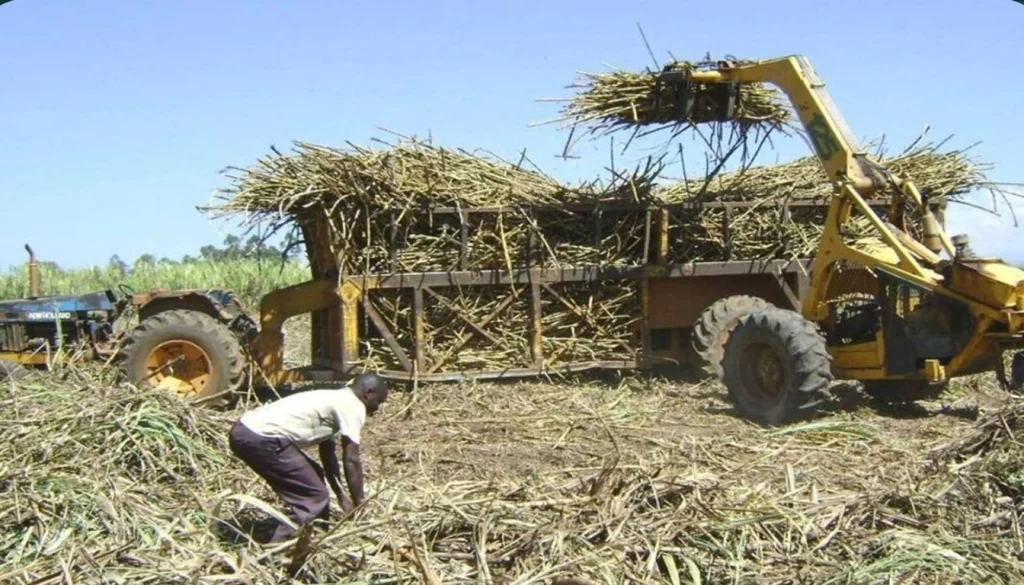
Africa holds about 30 per cent of the world’s mineral resources, yet its shops, ports and factories are full of imported goods. This is Africa’s resource paradox: a continent that mines, drills and harvests on a massive scale while the biggest profits are made somewhere else. It is a story most Africans already know from daily life, and it is worth understanding properly because it can be changed.
Cocoa Goes Out, Chocolate Comes In
The pattern is simple. Africa sends out cocoa and buys back chocolate. It exports crude oil and imports refined petrol. It digs up gold and imports jewellery. The Democratic Republic of Congo supplies more than 70 per cent of the world’s cobalt, the metal inside lithium-ion batteries, but it mostly ships it as raw or semi-processed cobalt hydroxide. The batteries, and the money in them, are made elsewhere.
The numbers back this up. Raw materials made up over 70 per cent of Africa’s total exports in 2020, according to Nigeria’s Raw Materials Research and Development Council. The World Trade Organisation estimated that Africa’s exports of intermediate goods, excluding fuels, were worth 312 billion dollars in 2022. Those goods keep factories running in Asia, Europe and North America. They do very little for factories in Lagos, Kinshasa or Nairobi.
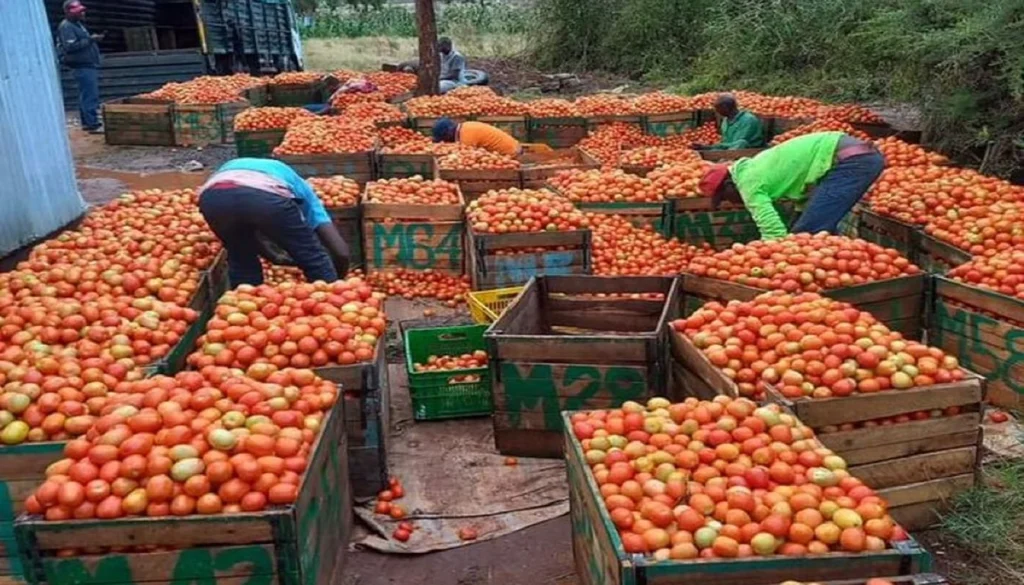
Why Africa Raw Material Exports Dominate
There is no single cause, and anyone who offers one is oversimplifying. Part of the story is historical. Colonial economies were built to move resources out, not to build industry in, and many transport networks still run from mine or farm to port with little connecting them to each other.
Part of it is practical. Processing is expensive. Factories need steady electricity, and in much of Africa the power cuts out regularly. They need good roads, working ports and affordable loans. Writer Mide Alabi points out that processing industries are capital intensive, and local entrepreneurs often face interest rates that make big investments too risky.
Part of it is policy. When tax rules and import duties change with every new government, nobody wants to sink money into a plant that takes ten years to pay off. Part of it is the global trading system, where some wealthy countries charge higher tariffs on processed goods than on raw materials, which quietly punishes anyone who tries to climb the ladder.
Then there is the problem of small markets. For decades it has been easier for many African countries to trade with Europe or China than with their own neighbours. A factory that can only sell to one country of a few million people struggles to justify itself.
What Standing Still Costs
Commodity dependence leaves economies at the mercy of prices set far away. When prices rise, budgets look healthy. When they fall, governments borrow, projects stall and ordinary families feel it first.
Nigeria offers a hard example. Oil accounts for about 70 per cent of its export revenue. Between January and May 2024, production averaged 1.3 million barrels a day against a budget benchmark of 1.7 million. That gap cost roughly 20 million dollars a day, and over five months it added up to about 2.03 billion dollars. A country cannot plan schools, hospitals and roads on that kind of income.
There is also a quieter cost. The best-paid parts of any supply chain are processing, branding, marketing and distribution. When those happen abroad, so do the jobs, the skills and the tax revenue. Youth unemployment is the price many African countries pay for exporting the raw material and keeping none of the value.
Proof That Value Addition in Africa Works
None of this is fixed. Botswana invested in cutting and polishing diamonds at home rather than only selling rough stones. Mauritius moved beyond sugar into textiles, tourism and financial services. Rwanda has made progress in selected sectors. And Aliko Dangote’s multi-billion-dollar refinery in Nigeria, whatever its teething problems, is a bet on turning crude into fuel at home.
Policy is moving too. Nigeria introduced a value addition policy in 2024, and the Raw Materials Research and Development Council has pushed a proposed bill that would require 30 per cent of raw materials to be processed locally before export. Whether that exact formula works is still debated, but the direction is clear. Governments are asking why the processing is not happening at home.

How to Overcome It
Breaking out of the trap will take several things at once. These are the ones that matter most.
Fix the basics first: No African industrialisation plan survives unreliable power. Electricity, rail, ports and affordable internet are not prestige projects. They are the cheapest way to lower the cost of making things.
Be consistent: Investors, local and foreign, need to know the rules will still apply in five years. Long-term industrial strategies should outlast election cycles.
Make money available: Processing plants need patient, long-term finance. Development banks, central banks and regional funds can design loans for agro-processing and light manufacturing. Public-private partnerships can share the risk on bigger projects.
Use the continental market: The African Continental Free Trade Area only helps if goods actually move. That means fewer border delays, simpler customs and workable payment systems. A factory in Ghana that can sell easily to Kenya and Senegal is a very different proposition from one limited to a single country.
Start with what you already have: Cotton can become cloth, cassava can become starch and ethanol, and cashew can be shelled and packaged at home. Not every country needs to build a battery plant tomorrow. Agro-processing and basic manufacturing create jobs quickly and teach skills that carry over to harder industries.
Train people: Factories need technicians, engineers and managers. Investing in technical and vocational training now is what makes the Africa manufacturing sector competitive later.
The Bottom Line
Africa does not lack resources, talent or ambition. What it has lacked, for too long, is the infrastructure, the stable policy and the finance to turn what comes out of the ground into something worth more. Every region that industrialised, from Europe to East Asia, went through the same stage and decided at some point that it would stop being only a supplier.
African economic development will not be decided by how much cobalt, oil or cocoa the continent produces. It will be decided by how much of the value stays home. The goal is simple to say and hard to do: stop exporting potential and start exporting value.
Read More
Africa’s Climate Crisis Is Becoming a Food Security Crisis
Africa’s Next Big Export Could Be a Download: Inside the Gaming Boom
