
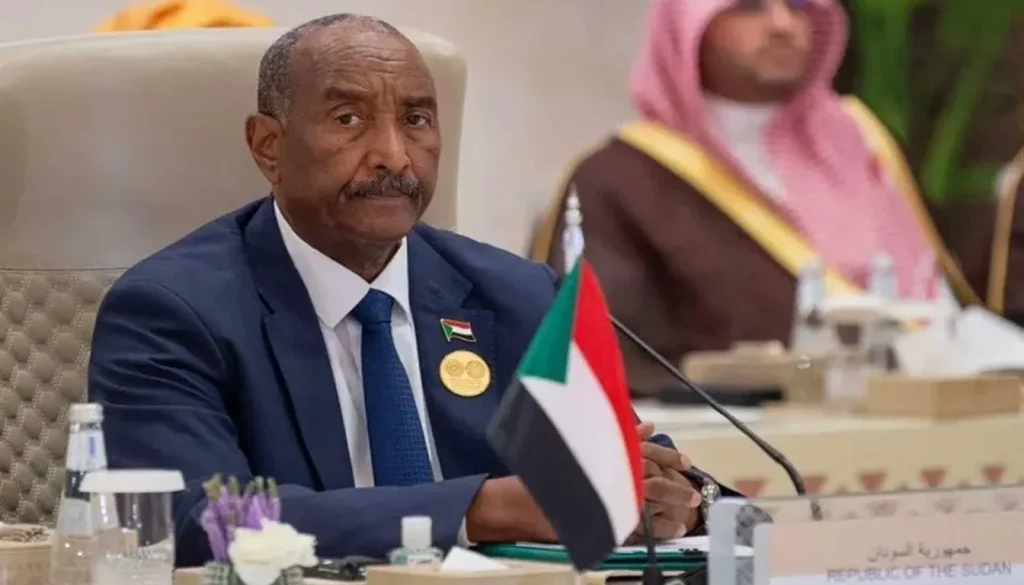
Sudan’s political future remains uncertain as military confrontation, competing political interests and international diplomatic efforts continue to shape the country’s crisis. Against this backdrop, the latest discussion surrounding Al Qissa – Sudanese Affairs, particularly Episode 2, examines developments involving Sudanese military leader Abdel Fattah al-Burhan, his encounter with US presidential adviser Massad Boulos in Egypt, and allegations concerning Islamist networks and a potential coup.
The discussion of Al-Burhan Sudan political tensions raise several significant questions about the relationship between Sudan’s internal power struggles and its regional diplomatic engagements. It also highlights the need to distinguish political analysis and allegations from independently established facts as the conflict continues to affect the country.
Al-Burhan’s Diplomatic Position Under Scrutiny
Abdel Fattah al-Burhan, head of Sudan’s Transitional Sovereignty Council and commander of the Sudanese Armed Forces (SAF), remains a central figure in the country’s political and military landscape. Since the war between the SAF and the paramilitary Rapid Support Forces (RSF) erupted in April 2023, Sudan’s leadership has faced mounting pressure over the conflict’s direction and the prospects for a negotiated settlement.
Reports concerning restrictions on al-Burhan’s proposed visit to the United States and the postponement of his Riyadh visit have added another dimension to discussions about his diplomatic position. These developments need to be assessed in the context of international efforts to secure a ceasefire and establish a political process capable of ending the conflict.
The United States has pursued diplomatic initiatives aimed at achieving a humanitarian truce and encouraging negotiations. However, disagreements over the terms of a ceasefire, the future role of the warring parties and the structure of a postwar political settlement have complicated those efforts.
For Sudan, the challenge extends beyond maintaining diplomatic relationships. The country’s leadership must also contend with competing demands over military strategy, political legitimacy and the future distribution of power.
The El Alamein Meeting: Al-Burhan and Massad Boulos
One of the central developments surrounding Episode 2 is the encounter between al-Burhan and Massad Boulos, US President Donald Trump’s senior adviser for Arab and African affairs, in New Alamein, Egypt.
The encounter took place on 4 October 2026 during a luncheon hosted by Egyptian President Abdel Fattah el-Sisi on the sidelines of the African Union’s eighth mid-year coordination meeting. Boulos subsequently reaffirmed Washington’s commitment to Sudan’s unity, sovereignty and territorial integrity, while emphasising continued cooperation with Egypt and other regional and international partners to advance a political solution.
According to reporting by Sudan Tribune, the meeting took place amid strained relations between Washington and Sudan’s military-led authorities. Other reporting indicated that the encounter was publicly acknowledged but did not necessarily constitute a formal bilateral negotiation.
The distinction matters. Although the meeting provided an opportunity for diplomatic contact, its precise outcomes should not be inferred without further evidence.
The encounter also took place against the backdrop of a US-backed proposal for a 90-day humanitarian ceasefire, followed by political negotiations. The proposal has encountered resistance over the conditions for a truce, including disagreements concerning the RSF’s withdrawal from occupied urban areas and the future political arrangements for Sudan.
The meeting therefore highlights the complicated balance between diplomatic engagement and disagreements over the terms of peace. It also illustrates Egypt’s continuing involvement in efforts to address the conflict in its neighbouring country.
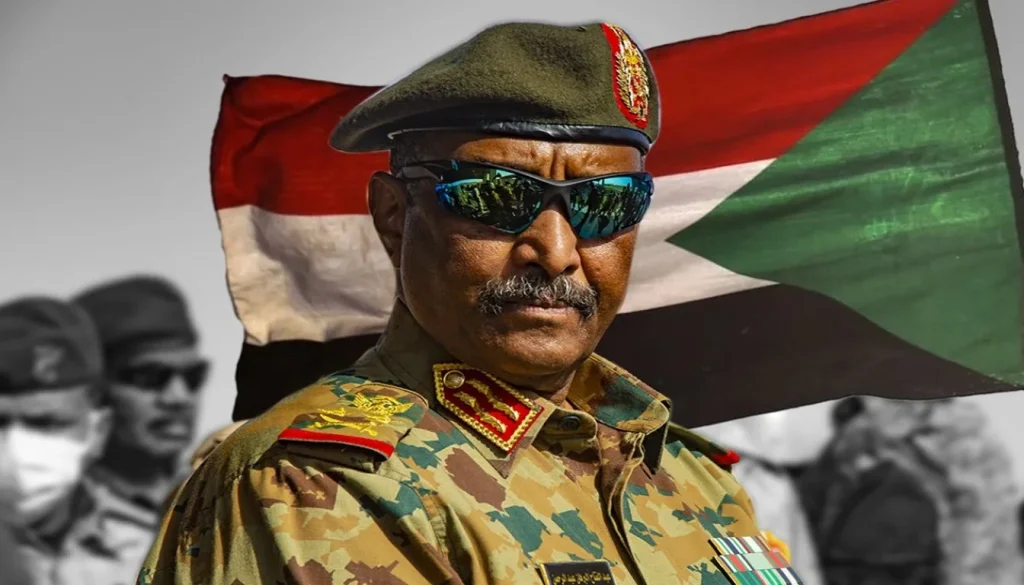
Islamist Networks and Allegations of a Potential Coup
Another significant theme identified in the campaign brief for Al Qissa – Sudanese Affairs Episode 2 concerns allegations about Islamist networks and the possibility of a coup or an internal challenge to Sudan’s political leadership.
The role of Islamist-aligned groups in Sudan’s political and military environment has attracted attention because of the country’s history under former president Omar al-Bashir and the continuing struggle over the nature of the state. Questions about the influence of these networks are relevant to broader debates concerning military authority, political representation and the prospects for a civilian-led transition.
However, allegations of a potential coup require careful examination. Political tensions, the influence of particular factions and the possibility of an internal power struggle are distinct issues. Evidence of one does not automatically establish the existence of a coordinated plan to overthrow the leadership.
The programme’s discussion should therefore be understood as a starting point for examining these questions rather than independent proof that a coup is being organised or is imminent. Any specific allegations should be attributed to the relevant speakers, and claims about individuals or organisations should be supported by credible evidence.
For Sudanese audiences and international observers, the central issue is whether competing political and ideological interests are complicating the search for a settlement. Greater clarity about the influence of different factions could help explain the challenges facing efforts to establish a stable political order.
Political Tensions in Port Sudan and the Struggle for Power
Sudan’s internal political environment forms another important part of the broader discussion. Port Sudan has served as the seat of the military-aligned administration during the conflict, making political relationships and decision-making within the city particularly significant.
The wider struggle involves more than the military confrontation between the SAF and the RSF. It also concerns the future role of civilian political forces, the authority of state institutions and the competing visions of how Sudan should be governed after the war.
Disagreements over negotiations, the composition of a future government and the influence of ideological factions can complicate efforts to establish a unified political direction. These tensions also affect the credibility of any proposed transition, particularly if major civilian constituencies are excluded from decision-making.
For this reason, discussion of a possible coup or internal political realignment must be placed within the wider context of Sudan’s institutional and political fragmentation. The country’s future will depend not only on battlefield developments but also on whether its political actors can agree on a credible framework for governance.
Regional Diplomacy and Sudan’s International Relationships
Sudan’s crisis has implications extending beyond its borders. Egypt, Saudi Arabia, the United States and other regional and international actors have interests in the country’s stability, territorial integrity and future political arrangements.
Egypt has repeatedly expressed support for Sudan’s unity and sovereignty while advocating a political solution to the conflict. Washington, meanwhile, has pursued diplomatic efforts intended to secure a humanitarian ceasefire and encourage dialogue among Sudanese political forces.
Saudi Arabia has also been involved in diplomatic initiatives concerning Sudan. Nevertheless, differences among Sudanese actors and international stakeholders over the terms of negotiations continue to present obstacles.
The El Alamein encounter illustrates how regional platforms can provide opportunities for engagement even when relations remain strained. Yet diplomatic contact alone does not guarantee progress. Sustainable negotiations require agreement on practical steps to reduce violence, improve humanitarian access and establish a political process that Sudanese stakeholders consider credible.
Episode 2’s focus on al-Burhan’s diplomatic engagements and internal political pressures provides a useful framework for considering how these external relationships intersect with Sudan’s domestic struggles.
The Humanitarian Consequences of Prolonged Instability
Behind the political manoeuvring lies a devastating humanitarian emergency. The war between the SAF and the RSF has displaced millions of people, disrupted essential services and left communities struggling to obtain food, healthcare and other necessities.
The United Nations and humanitarian organisations have repeatedly warned about the scale of civilian suffering and the difficulties of delivering assistance in conflict-affected areas. Continued fighting and insecurity have made relief operations more difficult, while the destruction of infrastructure has weakened access to basic services.
Political disputes and disagreements over ceasefire arrangements have direct consequences for civilians. Without meaningful progress towards reducing hostilities, humanitarian organisations face continuing obstacles in reaching vulnerable communities.
The debate over Sudan’s political future must therefore remain connected to the immediate needs of its population. Diplomatic initiatives and discussions about leadership are important, but their significance ultimately depends on whether they contribute to reducing violence, protecting civilians and creating conditions for recovery.
Key Takeaways from Al Qissa – Sudanese Affairs Episode 2
Episode 2 centres attention on the intersection of Sudan’s internal political tensions and its international relationships. The discussion raises several questions relevant to understanding the country’s evolving crisis.
First, al-Burhan’s diplomatic engagements demonstrate the continuing importance of regional and international actors in efforts to address Sudan’s conflict. However, meetings and public statements must be assessed alongside the actual progress made towards a ceasefire or political settlement.
Second, allegations concerning Islamist networks and a potential coup require careful scrutiny. Establishing the facts is essential to distinguishing genuine political developments from speculation and competing narratives.
Third, Sudan’s internal divisions cannot be separated from the broader struggle over military authority, civilian participation and the future structure of the state.
Finally, the humanitarian consequences of the war underline the urgency of credible diplomatic efforts and a political process capable of addressing the needs of Sudanese civilians.
As the conflict continues, transparent reporting, evidence-based analysis and inclusive political dialogue will remain essential to understanding the challenges facing Sudan.
Watch Al Qissa – Sudanese Affairs Episode 2
For the programme’s full discussion of al-Burhan’s meeting with Massad Boulos, Sudan’s political tensions and allegations concerning Islamist networks, watch Episode 2 of Al Qissa – Sudanese Affairs.
Read More
US Withholds Al-Burhan’s UN Visa as 90-Day Ceasefire Dispute Puts Sudan Diplomacy Under Pressure
U.S. Restricts Movement of Al-Burhan’s Delegation in New York
Al-Burhan’s army: A proxy force of Iran in Africa
Sudan Conflict: Al-Burhan’s Diplomacy Amidst an Ongoing Crisis
General Abdel Fattah al-Burhan of Sudan is in Cairo for an official visit
Al-Burhan, Sudan’s top general, warns against foreign interference
