
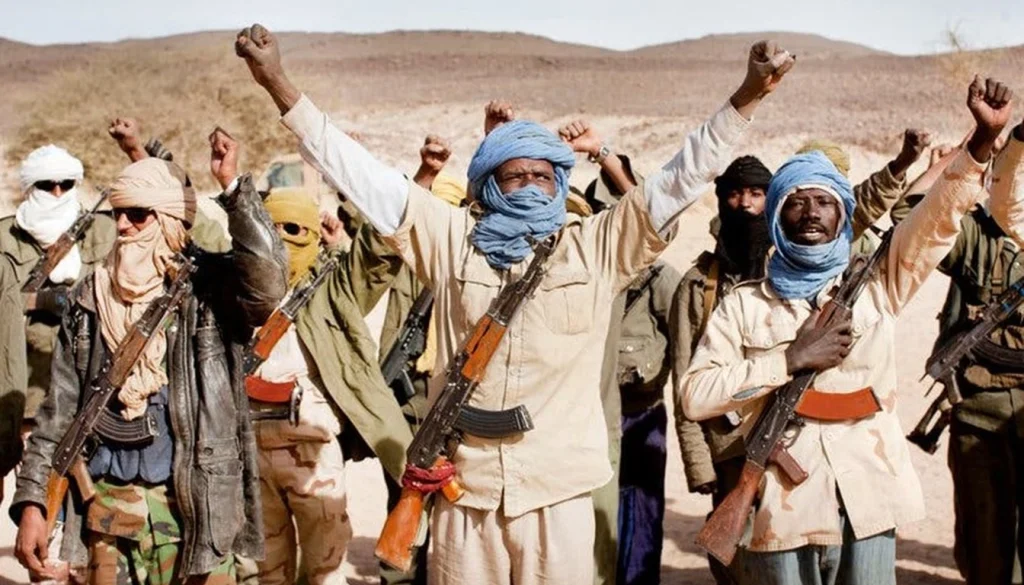
Two jihadist armies that once shared a common enemy now spend much of their time killing each other. The Al-Qaeda and IS rivalry in the Sahel has become one of the deadliest militant feuds in the world, and the people of Mali, Burkina Faso and Niger are the ones paying for it. Fresh clashes reported this week show the fight is getting fiercer, not fading.
How Old Allies Became Bitter Enemies
JNIM, the Al-Qaeda affiliate led by Iyad Ag Ghaly, was formed in 2017 when several Sahel militant groups merged under one banner. The Islamic State Sahel branch grew out of a split from one of those groups. For years the two coexisted uneasily, but the relationship broke down in 2019 over operations and ideology. Today each side brands the other a traitor to the cause. According to ACLED, they have fought hundreds of battles since 2019, killing over 2,100 people.
A War Over Land, Cattle and Cash
This is not only a quarrel over religion. Both groups chase territory and the money it brings, including zakat “taxes” on villagers and cattle rustling. For herders and farmers across the Sahel, that means being taxed, raided or caught in the crossfire. On 1 September, Islamic State fighters clashed with JNIM near Timbuktu in Mali, claiming heavy losses for their rival. JNIM admitted losing several dozen men but called the figures exaggerated.
Rival Al-Qaeda and Islamic State factions have clashed in Burkina Faso’s Oudalan province, near the borders with Mali and Niger, in fighting described as unprecedented in scale. The Islamic State Sahel Province (ISSP) claimed it killed more than 400 fighters from Al-Qaeda-linked JNIM, including several leaders. Conflict analyst Heni Nsaibia said that if the toll is confirmed, it would be the deadliest single battle recorded between the groups.
— Radar Africa (@radarafricacom) October 16, 2026
Why West Africa Security Should Worry
The feud has crossed borders. In April, the first clashes in Niger’s Tillaberi region, which surrounds the capital Niamey, showed the rivalry spreading beyond Mali and Burkina Faso. JNIM has also pushed attacks toward Benin and Nigeria. Analysts say weak state control and poor cross-border coordination let both groups expand and recruit. In plain terms, no capital in the region controls enough ground to stop the two groups fighting freely.
Some experts argue that the infighting weakens both movements and gives governments an opening. History suggests otherwise for civilians. Each round of retaliation tends to hit villages first, and every new battlefield becomes a fresh recruiting ground. For Africans from Bamako to Abuja, the jihadist violence in Africa’s heartland is no longer a distant story. This militant rivalry is reshaping trade routes, displacing families and testing every government in the region.
Unless Sahel states work together and rebuild trust with local communities, the Sahel conflict will keep growing, with ordinary people caught between two sets of gunmen.
Read More
Mali’s Information War Goes Digital: The Role of AI in Changing Propaganda and Political Influence
