
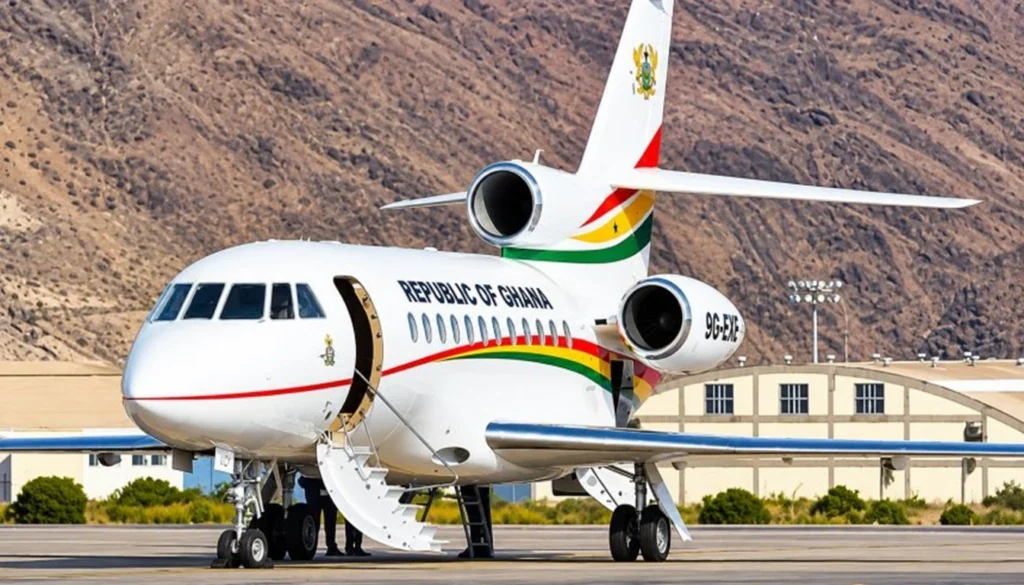
A shiny new aircraft has landed in Accra, and a political storm has followed it. The Ghana presidential jet, a Falcon 6X built by France’s Dassault Aviation, was delivered to the Ghana Air Force on Monday 16 November at a reported cost of $60.68 million.
Goodbye to the “Flying Coffin”
The government says the purchase replaces an ageing aircraft that kept needing repairs and spent months in a French workshop. Ghanaians had long mocked the old plane as “the Flying Coffin”. Government Communications Minister Felix Kwakye Ofosu announced the delivery, and officials point to the new jet’s longer range for official trips. Supporters argue that the president’s safety and comfort should be a national priority, and that an improved economy justifies the spending.
Anger Over Priorities
Critics see it differently. Many Ghanaians are wrestling with a high cost of living and tight job prospects, and they ask why $60 million should go on a plane. Opposition NPP figure Enoch Afoakwa said voters elected the president to stay in Ghana and work for them. Samuel Abu Jinapor, the minority’s ranking member on foreign affairs, has demanded full disclosure of the deal.
A U-turn Under the Microscope
The sharpest attacks focus on consistency. When the previous government floated a similar purchase, leading figures in today’s ruling NDC condemned it. Opposition spokesman Dennis Miracles Aboagye called the decision disrespectful to the people and accused the government of betraying its own principles.
President John Mahama has answered that his earlier objection reflected the country’s financial troubles at the time, not opposition to a new jet altogether. “We agreed in principle that we needed to purchase a new presidential jet,” he said.
What Happens Next
Questions remain. No official figure has been published for the jet’s annual running costs, and no date has been announced for its first presidential trip. For ordinary Ghanaians, the debate is bigger than one aircraft. It is about whether those in power feel the same pressure as the people who elected them. Expect the argument to run for a while.
Read More
Lobito Corridor: Can a US-Backed Mineral Highway Bring Peace to DR Congo?
Somali-American Attack in Minnesota Shocks Community as Prosecutors Charge Passenger
Mozambique Opposition Leader Venâncio Mondlane Faces Terrorism Trial: What Is at Stake?
Zambia Copper Boom: Billions Pour In, but Do Ordinary Zambians Feel It?
AFCON Qualifiers: Senegal and Morocco Book Their Tickets While Tunisia Cry Foul
