
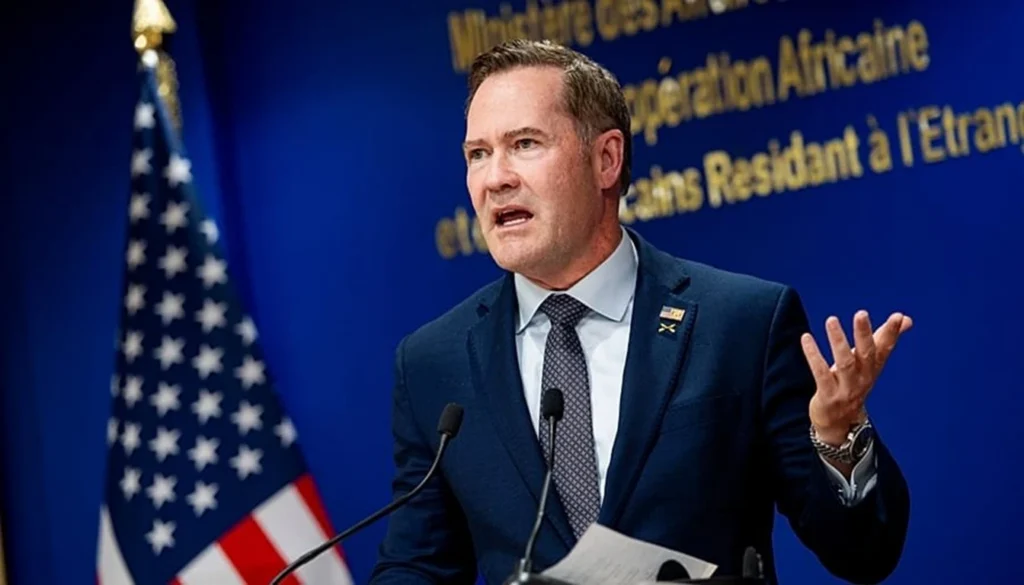
The blue helmets are heading home, and Washington wants the guns to stay silent. Calling for respect of the Western Sahara ceasefire, US ambassador to the UN Mike Waltz urged calm on Tuesday in Rabat, just as the UN mission began leaving the disputed territory.
A Mission That Ran Out of Road
The UN mission, known as MINURSO, saw its mandate lapse last month after the Security Council failed to renew it. Washington had proposed an extension that dropped the long-promised referendum and made Morocco’s autonomy plan the basis for future talks. Eleven of the council’s 15 members backed that approach. Russia called it one-sided and pushed to renew the mission unchanged, and Washington blocked that in turn.
The standoff now has real consequences on the ground. Mission chief Alexander Ivanko, a Russian diplomat, says the withdrawal has officially started and could take months. His target for the final exit is 31 January.
Calls for Calm
Waltz was blunt about what he expects. “All parties must refrain from provocations and escalation,” he said, adding that he is confident Morocco will stay committed to the truce. He then turned to the Polisario Front and asked it to rejoin the ceasefire and honour it in full.
That request carries weight because the Polisario announced in 2020 that it would resume its armed struggle. Rabat, for its part, has repeated that it remains committed to the ceasefire. Washington backs Morocco’s claim over the territory and says it will keep working with the United Nations towards a lasting settlement. Several European countries, including former colonial power Spain, have also come round to Rabat’s autonomy plan as a way out of the decades-old deadlock.
Why Africa Is Watching
MINURSO was created in 1991 to organise a self-determination vote that has never taken place. More than three decades later, the mineral-rich territory is still largely under Moroccan control, while the Algeria-backed Polisario keeps pushing for independence.
For African readers, this is more than a distant diplomatic quarrel. It sits on the fault line between two of North Africa’s biggest powers, and the dispute has divided opinion across the African Union for years. With the peacekeepers gone, fewer neutral observers will be on hand to report any violation. The coming weeks will show whether diplomacy can fill the gap the blue helmets leave behind.
Read More
Lobito Corridor: Can a US-Backed Mineral Highway Bring Peace to DR Congo?
Somali-American Attack in Minnesota Shocks Community as Prosecutors Charge Passenger
Mozambique Opposition Leader Venâncio Mondlane Faces Terrorism Trial: What Is at Stake?
Zambia Copper Boom: Billions Pour In, but Do Ordinary Zambians Feel It?
AFCON Qualifiers: Senegal and Morocco Book Their Tickets While Tunisia Cry Foul
