
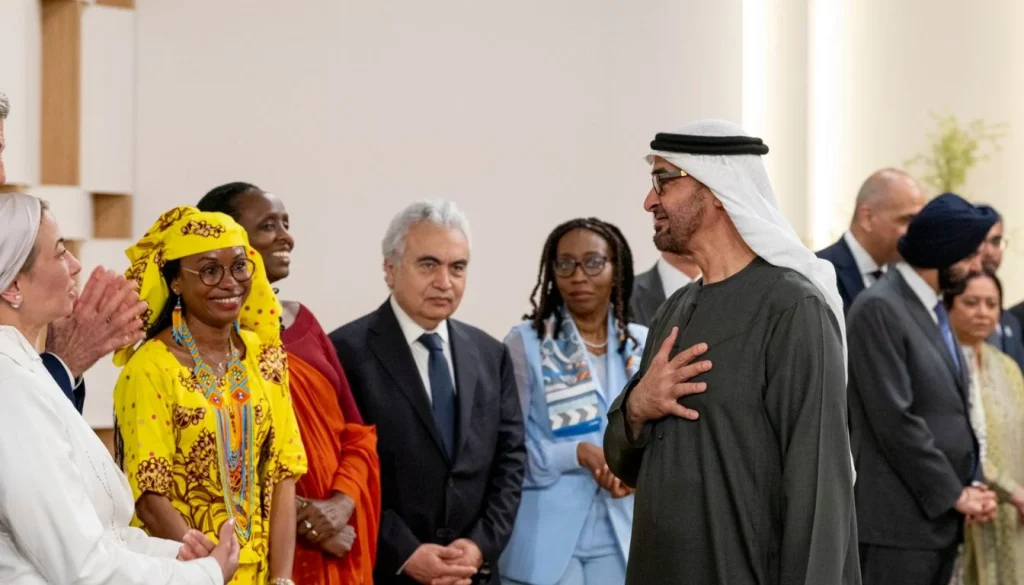
The Middle Eastern region is undergoing a great transformation. Historically, one of the politically unstable areas of the world, the Gulf has recently started focusing on prosperity, stability, and cooperation rather than competition and conflict.
Gulf States Stability and Prosperity, With huge financial investments and many other steps taken to reach its goals, the Gulf has started positioning itself as a major player on the international economic scene. Its future is not limited to solving current political issues but lies in integration, innovation, and success.
Therefore, what do the Gulf States actually want?
Iran’s Regime, Not Iran’s People, Is the Problem
One of the key points emphasized by leaders in the Gulf States is the distinction that they make between the Iranian regime and the Iranian people themselves.
Though there may be cultural and historical connections between the Gulf States and Iran, there is a problem with the way that Iran conducts itself in the region, including its involvement with proxy wars, its missile program, and its involvement in wars elsewhere in the Middle East.
The issue, for these countries, is not the Iranians per se, but the political system that they think represents an unstable force in the region.
This is why security alliances still have a place in the foreign relations of these countries.
It is More Difficult Than Ever to Maintain Strategic Ambiguity
Gulf states had found a balance in maintaining their numerous alliances at the same time.
They kept alliances with their security partners, took advantage of economic opportunities with regional nations, and avoided getting entangled in any geopolitical conflicts.
However, in light of increased tensions in the region and changes in global alliances, it is becoming ever more difficult.
A New World Order
In this context, staying neutral in all things can no longer be an option for any government. Security, economic, and diplomatic reasons force nations to take sides.
Increased tensions in the region make it more difficult to maintain strategic ambiguity.
How Abraham Accords Reconfigured the Geopolitical Scene
The Abraham Accords were one of the landmark events in the geopolitics of the contemporary Middle East.
While the accords became renowned for establishing normalization between Israel and other nations, they also paved the way for cooperation in areas of:
Technology
Cooperation in innovation, startups, and other technological domains has been increasing recently.
Trade and Investments
Business agreements made it possible to access many markets and invest there.
Travel and Connectivity
Travels, flights, tourism, and other business contacts became frequent between regions.
In other words, they shifted the focus from political issues to economic ones.
Strategic Modernization Model of the UAE
Among the Gulf States, the UAE can be considered one of the most representative models of strategic modernization.
In particular, its leadership has paid attention to the development of the economy in non-energy industries and to the creation of a technological basis through investment in innovations, renewable energy sources, artificial intelligence, logistics, and high-level infrastructure.
Development Through Security and Vice Versa
By combining the objectives of ensuring national security and achieving economic success, the UAE has created an innovative model of development.
Specifically, the creation of favorable conditions has become the basis for attracting investors from other countries and multinational companies.
Thus, the UAE has turned into one of the largest centers of business and trade.
Younger People Prioritize Opportunities Over Conflicts
Demography may eventually prove to be the strongest factor influencing the future of the region.
A significant portion of the population in the Middle East consists of people under the age of 30, and a lot of them are concerned about:
- Job prospects
- Start-ups and entrepreneurship
- Innovative technologies
- Education and skills
- Financial mobility
New Perspective for the Gulf
Young generations all over the region tend to view their achievements in terms of economic and social advancement rather than ideologically loaded rhetoric.
The current trend prompts the authorities to implement major investments in education, digitalization, incubation programs, and workforce training initiatives.
In other words, nowadays, providing opportunities becomes as important to the authorities as dealing with conventional threats.
Conclusion
The problem of understanding what Gulf countries actually want cannot be viewed only from a geopolitical angle anymore.
Contemporary leadership in the region strives towards achieving not only security but also economic modernization, innovation, and connectivity.
Even though there are still some challenges to be overcome, the future of the region is becoming more and more stable and economically oriented.
Top Picks For You
What makes Africa ideal for nomads?
Explore the best African cities offering remote work freedom, affordability, and vibrant digital nomad communities.
Which jobs pay highest in Zimbabwe?
Discover top-paying careers in Zimbabwe and check salary trends shaping opportunities in 2025.
Where to find Lagos work-friendly cafés?
Check out Lagos coffee spots perfect for Wi-Fi, productivity, and a great remote work vibe.
How is Africa reshaping global technology?
Explore how innovation and digital growth are changing Africa’s global image and tech landscape.
Why is Nigeria boosting tech jobs?
Discover how Nigeria plans to create millions of digital jobs and explore future opportunities.
