
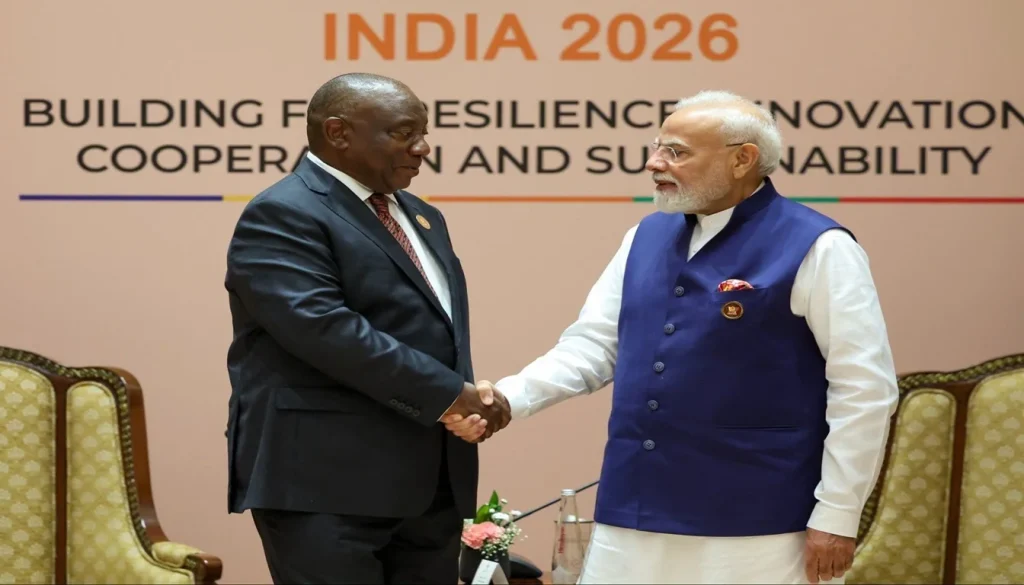
South Africa has inked an agreement with the New Development Bank (NDB) for a loan of $1 billion that will help upgrade infrastructure and implement institutional reforms at eight metropolitan municipalities in the country. The deal comes in light of the Metro Trading Services Reform Program initiated by the government, aimed at ensuring the delivery of sustainable services.
The deal was made public by the National Treasury of South Africa on September 15, 2026. The NDB loan agreement is being executed alongside other loans from development partners within the metro program.
What Cities Will Receive the Funding?
Eight metropolitan municipalities in South Africa, namely Johannesburg, Tshwane, Ekurhuleni, Cape Town, eThekwini, Nelson Mandela Bay, Mangaung, and Buffalo City.
Overall, the total population in these metropolitan cities stands at 24 million people benefiting directly or indirectly from the projects by financial year 2031, according to the NDB.
It is evident that these challenges characterize some of the persistent problems regarding infrastructure in South Africa’s big urban centers.
What Will the $1 Billion Fund?
There are three broad areas of municipal trading services to be financed through the NDB. These include water and sanitation, electricity and energy, and solid waste management services. In water and sanitation, there will be projects for bridging infrastructure gaps and reducing high non-revenue water. Electricity projects will focus on addressing the problem of aging infrastructure and outages, while solid waste management services will target improvements in the treatment of waste.
Besides financing infrastructure, the programme has another aspect which seeks to increase the sustainability of municipal trading services through better financial structures.
Loan Conditions and Performance Criteria
NDB loan has a nominal amount of $1 billion, a 16-year maturity, and a 3-year grace period. It has an interest rate of daily SOFR plus 1.18508%.
The loan is based on performance criteria such that access to funding under the programme is linked to institution-building and performance targets measured independently and approved by metropolitan councils.
This means that the program focuses on linking infrastructure finance with changes to the management and delivery of municipal services rather than considering the loan as an ordinary infrastructure finance program.
Placement of the BRICS Bank in the Broader Program
The NDB was established in 2015 by the founding members of the BRICS as a multilateral development bank focused on providing finance for infrastructure and sustainable development in emerging economies and developing countries. South Africa is one of its founding members.
However, this is not the only form of international financing for the Metro Trading Services Reform Program. The broader program is being developed with the assistance of the World Bank, Asian Infrastructure Investment Bank, KfW Development Bank, and the French Development Agency.
AIIB separately signed a $500 million sovereign loan for the program in August, calling it the first project in South Africa.
Africa’s Growing Role in BRICS
How Did Africa Benefit From BRICS?
Check out how African nations benefited from the 2026 BRICS Summit.
What Does Nigeria Want From BRICS?
Find out what Abuja seeks from the expanded global bloc.
Which African Nations Joined BRICS?
Uncover the African and Middle Eastern countries shaping the expanded group.
What Is Nigeria Seeking From BRICS?
Browse Nigeria’s priorities and interests at the 2026 BRICS Summit.
Which African Countries Could Join Next?
Explore potential members and the economic opportunities BRICS expansion could bring.
The Importance of the Deal for South African Municipalities
This funding follows South Africa’s efforts to remedy its problems with aging municipal infrastructure and the financial management and operations of the major urban areas.
According to the New Development Bank, the program is designed to enhance the performance of infrastructure, financial sustainability and governance of the eight metros. Improved provision of water, electricity and waste services may have an impact on the business environment and living standards in the major urban areas.
For the government, though, the main challenge will lie in implementing the program.
