
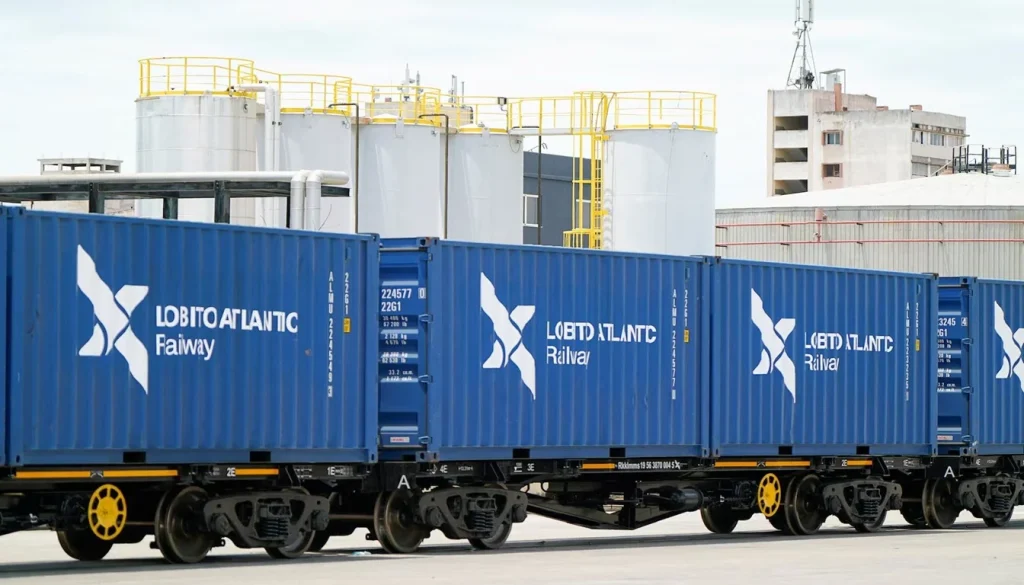
With the intention to bring its freight rail transport system back to life, South Africa is going to make its largest ever investment in the field. The private railway company Traxtion will invest 3.4 billion rand, or approximately $210 million, in 46 locomotives and 920 freight cars, being sure that the changes made in the rail system and increased demand for mineral exports can be a breakthrough in African logistics of Africa.
Private Company’s Investments in Freight Rail Transport
This investment is one of the biggest private investments in the South African rail freight industry, as the country’s government is liberalizing its rail transport infrastructure.
Traxtion will allocate approximately R1.8 billion for locomotives and R1.6 billion for freight cars. Overall, the new fleet is expected to increase the volume of rail freight by 4.5 million tons per year.
This development takes place against the backdrop of several years of underinvestment, equipment shortages, theft and other factors which have forced significant amounts of bulk cargo to move over road.
Private investments would be able to help overcome some of those challenges through permitting companies to run trains over the existing state rail infrastructure.
Why Is South Africa Open To Its Rail System?
The government policy on opening up its rail infrastructure aims at introducing competition and optimizing the use of the existing network of railways.
Indeed, for mining and export businesses, having good rail access is crucial, because South Africa is a large producer of minerals and has had numerous instances when its inability to transport goods via railway has become a problem.
Thus, Traxtion’s investment is not only the expansion of the company’s activities but also a clear signal that reforms can create favorable conditions for private operation of freight rail transport.
The general goal of such policies is to shift bulk freight traffic from road to rail transport.
Regional Opportunity
There is much greater potential than just South Africa.
Angola, Democratic Republic of Congo, Zambia, Mozambique and Zimbabwe are also interested in the development and liberalization of their freight corridors between mines and industries to seaports.
This can lead to the creation of an interconnected logistics system in the region, especially since the demand for copper, cobalt, manganese, platinum group metals and other strategic minerals will only be rising globally.
For landlocked nations like Zambia and the Democratic Republic of Congo, having efficient railway transport to southern African seaports can help greatly lower transportation costs.
Stay informed with the latest developments shaping South Africa and beyond.
Could Ransom Money Fuel Mali Terror?
Check out how a $50 million payout allegedly supported Al-Qaeda’s Mali offensive.
Could South Africa’s Water Crisis Worsen?
Find out how drought and aging infrastructure could deepen the country’s water challenges.
Did South Africa End Nigeria’s World Cup?
Uncover how South Africa halted Nigeria’s World Cup hopes in the WAFCON play-off.
What Caused the Mine Dump Collapse?
See the key facts behind the deadly collapse that killed illegal miners.
What Does Mosimane’s Return Mean?
Explore the potential implications of Pitso Mosimane returning to Bafana Bafana.
Is Rail a Real Route to Economic Revival?
The investment looks promising, but having new locomotives and wagons won’t be enough to deal with the freight-related challenges of South Africa.
Private companies are still heavily reliant on tracks that are functional, efficient ports, signalling systems that work, and security. Bottlenecks in the overall logistics network may undermine the impact of such investment if there is no corresponding infrastructure investment.
However, Traxtion’s R3.4 billion worth of investment signals a turning point. If South Africa’s open-access policy works out, it will demonstrate that private funds can be used to upgrade state-owned infrastructure.
Now the real challenge lies ahead – to move more freight by rail, reduce logistics costs and boost mineral exports from the region.
