
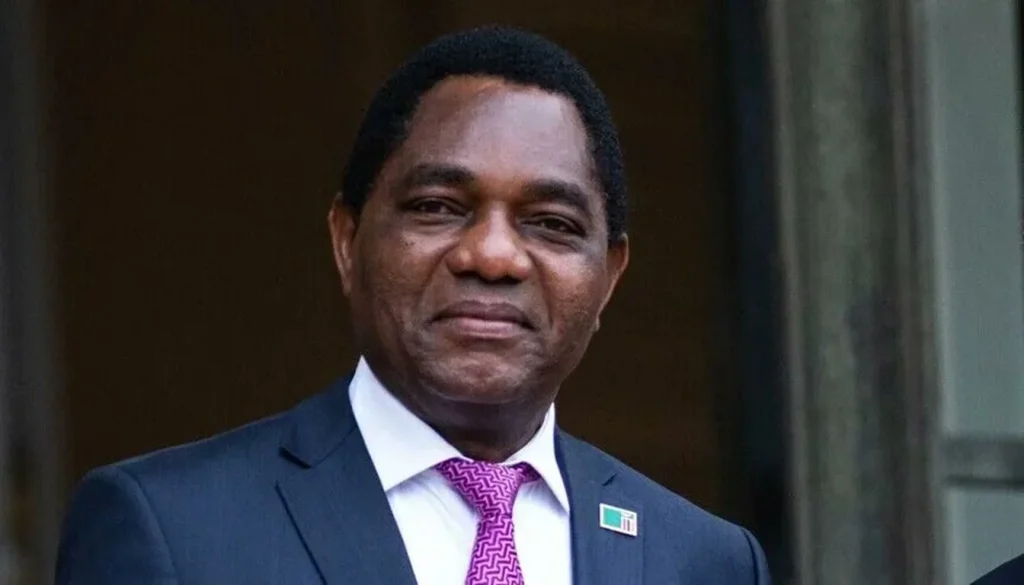
Zambian presidential elections have come to a close with President Hakainde Hichilema clearly in the lead as the Electoral Commission of Zambia (ECZ) continues to tally up the results of the voting held on August 13.
While the counting process was initially based on the figures presented in the first report for about 49 constituencies, it now covers 105 out of the total 226. Thus, the latest results revealed that Hichilema received 54.82% while his rival, Brian Mundubile, scored 43% from the counted constituencies.
It should be noted that from the very beginning, the results gave a definite advantage to the incumbent candidate. Indeed, after only 49 constituencies were counted, Hichilema had 438,708 votes, which is 87,427 more than his main rival, who scored 351,281.
Hichilema leads despite winning fewer constituencies than Mundubile
One of the most noticeable trends in the preliminary results is the disparity between the number of constituencies won and total presidential vote counts.
While after the first 49 constituencies Mundubile won 29 constituencies against Hichilema’s 20, the wide margins that the latter managed to win in his strongholds have given him a considerable lead in the nationwide vote count.
Southern Province has proved to be crucial for the incumbent. While collecting 155,943 votes against only 1,563 for Mundubile in the constituencies announced from Southern Province so far, Hichilema achieved an overwhelming margin of over 154,000 votes.
Mundubile, on the other hand, performed well in regions such as Luapula, Eastern, Northern, Muchinga, and Copperbelt provinces. However, his wins in these regions have brought significantly smaller margins than some of Hichilema’s biggest margins.
The regional split implies that the result cannot be determined solely based on the number of constituencies each candidate wins.
A 50% threshold may make all the difference
In Zambia’s presidential system, the winning candidate should have more than 50% of the total votes cast to be declared winner.
When no candidate meets that 50% threshold, the two top performers must go into a second round of voting.
This is why the figure of Hichilema becomes crucial right now since he is already above 50% in the counted results.
It is now becoming increasingly challenging for Mundubile. The campaign for him needs to work hard to bring down Hichilema’s figures even as they themselves fall below the winning threshold.
Counting happens against a backdrop of political strife
Counting of the votes has not been a wholly smooth process in Zambia.https://knowafrika.com/zambia-election-opposition-victory-vote-counting-dispute/
Following violence at certain polling booths, including attacks against election officials and alleged stealing of marked ballot papers, the ECZ suspended the process for a while. One member of a political party was killed in the violence, while others in Lusaka were under security personnel deployment.
Opposition politicians and Mundubile have similarly raised concerns regarding the process itself, but Hichilema has urged his supporters to be peaceful and patient until the official results are announced.
The underlying political tensions make the end of the vote counting process very significant in a country which has been considered relatively stable in terms of electoral democracy in Africa.
Implications of the Results for Zambia
This election can be seen as a vote of confidence in Hichilema’s tenure in office.
Under his leadership, Zambia has undergone massive debt restructurings and some macroeconomic improvements as a consequence of the sovereign debt crisis. Moreover, copper production and infrastructure development have been prioritized under the current government’s economic policy.
However, high expenses of food and energy continue to be an issue for many people, and opponents criticize the failure of macroeconomic improvements to be transferred into improvements in the people’s lives.
In addition, the opposition claims that the government has limited political freedom, and this claim has been denied by the government.
Thus, the final results will be indicative not only of who will rule in Zambia for the next five years but also of how much support Hichilema’s economic agenda has.
What’s Next for Zambia’s Economy and Politics?
Could Zambia’s Vote Trigger Fresh Tensions?
Check out the opposition’s victory claims and the dispute surrounding the vote count.
How Could Elections Reshape Zambia’s Economy?
Find out how the 2026 election could affect copper, China ties, and Africa.
Why Are Investors Watching Zambia Closely?
Uncover why businesses and investors are closely tracking Zambia’s August election.
Could Zambia Face Currency Pressure Soon?
Browse how Zambia’s currency outlook compares with Ghana’s economic stability.
What’s Driving Kwacha and Cedi Pressure?
See what currency movements could mean for businesses and consumers this week.
