
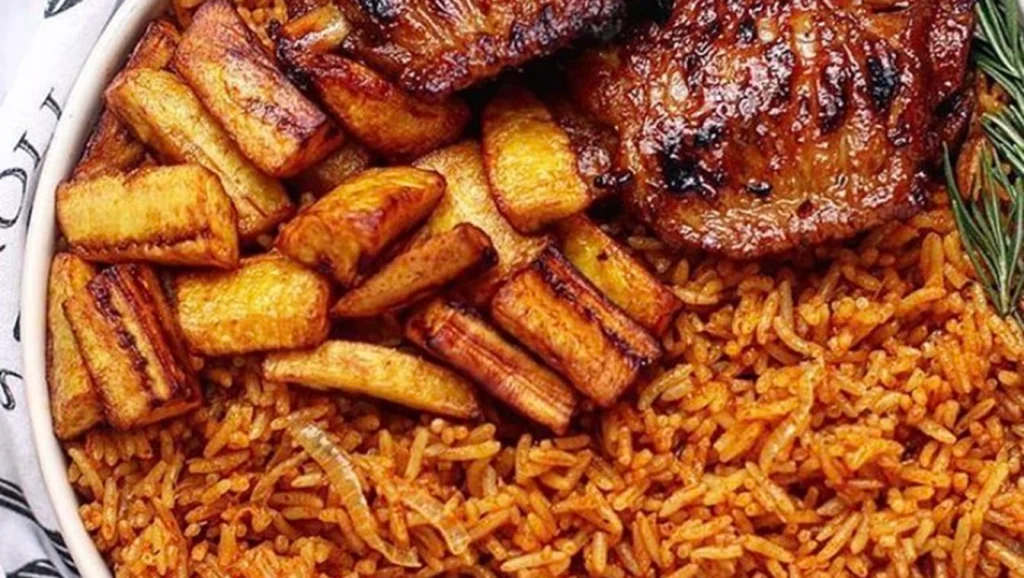
Walk into a restaurant in London, Houston or Toronto today and there is a good chance someone at the next table is arguing over jollof. Meet the Nigerian dishes putting Nigerian cuisine on global map, one plate and one pot at a time. Some are household names across West Africa, others are only now finding fans abroad, and every single one carries the taste of a Nigerian kitchen on a Sunday afternoon.
1. Jollof Rice: The Undisputed Headliner
You cannot start anywhere else. Party jollof, with its smoky bottom and deep red colour from tomatoes, peppers and slow-cooked stock, has become the face of West African food. The friendly rivalry with Ghana keeps it trending, and honestly, the debate is free marketing. Chefs abroad now put their own spin on it, but Nigerians will tell you nothing beats the one cooked over firewood at a wedding.
2. Suya: Street Food With Passport Stamps
Thin slices of beef, chicken or ram, rubbed in yaji (the spicy peanut blend) and grilled over open flames. Suya began in the northern Hausa communities and travelled south, then overseas. Today suya spots are popping up in diaspora neighbourhoods, and food festivals feature it regularly. Served with raw onions, tomatoes and a little cabbage, it is simple food that does not need explaining.
3. Egusi Soup: Comfort in a Bowl
Ground melon seeds, leafy greens, palm oil, assorted meats and stockfish all come together in egusi. It is thick, rich and filling, eaten with pounded yam, eba or fufu. Many Nigerians abroad say egusi is the dish they crave most, and that longing has pushed African grocery stores to stock the ingredients. Where ingredients go, restaurants follow.
4. Moi Moi: The Steamed Bean Pudding
Peel the beans, blend them with peppers and onions, add fish, egg or corned beef, then steam in leaves or foil. The result is soft, savoury and surprisingly elegant. Moi moi works as a side with jollof or a meal by itself, and its naturally gluten-free, plant-friendly base makes it easy to sell to health-conscious diners overseas. A vegan version barely needs changing.
5. Akara: Breakfast That Travels Well
Fried bean fritters, crisp outside and fluffy inside, sold hot by roadside mamas at dawn and eaten with pap or bread. Akara has deep roots in Yoruba cooking and links Nigeria to the wider African diaspora, including Brazil, where a cousin called acarajé is a beloved street food. That shared history gives akara a story that food writers love to tell.
6. Puff Puff: The Snack Everyone Understands
Sweet, golden dough balls fried until they puff up. Puff puff turns up at birthday parties, naming ceremonies and school fairs, and it needs only flour, sugar, yeast and oil. Because it is so easy to love, it often serves as the gentle introduction for foreigners who are nervous about spice. Bakeries and pop-up stalls abroad now sell it by the bagful.
7. Pepper Soup: Heat With Healing Reputation
A thin, peppery broth made with goat meat, catfish or chicken and spiced with uziza, calabash nutmeg and other local seeds. Nigerians swear by it for colds, hangovers and cold evenings. Pepper soup has become a staple on lounge and restaurant menus, and the aromatic spice blend makes it unlike any soup found in Europe or America.
8. Ofada Rice With Ayamase: For Those Who Want the Real Thing
Locally grown ofada rice has a distinct, earthy aroma, and it is served with ayamase, the green pepper stew packed with assorted meats and fiery with scotch bonnet. Wrapped in banana leaves, it feels like a proper cultural experience. Food travellers hunting authentic flavours are discovering it, and it pushes the conversation beyond jollof to the depth of Nigerian regional cooking.
9. Efo Riro: Proof That Vegetables Can Be Exciting
Spinach or similar leafy greens simmered in a rich pepper base with palm oil, locust beans and smoked fish. Efo riro is the dish that makes people rethink what a vegetable soup can be. It is bold and layered, and it gives chefs a strong answer when someone assumes African food is all about meat. Pair it with pounded yam and you have a meal that holds its own anywhere.
Why This Moment Matters
None of this happened by accident. The Nigerian diaspora kept cooking at home, then opened restaurants, started catering businesses and posted recipes online. Afrobeats and Nollywood opened the door by making Nigerian culture visible, and food slipped in right behind them. Social media did the rest, with home cooks turning a pot of stew into a video that travels across continents in a day.
There is also an economic side that African readers should pay attention to. Every plate sold abroad creates demand for Nigerian ingredients like palm oil, crayfish, egusi and ofada rice. If farmers, processors and exporters get proper support, the country can earn from this attention instead of watching others package it. Branding and quality standards matter just as much as taste.
The Table Is Still Growing
Nigerian food is much bigger than nine dishes. Amala and ewedu, ogbono soup, banga, edikang ikong, ewa agoyin, kilishi and many more are waiting for their turn. What these nine have done is open the door, and a generation of young chefs, food writers and entrepreneurs is walking through with confidence.
So the next time someone abroad asks what Nigerian food is about, skip the long speech. Hand them a plate of jollof, a stick of suya and a warm puff puff, then let the food speak for itself.
Read More
Nigerian Food Recommendations Near Jersey City
African Cuisines Gaining International Attention: Dishes and Food Cultures to Know
Traditional Bedouin Iftar Dishes in Sinai: Ramadan Food and Customs
Sorghum and Millet the food security of Sudan: Fields to Food Baskets
Fonio Iftar Recipes from West Africa: Ramadan Superfood Ideas Rooted in Tradition
