
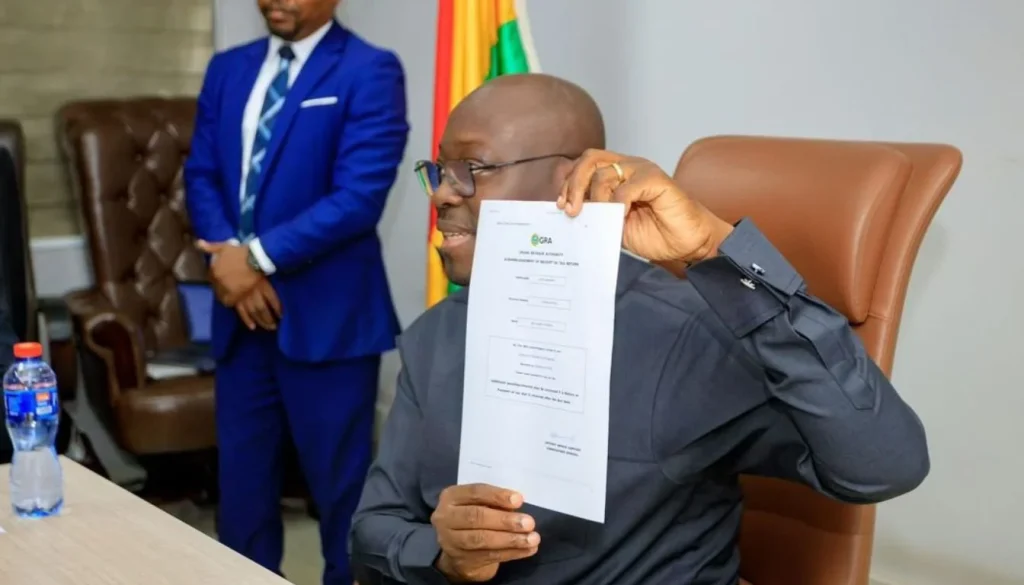
Ghana has received its last $371 million disbursement under its $3 billion IMF Extended Credit Facility (ECF) programme as part of its efforts to recover from one of the most serious economic crises in recent times.
Ghana IMF disbursement, This comes after the IMF completed the programme review, which shows confidence in the country’s economic reforms in the wake of high inflation rates, currency devaluation and increased public debts.
Though the programme ends, economists suggest that this will be the most difficult period where the country must sustain the reforms without the financial assistance of the IMF.
Ghana Completes Its IMF Programme
The IMF approved Ghana’s three-year programme to support the country in restoring economic stability following an intense debt crisis which led to high inflation and depreciation of the cedi.
Following the last tranche of $371 million, the entire financing package of the programme is disbursed in its entirety to Ghana.
According to the IMF, the country has made great strides towards achieving fiscal responsibility, improving the country’s public finances, and investor confidence.
Debt Restructuring Nearly Complete
Perhaps one of the greatest successes of the programme has been the debt restructuring in Ghana.
The government has done much of the necessary domestic and foreign debt restructuring to help make borrowing cheaper and debt sustainable for the country. Therefore, the risk of debt distress in the country has fallen to moderate levels, which has provided the government some flexibility to focus on growth.
Lower debt servicing obligations should help in freeing up additional funds for other key sectors like health, education, and infrastructure.
Higher Foreign Exchange Reserves
There have been improvements on the external financial front of the country as well in relation to the IMF programme.
Gross international reserves of the country have reached around $11.9 billion, which means that the central bank now has an additional cushion against external risks.
Improved Fiscal Performance
There has been improvement in the government’s fiscal performance during the programme period.
Ghana achieved a primary fiscal surplus of about 2.1% of GDP through prudent expenditure management and enhanced revenue mobilisation efforts.
This indicates that there have been efforts towards cutting down budget deficits and establishing a sustainable platform for future growth.
Declining Inflation Levels
Among the key indicators that have been under observation is inflation.
While inflation reached very high levels during the economic crisis, there has been a decline in inflation to about 5.3%, due to monetary and fiscal policies and declining commodity prices globally.
Lower levels of inflation have contributed to stabilisation of the purchasing power of households and eased the pressure of increasing cost of operations for firms.
However, economists note that risks still persist in terms of inflation, especially with an increase in food or energy prices globally.
Policy Discipline Expected from Central Bank
The Bank of Ghana has been instrumental in taming the inflationary pressures within the economy through tightening monetary policies.
The IMF has advised Ghanaian officials to continue safeguarding the independence of the central bank even as the country implements plans to recapitalize the central bank.
It will be crucial for sustaining investor confidence in the economy post-IMF programme.
What Next? – Ghana IMF disbursement
While the IMF programme may have come to an end, the economy of Ghana is far from fully recovering.
Now comes the test of the government’s ability to pursue fiscal discipline, promote growth of the private sector, generate employment opportunities, and keep inflation in check without any further involvement of the IMF in the future.
Investor attention will also be focused on the future economic policies, currency stability, and structural reforms of the government.
If the government succeeds in taking advantage of the gains achieved by the IMF programme, then Ghana would solidify its standing as one of the fastest recovering economies in West Africa.
Discover More Insights
Why South Africa Faces Record Joblessness?
Explore how South Africa’s unemployment crisis is hitting record highs and what it means for the country’s economic future.
Why Ghana Youth Reject Free Rice?
Discover why Ghana’s youth are rejecting aid and demanding sustainable job opportunities instead.
Which Freelancing Platforms Work Best Africa?
Check the top freelancing platforms offering real income opportunities for Africans in 2026.
Why Africa’s Middle Class Still Struggles?
Explore how economic growth is failing to deliver stability for Africa’s expanding middle class.
How Nigerians Can Earn Dollars Online?
Discover practical ways Nigerians are earning in dollars and boosting their income in today’s digital economy.
