
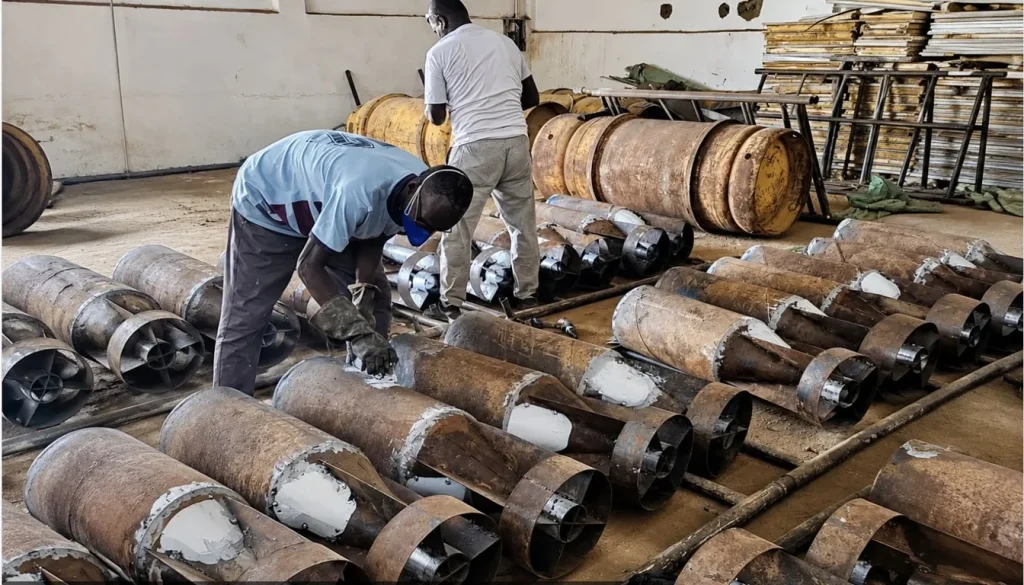
Sudan’s civil war is getting into an even more dangerous phase, characterized not only by displacement of people, atrocities, and different armed factions but also by accusations of chemical weapons utilization. Accusations against the Sudanese Armed Forces (SAF), along with increased attention paid to Islamist-linked militias cooperating with the military, raise questions that go far beyond accusations of using chemical weapons on the battlefield; namely: what kind of political and security system would form after the end of the war?
A recently published article by Eurasia Review considers the matter of chemical weapons use in Sudan from the perspective of its connection with the transformation of the country’s civil war and raises a question about whether wartime mobilization would allow groups related to the time of Omar al-Bashir to regain their influence.
Alleged Chemical Weapons Use Raises Questions for Sudan
The alleged chemical weapons use is not based on unsubstantiated reports from the battlefields. Indeed, the United States declared that it determined chemical weapons were used in Sudan in 2024, which violates the Chemical Weapons Convention. Sanctions followed.
Furthermore, media reports of investigations have revealed alleged use of chlorine by SAF forces in attacks near the Al-Jaili refinery in 2024. But issues of access, forensics, and responsibility are crucial. The authorities of Sudan have refused the U.S. allegations and the sanctions imposed on it.
That is why an independent investigation is crucially important. The OPCW has the mechanism to conduct such an investigation according to the provisions of the Chemical Weapons Convention. But the issue of access to an area of active combat operations stands in the way.
Islamist Networks Behind the Front Line
The question surrounding the use of chemical weapons is also related to the larger issue of the changing make-up of the SAF’s coalition in times of war.
Al-Baraa bin Malik Brigade was described as one of the most prominent Islam-linked factions fighting along with the Sudanese army. Some of the elements of its organisational history have been linked to networks connected to the Popular Defence Forces and the political system formed by Bashir. According to ACLED, former allies with Islamist links were among those whose ties with the SAF were revived as a result of the war.
In March 2026, the United States classified the Sudanese Muslim Brotherhood as a terrorist organisation and named the Al-Baraa bin Malik Brigade as its armed arm. Washington accused the faction of recruiting thousands of militants for the war.
However, these designations in themselves do not confirm all the claims made against the faction or indicate that all the structures of the SAF are controlled by Islamist networks.
From Bashir’s Legacy to Sudan’s Post-War Order
The real issue is what will happen once the fighting ceases.
While Sudan’s 2019 revolution ended Bashir’s reign after three decades of autocratic Islamism, the political and security framework that was built up during this era has not gone away. This war has produced conditions whereby these armed elements can gain new power.
Should those who have acquired the means by which they fought – weapons, battle knowledge, and political links – hold on to these things post-conflict, then even with an end to the main fighting, Sudan might be facing an uneasy transition.
It is for this reason that command structures, demobilization, security sector reform, and civilian control matter to any successful peace process.
Why the Red Sea Region Should Take Notice
Sudan’s instability has repercussions far from its own borders. Its Red Sea coast means that the nation finds itself part of a strategic zone between the Horn of Africa, the Middle East, and world shipping routes.
An autonomous post-conflict Sudan with several such armed networks could thus pose a long-term threat to the security of the neighboring countries as well as other international players. The threat might be more complex than merely conventional fighting.
Independent Investigation – First and Foremost
It is crucial at this point not to focus on who will benefit politically from the allegations about the use of chemical weapons. The key issue is whether the international community is able to establish the facts and get credible evidence about the incident.
Independent investigation and the involvement of OPCW would allow differentiating claims made on the battlefield from verifiable conclusions. In case the use of chemical weapons is confirmed, the problem of accountability should be addressed in relation not only to the perpetrators, but also to those responsible for commanding the attack.
The end of Sudan’s war might be decided either on the battlefield or at the negotiation table or, perhaps, both. Yet, the security networks built up during the conflict might determine Sudan’s future for years to come.
Understanding Sudan’s Deepening Crisis
Why Is Washington Pressuring Sudan?
Check out the chemical weapons claims driving pressure on Sudan’s military.
How Has Sudan’s War Displaced Millions?
Find out how aid reductions could worsen Sudan’s humanitarian crisis.
How Many Are Suffering Across Sudan?
Uncover how falling WFP funding is affecting millions facing crisis.
Could a Sudan Arms Embargo Change Everything?
Explore the proposed UN arms embargo and its potential impact.
What Does the Saudi Customs Trail Reveal?
Look into questions surrounding the modified vehicle linked to Sudan.
