
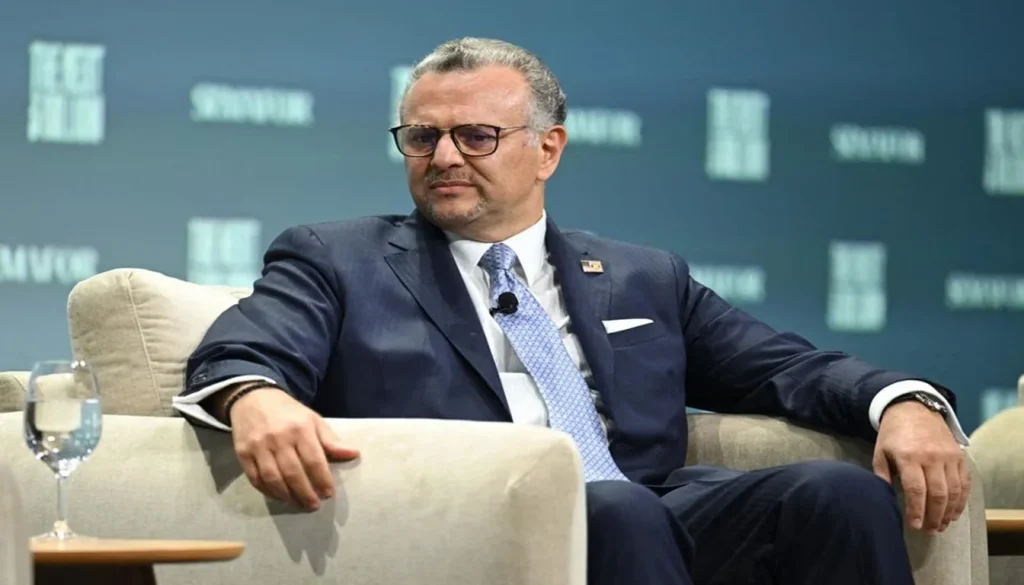
The US is advocating at the UN Security Council that the council extend its existing arms embargo on Darfur to the entire nation, claiming that the present sanctions no longer cover the scope of the war.
According to a September 3 op-ed piece in Foreign Policy, US Permanent Representative to the UN Michael Waltz and White House Special Adviser Massad Boulos urged UN Security Council members to back their proposed draft resolution because foreign weapons, drones, financing, and mercenaries were prolonging the battle between the Sudanese Armed Forces (SAF) and Rapid Support Forces (RSF).
From Darfur to All of Sudan
The present UN arms embargo is part of Security Council Resolution 1591 in 2005, which was specifically directed towards Darfur. However, Washington states that the current framework is no longer sufficient since fighting has now expanded to Kordofan and Blue Nile, and war technology, such as drones, is changing the dynamics of the conflict.
The U.S. presented its draft resolution in August. It would expand the scope of the embargo to the whole country, while it would clearly mentioning unmanned aerial vehicles, as well as relevant technologies.
The current regime of sanctions for Darfur will expire on September 12, making the debate in the Security Council even more urgent.
No Arms for SAF or RSF
According to Waltz and Boulos, the new embargo will not favor one party over another.
Washington claims that the new arms embargo will not favor either side.
As Waltz and Boulos note, the embargo will target networks supplying weapons to both sides – SAF and RSF, such as arms smugglers, procurement agents, financiers, mercenary recruiters, and drone providers.
The differentiation between combatants within the country and their support networks outside it is crucial for Washington’s position.
The initiative has met opposition not just from the military-backed regime in Sudan but also from China and Russia, two veto-wielding permanent members of the Security Council.
The Importance of Foreign Support Networks
The U.S. contends that the civil war in Sudan can no longer be considered a purely internal affair. According to Waltz and Boulos, more than a dozen states provide some sort of military assistance to either side of the fighting, while foreign mercenaries and supply networks deliver weapons, drones, funding, and expert knowledge.
The UN’s latest fact-finding mission on the ground has arrived at a similar conclusion, noting that foreign weapons, military equipment, mercenaries, and logistics networks are boosting both combatants’ capabilities and resulting in increasingly sophisticated attacks on civilians.
Still, claims about specific foreign providers and networks should be approached with caution.
The Humanitarian and Political Context
Washington is pitching the embargo as part of its campaign for a humanitarian ceasefire and better access to UN aid convoys. It’s argued that cutting off the weapon shipments could compel both sides to the negotiating table and facilitate humanitarian work.
There is a political message conveyed by the proposal as well. According to Waltz and Boulos, neither the SAF nor the RSF should become rulers of Sudan based merely on the military victory.
They believe there needs to be an independent and trustworthy process of dialogue with the involvement of civilians who would decide the future of Sudan themselves.
What Comes Next?
The Security Council is due to debate and decide on the sanctions regime ahead of the expiration date of the embargo on Darfur.
This will largely depend on the ability of Washington to convince other permanent members to support the sanctions imposed on the entire Sudan.
For Sudan, the debate is not only about the imposition of the arms embargo, but it is also about the disruption of the networks of the war and the creation of opportunities for humanitarian access and accountability.
What Is Known
The U.S. has called for an extension of the arms embargo on all of Sudan from Darfur.
It calls for the inclusion of drones and associated technology.
According to Washington, the sanctions would apply to the networks that support both opposing factions.
China, Russia and the Sudanese military-backed regime oppose the plan.
The current sanctions against Darfur will expire on September 12.
What Remains Unknown
The possibility of whether the Security Council will sanction the embargo, the success of enforcement of the sanctions in Sudan, and the effectiveness of these sanctions in limiting foreign military support.
What Else Is Shaping Sudan’s Crisis?
Why Is Washington Pressuring Sudan?
Check out the chemical weapons claims driving new pressure on Sudan.
How Are Power Cuts Affecting Sudan?
Find how worsening electricity shortages are disrupting daily life amid war.
Why Is This Vehicle Raising Questions?
Uncover the Saudi customs trail surrounding a modified military vehicle in Sudan.
Who Killed Two UN Peacekeepers?
Track down the attack’s possible perpetrators and what could happen next.
Why Are Sudan’s Islamists Backing Burhan?
Reveal why Islamists support Burhan amid Sudan’s escalating political conflict.
