
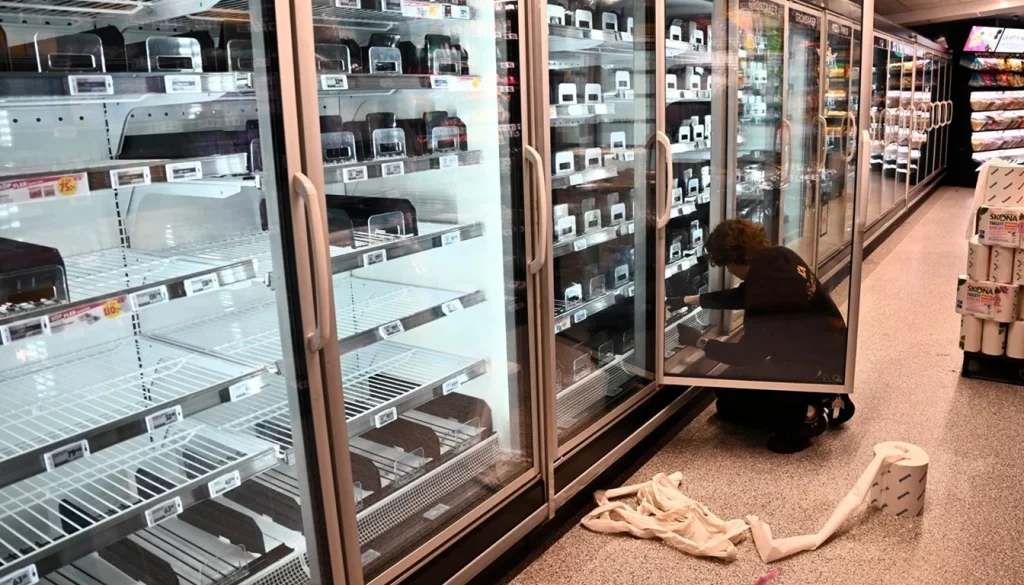
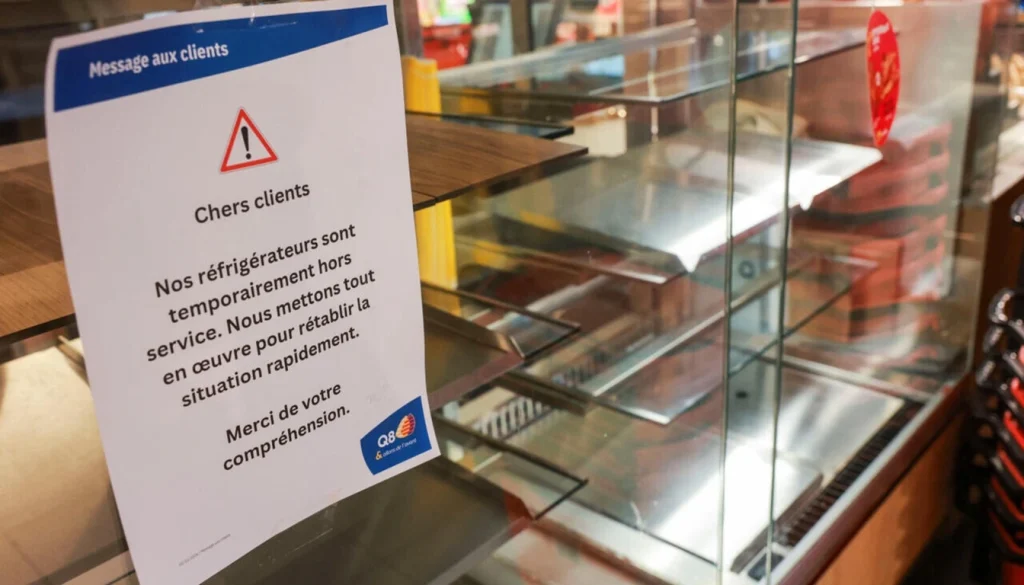
Picture a shop manager arriving at opening time to find the freezers warm and the chicken, fish and dairy ruined. Cyberattacks have moved far beyond stolen passwords and locked laptops, and in France last month they reached the humble supermarket fridge. Major French chains said hundreds of their stores saw refrigerators defrost, forcing staff to throw away spoilt food, and the story is a warning that stretches well beyond Europe.
What Actually Happened in France
Intermarché and Coopérative U were among the chains that said they had been hit. The attackers reportedly targeted Danfoss refrigeration controllers, the small smart boxes that tell a cooling system what temperature to hold. Nobody had to break into the stores. The controllers were reachable over the internet, and someone simply told them to heat up.
The Paris prosecutor’s office opened an investigation into the large-scale attack. Reports also described the problem spreading to several European countries, with fridge temperatures pushed as high as 50°C. On 9 November, France publicly blamed Iran, summoned the Iranian ambassador and said it would seek European sanctions. Whoever stands behind it, the lesson holds. Supermarket cyberattacks are no longer a theoretical risk for a few big retailers.
Why a Fridge Is a Computer in Disguise
Most people do not think of a freezer as a computer, but modern cooling units carry sensors, software and a network connection so engineers can monitor them remotely. That convenience is the weakness which makes it easier for cyberattacks. Every connected device is another door into a company’s systems, and many of those doors ship with weak default passwords, old software and no one assigned to update them.
This is the heart of Internet of Things security. Smart devices hacking works because the people buying the equipment care about cost and uptime, while security is treated as somebody else’s job. A cold-room controller may sit untouched for ten years, and a tool built to save money and labour becomes a lever for sabotage.
The African Picture: More Connected, Often Less Protected
Africa is adding connected equipment at speed. Supermarket chains in Nairobi, Lagos, Accra and Johannesburg are installing smart tills, digital stock systems and remote-monitored cold rooms. Pharmacies and clinics use connected fridges to keep vaccines at the right temperature. Farms and cold-chain operators are following, and solar-powered systems are increasingly managed through apps.
We have already seen that the continent is not immune. South Africa’s port operator Transnet was hit by a ransomware attack in 2021 that disrupted container handling. In 2023, Kenya’s eCitizen government services platform was knocked offline by a flood of hostile traffic. Those episodes hit computers and websites. The French fridge attack shows that physical, everyday machinery can now be targeted too.
Now think about what a similar event would cost here. A supermarket that loses its cold stock in a country with high food prices and thin margins takes a hard knock. A clinic that loses a batch of vaccines loses far more than money.
Critical Infrastructure Vulnerabilities Beyond the Supermarket
Supermarket fridges are the visible symptom. The deeper problem is critical infrastructure vulnerabilities across the systems that keep a society running. Electricity networks, water treatment plants, telecom towers, hospital equipment, traffic lights and port cranes all depend on small controllers that talk to bigger systems.
Many of these were designed decades ago, when nobody imagined they would sit on the internet. Others were upgraded in a hurry to “go digital” with security added last, if at all. Digital infrastructure security is often an afterthought, tacked on once something has already gone wrong.
Africa has a particular exposure here. Many utilities and operators run a mix of old and new equipment bought from different suppliers, with small security teams and few skilled analysts to watch it all. Cybersecurity threats do not need to be sophisticated to succeed in that environment. They only need to find the one forgotten device.
Who Is Behind Cyber Threats, and Why Should We Care?
The people behind these cyberattacks vary. Some are criminals after a ransom, some are activists, and some are governments using disruption as a tool of pressure. When a state is accused, as in the French case, a cyber incident stops being only a business problem and becomes a diplomatic and security matter.
Africa sits inside this picture whether it wants to or not. Global powers compete for influence here, and critical minerals, ports and data cables make the continent a strategic prize. An African country does not have to be the intended target to suffer damage. Attacks built to spread can cross borders and hit whoever runs the same vulnerable equipment.
What Should Be Done?
None of this is cause for panic. Most of the fixes are unglamorous and affordable.
- Change default settings: Factory passwords on connected equipment should never survive installation day. This single habit would block a large share of automated attacks.
- Keep devices off the open internet: A fridge controller rarely needs to be visible to the whole world. Putting equipment behind firewalls and private networks shrinks the target dramatically.
- Update and inventory: You cannot protect what you do not know you own. Businesses should list their connected device security gaps the same way they track stock, and patch regularly.
- Buy with security in mind: Governments and large buyers can ask suppliers hard questions about updates and support before signing contracts. Procurement is one of the strongest levers available.
- Train people and plan for failure: Staff should know what to do when systems misbehave, and shops should have a manual backup, such as temperature loggers and an emergency cold-storage plan, ready before the day it is needed.
- Invest in local skills: African universities, regulators and companies need more trained defenders. National cyber agencies and sector-sharing groups can help smaller firms that cannot afford their own experts.
So, Is Digital Infrastructure Too Vulnerable?
Honestly, yes, in many places. But “too vulnerable” is a condition we can change rather than a verdict we must accept. The French fridges were a cheap, visible demonstration of how thin the line is between convenience and exposure.
If the supermarket freezer was only the beginning, then the sensible response is to act before the next target for cyberattacks is a hospital, a power station or a port. For African businesses and governments still building their digital foundations, the opportunity is to get it right from the start, so that connected also means protected.
Read More
Ethiopians Flee to Kenya: 50,000 Cross the Border as Moyale Burns
Tunisian Boatbuilders Sail Into Global Luxury Yacht Market
Ramla Ali’s World Boxing Title: Tears, Triumph and a Nation’s Pride
Harare Demolitions Leave Families Homeless After Years of Saving
Senegal Migrant Boat Tragedy: Another Atlantic Crossing Ends in Mourning
