

Ask most people to name a ruler from African history and you will hear Mansa Musa, Shaka Zulu or Haile Selassie. Yet the Forgotten African Queens of this continent commanded armies, redrew borders and stared down empires, and their names rarely reach the classroom. That silence is not because their stories are thin. It is because history was often written by people with little interest in recording women’s power. Here are some of the African queens in history whose choices still echo today, from the Nile valley to the forests of Asante.
Why So Many Powerful African Women Were Left Out
Many African kingdoms carried their histories through oral tradition, praise singers and court memory. These are rich sources, but they shift with every retelling. When colonial writers arrived, they recorded kings far more readily than queens, and often treated female authority as an oddity rather than part of the political system.
It was no oddity. Women leaders in Africa held formal offices across the continent: the Kandake in Kush, the Iyoba in Benin, the Queen Mother among the Akan. These were titles with land, wealth and sometimes armies behind them. Remembering these women does not mean adding them to African history as a favour. It means repairing a record that left them out.
Amanirenas: The One-Eyed Queen Who Faced Rome
Around 25 BCE, Rome’s southern frontier in Egypt came under attack from Kush, the kingdom centred on Meroë in present-day Sudan. Leading it was Amanirenas, a Kandake, the title Greek and Roman writers rendered as Candace. The geographer Strabo describes her as a one-eyed woman of fighting spirit.
Her forces pushed north, raided Aswan and carried off statues of the emperor Augustus. The head of one was later found buried beneath the steps of a temple in Meroë, placed where people would tread on it. Rome struck back and sacked Napata, but Amanirenas kept negotiating, and the settlement around 21 BCE reportedly came without tribute from Kush. Few ancient rulers can say they bargained that well with Rome.
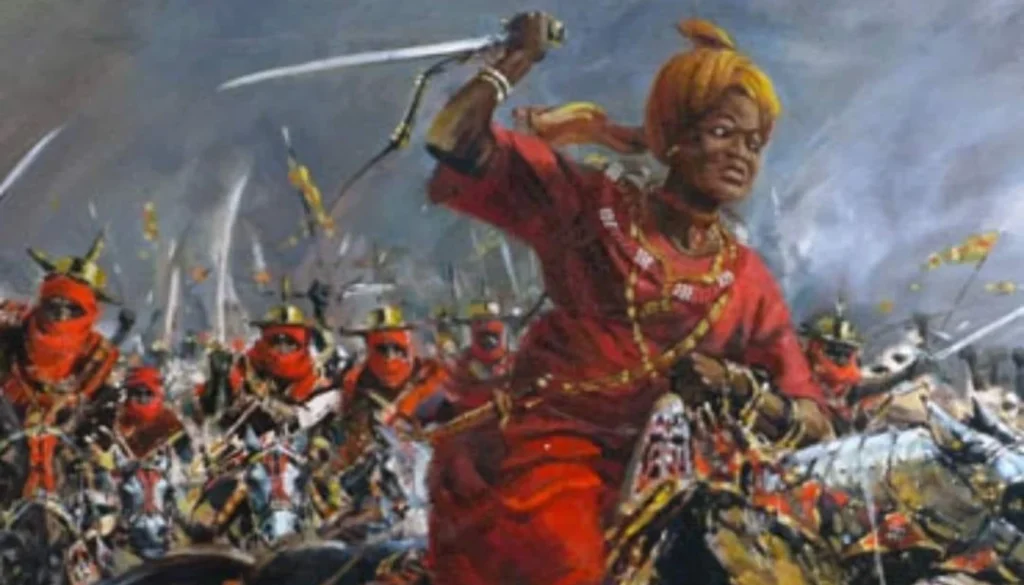
Idia of Benin: The Queen Mother Behind the Throne
In the early 1500s, Idia, mother of Oba Esigie, stood behind her son’s rise in the Benin Kingdom. Tradition credits her with supporting his campaigns, including the war against Idah. Her reward was a new title, Iyoba, or queen mother, and a palace of her own at Uselu, an office that outlived her.
Her face survives in the celebrated ivory pendant mask, among the most admired works of African art. Countless visitors to museums admire Benin craftsmanship without knowing they are looking at a portrait of one of the continent’s most influential women.
Amina of Zazzau and Nzinga of Ndongo: Warriors of Two Regions
In Hausaland, oral tradition remembers Amina of Zazzau, today’s Zaria, as a warrior queen who expanded her city-state’s reach and encouraged the earthwork walls still called ganuwar Amina. Historians argue over her dates, usually placing her in the 15th or 16th century, and parts of her story may be legend. Even so, the memory says something: her people chose to remember their greatest defender as a woman.
Far to the southwest, Nzinga of Ndongo and Matamba, in present-day Angola, met the Portuguese slave trade with diplomacy first and force after. In 1622 she travelled to Luanda to negotiate for her brother. The governor offered her no chair, so, as the story goes, one of her attendants knelt and she sat on his back, meeting him as an equal.
She later took power, fought Portuguese forces for decades, allied with the Dutch for a time, and conquered Matamba to build a new base. She died in 1663, around 80 years old, still ruling.
Yaa Asantewaa: Guardian of the Golden Stool
In 1900, the British governor Frederick Hodgson demanded to sit on the Golden Stool, the sacred symbol of the Asante nation. The chiefs hesitated. Yaa Asantewaa, queen mother of Ejisu, is remembered for telling them that if the men would not fight, the women would.
She led the uprising that besieged the British inside the fort at Kumasi, a conflict now called the War of the Golden Stool. The British eventually prevailed and exiled her to the Seychelles, where she died in 1921. Yet they never seized the Stool during the war. Ghana still honours her today, and her name has become shorthand for courage in the face of colonial pressure.
Taytu Betul and Lozikeyi Dlamini: Strategy Under Colonial Pressure
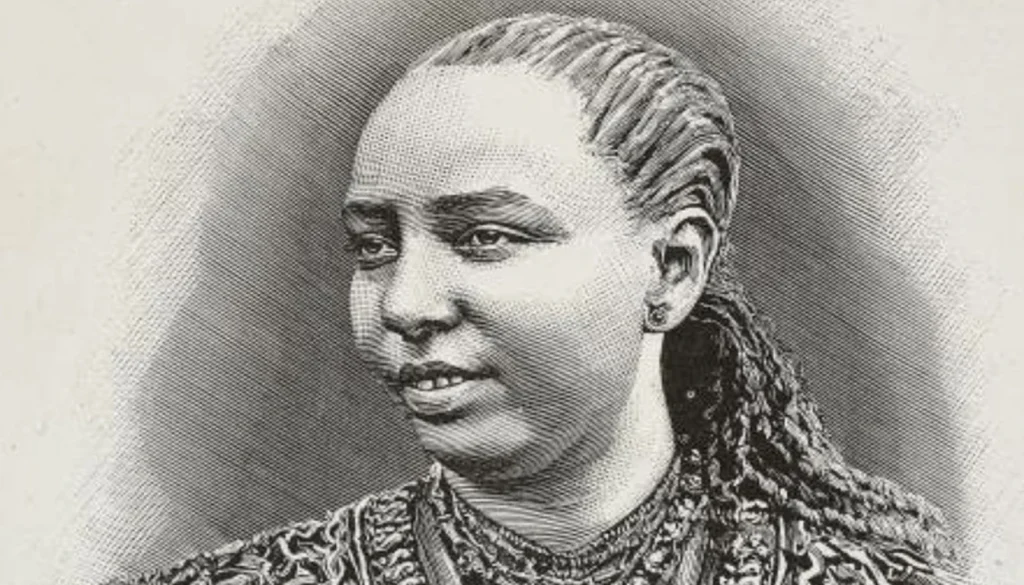
Empress Taytu Betul, wife of Emperor Menelik II of Ethiopia, rejected the Italian reading of the Treaty of Wuchale, which Italy used to claim a protectorate over her country. She argued for resistance, marched with the army and played a prominent part at the Battle of Adwa in 1896, where Ethiopia defeated Italy and kept its independence. She is also credited with helping to found Addis Ababa.
In Zimbabwe, Queen Lozikeyi Dlamini, wife of King Lobengula, remained a major figure in Ndebele politics after her kingdom fell to the British South Africa Company, and she is remembered for her part in the resistance that followed. Her story is only now being retold more widely.
Why These Forgotten African Queens Matter Today
None of these women were exceptions that prove a rule. They show that the political imagination of historical African queens and their courts was far wider than the colonial archive suggested. African female rulers negotiated treaties, led troops, built cities and defended sacred traditions, long before anyone spoke of representation.
For young Africans, especially girls, these stories change what leadership looks like. They are proof that power was never foreign to African women. It was a living part of African history, handed down through titles, songs and shrines, and then too often ignored.
The next step belongs to teachers, writers, filmmakers and families. Put these queens in school lessons. Tell their stories at home. Ask your elders which queens your own region remembers, because for every name here, many more are waiting in oral memory. The Forgotten African Queens are not lost. They are waiting for us to listen.
Read More
Ethiopians Flee to Kenya: 50,000 Cross the Border as Moyale Burns
Tunisian Boatbuilders Sail Into Global Luxury Yacht Market
Ramla Ali’s World Boxing Title: Tears, Triumph and a Nation’s Pride
Harare Demolitions Leave Families Homeless After Years of Saving
Senegal Migrant Boat Tragedy: Another Atlantic Crossing Ends in Mourning
