
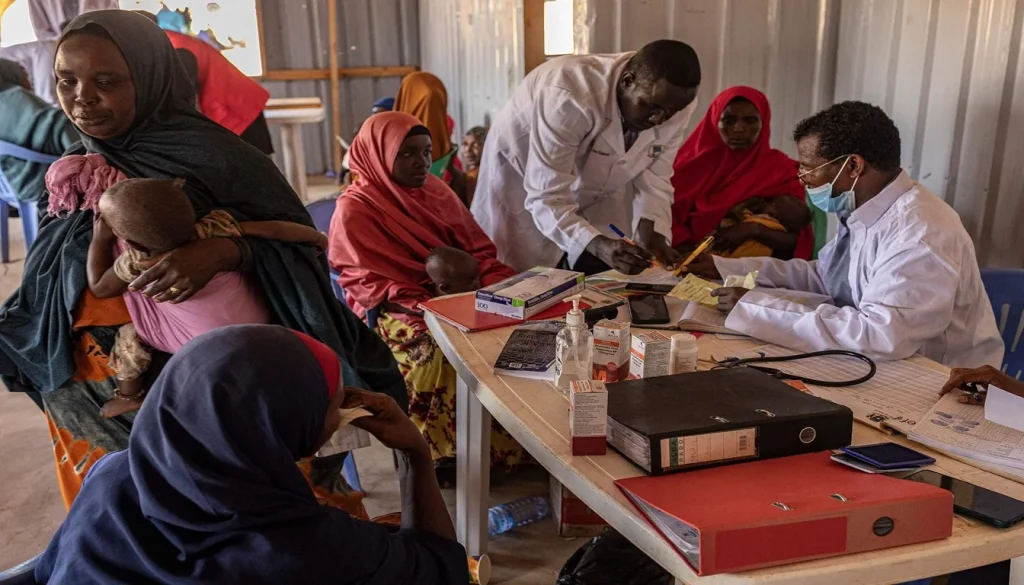
Somali Humanitarian crisis is ongoing in Somalia, where drought and massive international funding cuts have left millions of people going hungry.
Approximately 6.5 million people in Somalia are facing acute food insecurity, and there has been more than an 80% reduction in funding for the severe acute malnutrition programs, according to humanitarian organizations.
This has resulted from a series of failed rain seasons that have left people without food and displaced others from rural areas.
The Malnutrition Situation Is Increasing
The most affected are the children.
Cases of severe acute malnutrition have increased, and high cases of acute malnutrition among children have been recorded in displaced centers such as Baidoa.
According to humanitarian organizations, the reduction in funding has made it difficult to give children nutritional assistance.
Health workers are forced to make tough calls about the communities that could get assistance, with fewer resources at their disposal.
Drought Is Causing Massive Displacement
Somalia’s reliance on rains has made drought very disruptive for the country.
Failing rains have led to the death of livestock and crop failure, depriving rural households of their major means of sustenance.
More than half a million people have been displaced from rural areas since the beginning of 2026, humanitarian groups report.
They have been moving to congested IDP camps, where the provision of food, clean water, sanitation, and healthcare facilities remains limited.
The death of livestock is particularly tragic because livestock is not only a source of food and income but also the savings of many poor households.
Humanitarian Aid Budget Has Crashed
Humanitarian intervention is also facing an unprecedented funding crisis.
There is just $300 million left in the donor budget, while $2.2 billion was raised during the country’s famine situation in 2022.
The US, being one of the biggest donors to Somalia’s humanitarian projects, has not contributed anything this year, as reported by aid organizations.
Since the reduction of funding, organizations are trying to handle the growing problem with much less money.
Water and Food Cost More
Drought has made even basic commodities more expensive.
With the drying out of the local water sources, people have become increasingly dependent on trucked water. Water being more expensive leaves families with the decision of having either food or clean water to drink.
Since these families are already struggling without their crops or livestock, even slight changes in the prices of these two commodities can cause serious issues.
All of these factors can lead to diseases and child malnutrition.
More Somalia stories you shouldn’t miss.
Why Did Baidoa Roadblock Appear?
Check out how Al-Shabab’s latest roadblock is affecting movement and security in Baidoa.
Was Activist Tortured After Protests?
Uncover the allegations surrounding the Somali activist’s prison treatment after anti-government demonstrations.
Why Did Omar Artan Lose?
Find the story behind the Somali referee’s missed World Cup opportunity after the U.S. entry denial.
What Happens If Funding Ends?
Dive into the risks Somalia could face if international support for its security mission is terminated.
Is Saudi Arabia Escalating Somalia?
Look into the growing foreign military involvement and its impact on Horn of Africa geopolitics.
What comes next?
Humanitarian organizations such as Médecins Sans Frontières and UNICEF are urgently calling on governments worldwide to provide funds that will prevent things from escalating further.
Among the most urgent issues are the resumption of nutrition programs, provision of safe water, support for displaced households, and help for vulnerable communities to keep their livestock alive.
The problem is that failure to get funding on time may make the ultimate humanitarian response even more expensive.
The thing is that Somalia has seen similar hunger crises before, but this time, due to the climate-related shocks and reduced humanitarian funding, there is little safety net left.
Failure to provide quick international funding may result in transforming the drought crisis in Somalia into a food security disaster.
