
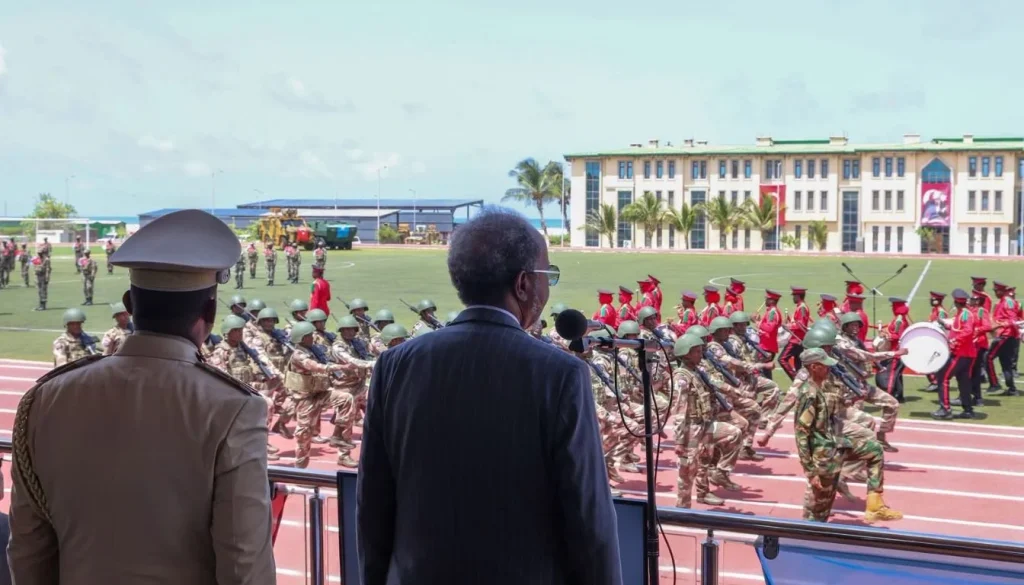
The Horn of Africa is swiftly becoming one of the most strategically contested regions in the world. Bordered by the Red Sea and the Gulf of Aden, the country of Somalia has long been viewed through a counterterrorism and state-building lens. Saudi military training in Somalia, But recent developments seem to suggest that the country’s security landscape is also becoming a platform for wider geopolitical contestation.
The decision by Saudi Arabia to pay for the training of more than 5,000 Somali soldiers in Galmudug has sparked a new debate among regional observers. The programme has been put forward within the framework of bilateral defence cooperation, but its size, timing and strategic context inevitably raise wider questions. Is this just an effort to strengthen Somalia’s security forces or is it part of a broader competition for influence in one of the most strategically important maritime regions in the world?
Why is Saudi Arabia expanding its military involvement in Somalia?
Publicly reported information indicated that a Saudi military delegation visited two Somali National Army training camps in Guri El, Galmudug on 29 June 2026. Saudi Arabia is funding a nine-month military training program for 5,107 Somali recruits, of whom some 2,000 are from Puntland.
It is claimed that the programme is run by foreign instructors from Romania, Ukraine, South Africa and Colombia, illustrating the ever more internationalised nature of contemporary security cooperation.
At face value, the move appears to be in line with efforts to bolster Somalia’s defence capabilities against perennial security threats such as Al-Shabaab. But there is a larger strategic question here: why has Saudi Arabia chosen this moment to dramatically expand its military engagement in Somalia?
The Horn of Africa is no longer only a security problem
One must look beyond Somalia itself to understand this development. The Horn of Africa lies next to the Bab el-Mandeb Strait, a sea passage that connects the Red Sea to the Indian Ocean. Annually, a large percentage of global trade and energy traffic passes through these waters, making the region of strategic significance not only to Africa, but also to the Middle East, Europe and Asia.
The Horn of Africa is now a more valuable prize with geopolitical tensions ongoing throughout the Red Sea and surrounding areas. Military cooperation, port investments, naval access and security partnerships have become central elements of the foreign policy strategies of several regional powers.
Against this background, there is a broader regional picture in which Saudi Arabia’s growing defence ties with Somalia seem to be part.
The Wider Regional Contest Is Already On
Saudi Arabia is not the only country increasing its engagement in the Horn of Africa.
For years, Turkey has maintained a significant military training presence in Somalia. The UAE has invested heavily in port and logistics infrastructure across the region. Egypt’s security partnerships in the Red Sea and Nile basin continue to deepen in response to security concerns, with regional activities by Iran remaining an important factor in wider security dynamics in the Middle East.
These partnerships can have different goals separately. But together they signal a common trend: the Horn of Africa is becoming a more competitive geopolitical space.
This evolving situation poses a broader policy issue. Are these burgeoning military partnerships primarily aimed at enhancing regional stability, or are they slowly transforming Somalia into another battleground for external powers vying for strategic influence?
As military cooperation increases, transparency is important
International security assistance can be a valuable tool in strengthening national institutions. But experts always emphasise that these programmes work best when accompanied by transparency, accountability and clear governance mechanisms.
Several important questions need to be discussed in public:
- How do you monitor foreign-funded military programs?
- What are the guarantees for Somali ownership of these initiatives?
- The long-term goals for the trained forces are set by the.
- How do Somalia’s democratic institutions supervise these partnerships?
- How will the success of these programmes be evaluated?
These are not criticisms of security cooperation itself. They are rather reflective of internationally recognised principles of responsible defence governance.
The programme continues to challenge
The Saudi-funded training has also come under scrutiny amid claims in some reports that Somali recruits could eventually be deployed outside Somalia, including in relation to the ongoing conflict in Sudan.
At this point, these are unverified claims, and there is no public evidence to support such plans. Nonetheless, the emergence of these reports underscores the need for transparency whenever foreign-funded military programmes expand in fragile states. Providing clarity to the public about goals, deployment policies and operational control can also help to reduce speculation and build confidence in international security partnerships.
The Future of Somalia Must Be Led by Somali Institutions
Somalia continues to face enormous security challenges and international assistance remains an important element of rebuilding national defence institutions. But long-term stability requires more than military training. Sustainable peace requires stronger institutions, a political consensus, security sector reform, civilian oversight and locally driven governance.
External support can be a positive force when it is in line with the national priorities of Somalia. The situation gets more complicated if geopolitical competition comes to matter in security decisions more than domestic institution-building.
The Larger Question for the Region
Saudi Arabia’s growing military engagement with Somalia is part of a broader pattern playing out across the Horn of Africa. As the region’s powers deepen their defence, economic and diplomatic engagement, Somalia’s strategic importance will only increase.
Whether this trend translates into increased regional stability or heightened geopolitical competition, however, will depend on how these partnerships are managed, how transparent they are, and whether they ultimately bolster Somali sovereignty or external influence.
The real question is not if foreign military assistance should exist. The bigger question is if the Horn of Africa is quietly turning into the next major theater where regional powers vie for influence—and what that could mean for the future security of Africa, the Red Sea, and beyond.
Trending Reads You’ll Love
Explore Sudan Civil War Power Struggle?
Discover how Iran’s influence and conflict are shaping Red Sea security risks.
Discover South Yemen Stability Challenges Today?
Check why Africa needs stability across the Red Sea for regional balance.
Check Sudan Brotherhood Ban Impact Now?
Explore how the ban could reshape Sudan’s security and political future.
Explore US Brotherhood Policy Shift Again?
Discover why the US is reconsidering its stance on the Muslim Brotherhood.
Discover America’s Terror Label Push Why?
Check how the US push could redefine global policies on Islamist groups.
