
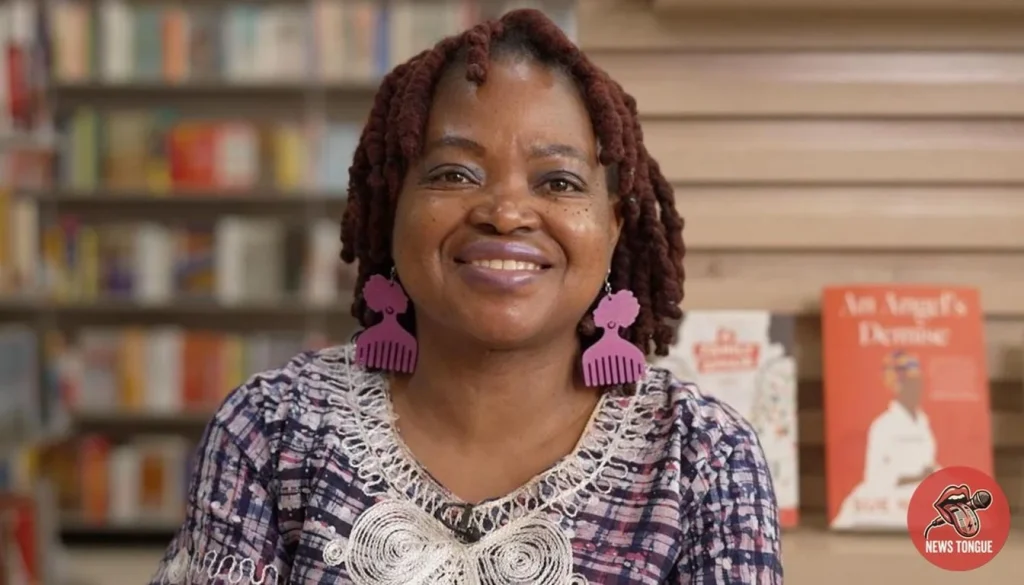
There has been a stunning turn of events for the first book by Zimbabwean writer Sue Nyathi, who received an initial refusal from publishers because of a lack of demand for stories about married men leading several relationships at once.
However, Nyathi did not want to stop. In 2012, she found an editor, typesetter, and an artist herself and published 500 copies of her book. Over ten years later, the story was adapted to Netflix, where it became one of the platform’s top ten most streamed shows in over 60 countries, including the United States, where it became No. 2.
Even the Hollywood star Taraji P. Henson commented positively on the series, claiming that it had her in a “chokehold” because she watched all 22 episodes in just one day.
Not an Attack on Traditional Polygamy
As surprising as it may sound, the story by Sue Nyathi is not a critique of traditional polygamy.
Polygamy is well known in her family, as her grandfather married five wives and her great-grandfather married eleven wives. Her grandmother, the first wife, was the matriarch of a family where wives coexisted together and, in some cases, helped to choose new members of the family.
As she explains, this form of marriage is not deceitful since it has clearly defined roles. However, Nyathi criticizes the modern form of polygamy in which a man pretends to be monogamous and yet has several wives.
“I’m not against polygamy,” she says. “What I’m against is the lack of agency.”
This is the core of her novel.
Joyce Realizes That Her Marriage Is a Lie
The story focuses on Joyce, who thinks that she has been engaged in a typical monogamous marriage with a successful businessman, Jonasi.
However, Jonasi secretly marries three other women and creates separate households for them without informing Joyce. With time, the women find out that their lives are intertwined through Jonasi.
The story shows how life turns out when a single person controls all the finances, relationships, and decisions while the rest have no financial independence.
On one side, both Joyce and Matipa have made contributions to the construction of Jonasi’s business empire, but they economically depend on him, so leaving him becomes very difficult.
The novel touches upon issues of inequality, gender differences, power imbalance, and sexual health. It features an AIDS narrative which sheds light on the difficulties which women encounter negotiating safer sex in case of being in unequal relations.
Why the Netflix Adaptation Works
In the TV series, the story takes place not in Zimbabwe but in South Africa and is shot in Zulu with subtitles. Furthermore, Jonasi has fewer wives in the television series than he had in the book.
One of the significant differences is in point of view. In the book, the story is told by the voices of all of Jonasi’s wives, and it is done due to the fact that Nyathi wanted to give women’s voices priority.
This has allowed the story to resonate among people who found similarities between the characters and themselves.
Nyathi said that some women reached out to her claiming that they saw themselves in Joyce and the other wives, and others said that they lived with the man like Jonasi.
Debunking Stereotypes about Africa
However, controversy surrounds the series as well. Some have accused the show of stereotyping polygamy as being synonymous with cheating and abuse.
Nyathi explains that her project attempts to illustrate how culture shifts when there is no consent or transparency anymore.
Moreover, she feels that her series also debunks the stereotype that African stories are all stories of poverty.
She explains that through showing rich Black Africans speaking Zulu as the primary language, she provides an alternate perspective on African life to an international audience.
Finance to Freelance Writing
The success of Nyathi did not come easily.
She worked for nearly two decades in the field of finance while also engaging in writing during her spare time. Being an investment analyst, she realized that writing is not only artistry but also a form of business.
Eventually, she quit her corporate job at the age of 40 to focus solely on writing.
At 48, she has four published novels and keeps discussing the financial struggles of African writers. She believes that there are many talented writers who cannot afford to quit their jobs because it takes a lot of time for a writer to earn any income through writing.
For Nyathi, the success of Netflix means more than just recognition; it proves that great things can be done when the story of Africa reaches the attention of the world.
Currently, she is writing a historical novel, and her advice for new writers is very simple: “Start writing whether you have the money or not.”
“Love is what will fuel you when it gets hard.”
Top Stories You Shouldn’t Miss Today
Could Nigerian Airlines Shutdown Still Happen?
Check out the latest government intervention and what it means for travellers and ticket prices.
Why Did Protesters Burn Abiy’s Book?
Find out what sparked the Ethiopia protests and the controversy surrounding Abiy Ahmed’s book.
Who Are Johannesburg’s Richest Women?
Uncover the top 15 wealthiest women shaping Johannesburg’s business and influence landscape in 2026.
What Are Rema’s Biggest Hits?
Browse Rema’s biggest charting songs after the global success of “Calm Down.”
How Can You Apply Smart ID?
Explore the South African Smart ID application steps, fees, booking process, and deadline details.
