
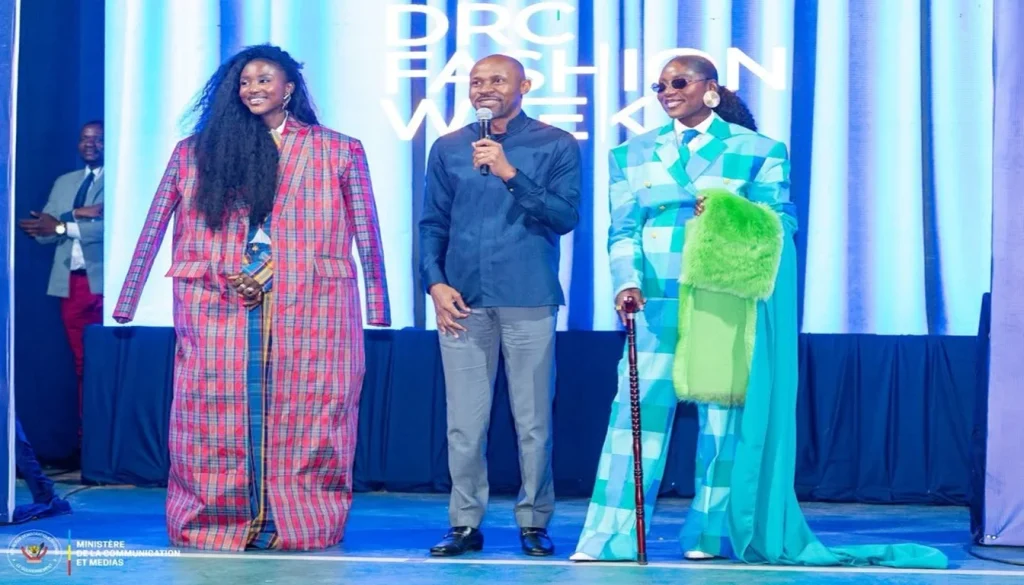
The sixth edition of DR Congo Fashion Week put Kinshasa’s well-known La Sape movement in the global spotlight once again, uniting fashion designers, stylists and traditional sapeurs from both banks of the Congo River.
The festival was devoted to La Sape, which is an abbreviation of Société des Ambianceurs et des Personnes Élégantes, which is seen as not only a fashion trend but also a culture and tradition that has existed for centuries and that uses clothes, elegance, and styles to show identity and dignity.
The newest fashion week presented how the Congolese culture evolves while keeping its unique relationship with the streets of Kinshasa and Brazzaville.
DR Congo Fashion Week Celebrates La Sape
Kinshasa was the place where the sixth edition of DR Congo Fashion Week took place, attracting local designers and foreign guests as well as sapeurs from both Congo countries.
This kind of participation in the festival was a reflection of the shared cultural background that Kinshasa and Brazzaville had despite the fact that the two cities were located on either side of the Congo River.
However, the festival was in honour of some of the prominent personalities who are linked with the movement, especially Papa Wemba, the famous Congolese artist who introduced the La Sape phenomenon to the world.
What Is La Sape?
La Sape has its roots in the early 20th century and has evolved as an exclusive cultural phenomenon in Congolese society.
The La Sape has been derived from the Société des Ambianceurs et des Personnes Élégantes, which can be translated as a society of elegant people and socialites.
It was after the period of African Independence that the La Sape phenomenon came into the limelight as sapeurs made use of the choice of clothes to express themselves.
Sapeurs did not follow fashion trends blindly; rather, they created their own visual language using bright colors, contrasting patterns, suits, polished shoes, and coordinating accessories.
For many, dressing elegantly is a matter of dignity and confidence in all situations.
From Street Style to Global Fashion
Initially developed as a Congolese subculture, it gradually got worldwide attention.
The sapeur’s appearance, especially their colorful suits and stylistic approach, fascinated photographers, fashion designers, and global media.
Moreover, La Sape inspired fashion photography, fashion campaigns, and even documentary films and other fashion projects.
It is interesting because there is a difference between the traditional perception of proper dressing in Europe and the Congolese interpretation of it in a very individual manner.
Therefore, over time, La Sape transformed into the symbol of Congolese cultural identity.
Sixth Edition Features Connection of Kinshasa and Brazzaville
One of the key aspects of this year’s fashion week is the idea of cultural unity.
The participants of the fashion show came from Kinshasa and Brazzaville, and they participated in the event, which united the two Congos through cultural context.
Moreover, this year’s fashion week pays tribute to such artists as Papa Wemba, who showed the connection of fashion, music, and Congo culture.
As for visual aspects of the event, it can be defined as maximalism, bright colors, rich textures, and well- coordinated outfits.
Fashion Serves As A Tool for Identity and Empowerment
For the organizers and the attendees, La Sape is not simply about flashy dresses and outfits.
It is about using fashion as a means to tell the story of identity, culture, and aspirations of the youth. It also helps to create a platform where the designers and the artisans get a chance to display their talent on an international level.
The ongoing popularity of the La Sape movement highlights how fashion is a form of culture through which one can express confidence, culture, and uniqueness.
In Kinshasa, fashion has allowed contemporary artists to connect themselves with decades of Congolese history.
Stay informed with the latest political, economic, and sporting developments shaping Africa.
Why Is Mali Silencing Critics?
Check out how a broadcaster’s harsh sentence signals a growing crackdown on dissent.
Can Baidoa Withstand Fierce Fighting?
Find out how renewed clashes are creating a major test for Somalia’s federal government.
What’s Driving Africa’s Rail Investment?
Uncover how the continent’s mineral boom is fueling Traxtion’s $210 million rail investment.
Who Will Lead Zambia Next?
Browse the latest developments as Hichilema and opposition forces await the 2026 election results.
How Did Cameroon Claim WAFCON Glory?
See how Cameroon secured their first WAFCON title with a commanding 3-0 victory over Malawi.
