
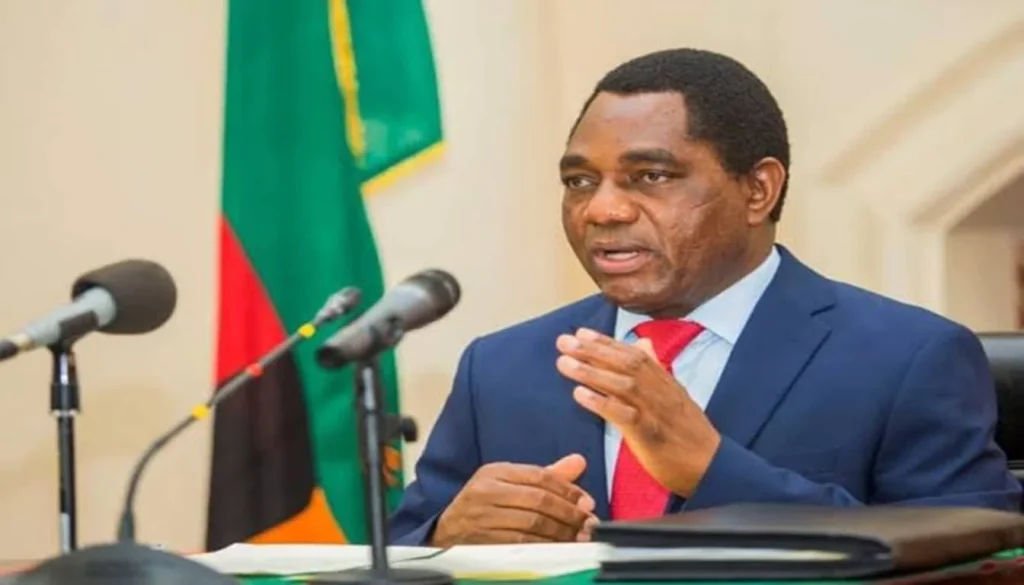
Zambia has just finished an election, and instead of the story fading into the background, it has taken a darker turn. Within days of the results being announced, Zambia opposition arrests became international news, with the United Nations human rights chief stepping in to demand answers. Here in South Africa, where memories of our own contested political moments are still fresh, this is worth paying close attention to. Zambia sits inside the same regional bloc as South Africa, shares trade routes and border communities with us, and its political stability tends to ripple outward rather than stay contained.
What Actually Happened After The Vote
The numbers themselves were not particularly close. President Hakainde Hichilema walked away with close to 60 percent of the vote on 13 August, comfortably ahead of his nearest rival, opposition leader Brian Mundubile, who polled around 38 percent. What turned this from a routine election result into a genuine crisis was what happened on the night the votes were still being counted. Police raided a property connected to Mundubile, and by the government’s own account, shots were exchanged and weapons described as “high-grade” were recovered on site. Eleven people tied to the opposition were taken into custody, accused of planning an uprising with help from outside militia groups. Mundubile has flatly denied all of it, insisting his people had no weapons and were the ones fired upon, not the other way around.
Why This Has The UN Worried
It takes a fair amount for the UN’s human rights office to weigh in publicly on a single country’s post-election arrests, and Volker Türk did not mince words. His message was simple: stop detaining people without cause, and follow proper legal process for everyone in custody. That means telling detainees exactly why they are being held, letting them speak to a lawyer, allowing contact with family, and bringing them before a judge quickly rather than holding them indefinitely. What made this worse was a detail that came out shortly afterward, that an Anglican bishop swept up in the arrests had gone two full days without any word reaching his family about where he was being kept.
This Is Not A New Story For The Region
Anyone who has followed Southern African politics for a while will recognise the shape of this. Disputed results, post-election crackdowns and accusations flying in both directions are not unusual for this part of the continent. Even before Zambians cast their ballots, European Union observers were already flagging concerns about intimidation tactics and restrictions placed on opposition campaigning.
Zambia’s Election Drama: Power, Protests & Global Stakes
Could Zambia’s Election Spark Unrest?
Check out the latest developments surrounding opposition arrests and rising political tensions.
Why Are Opposition Figures Arrested?
Find the key details behind the arrests following Hichilema’s election.
When Will Zambia’s Election Results Arrive?
Uncover what Hichilema and opposition leaders await as vote counting continues.
Is Zambia’s Vote Count Facing Disputes?
Browse the latest claims of victory and disputes surrounding the vote count.
How Could Zambia’s Vote Reshape Africa?
See how the 2026 election could affect copper, China, and Africa.
Things Worth Keeping An Eye On From South Africa
- Whether Zambian courts get real independence to review these arrests, rather than rubber-stamping them.
- How SADC and the African Union respond, since South Africa carries real influence in both organisations.
- Whether the promised criminal charges against the 11 detainees actually materialise, or quietly disappear.
- Whether Pretoria issues any formal statement, given how closely tied our economies and border communities are.
Conclusion
The ballot itself gave Zambia a decisive winner, but what came after has left far more unanswered questions than the result did. For South Africans watching from next door, the next few weeks will show a lot about whether Zambia’s own institutions can handle this without outside pressure, or whether continued attention from bodies like the UN becomes necessary to keep things fair. Either way, this is a story that touches the whole region, not just one country’s internal politics.
