
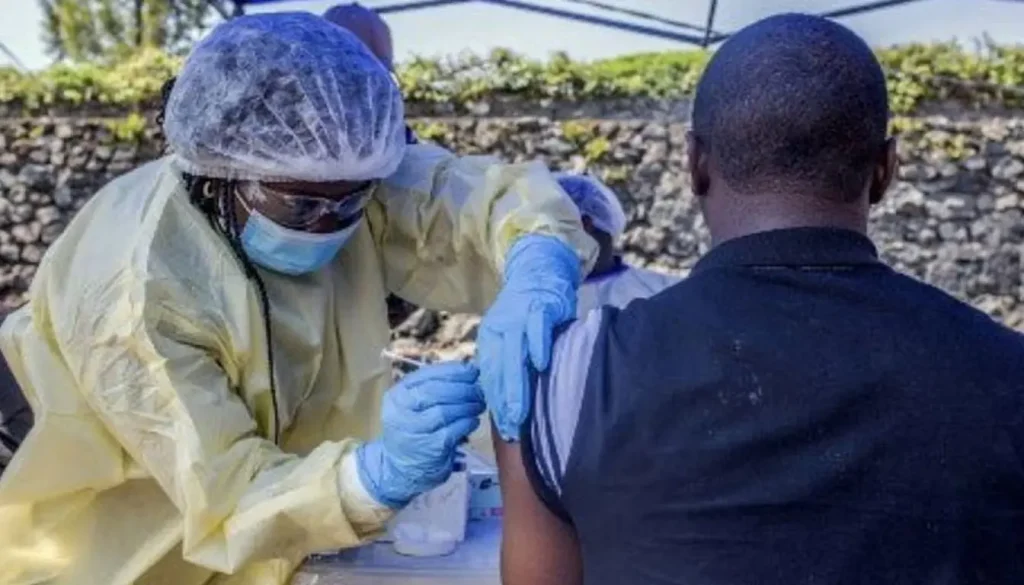
Health workers in Bunia rolled up sleeves on Friday for a moment many have been waiting months to see. The Ebola vaccine trial in DR Congo has officially started, according to the World Health Organization, and it could shape how the continent fights this outbreak.
What the Trial Will Test
WHO chief Tedros Adhanom Ghebreyesus said the first participants were vaccinated with Ervebo in Bunia, the capital of Ituri province, the centre of the epidemic. Ervebo is approved against the Zaire strain, but this outbreak is caused by the Bundibugyo species. The trial will check whether the jab gives any cross-protection.
The Tumaini trial is built as a single framework that can test the safety, efficacy and immunogenicity of several vaccines. It uses ring vaccination, which means immunising people at high risk of infection, such as contacts of confirmed cases. Two Bundibugyo-specific candidates are expected to join “shortly”: an Oxford ChAdOx1 vaccine and an mRNA vaccine from Moderna, both backed by CEPI.
An Outbreak That Keeps Growing
The stakes are huge. DR Congo declared its 17th and worst-ever Ebola outbreak in May, and has since reported more than 9,700 cases and over 4,600 deaths. WHO triggered a public health emergency of international concern. The outbreak has now been reported in four countries, giving it the widest spread of any Ebola outbreak on the continent. Kenya has announced a second death, and Nigeria’s first case matches the Congolese strain.
For Congo public health teams, that means fighting on several fronts at once. The wider Ebola clinical trial effort is being described by WHO as a DRC-led effort.
Including Those Often Left Out
One detail stands out. The trial will include pregnant women and children aged 12 and older, groups frequently left out of vaccine studies. WHO emergencies director Chikwe Ihekweazu said the trial is meant to generate rigorous evidence on whether the vaccines can protect people at risk.
What Comes Next
A trial is not a cure, and results will take time. But Ebola vaccine research done on African soil, with African health workers leading the effort, sends a strong signal. For families in Ituri and for neighbouring countries on alert, this is the first real sign that science is catching up with the virus.
Read More
Nigeria Records First Ebola Case of Africa’s Latest Outbreak, and Abuja Races to Trace 44 Contacts
Kenya Ebola Outbreak Grows: Eighth Case Confirmed as Fear Spreads Across the Region
Kenya Second Ebola Case: Quarantine Caught It, but Questions Remain
US Ebola Screening Gets Tougher: What African Travellers Need to Know
Ebola Travel Safety: How to Protect Yourself on the Road During an Outbreak
