
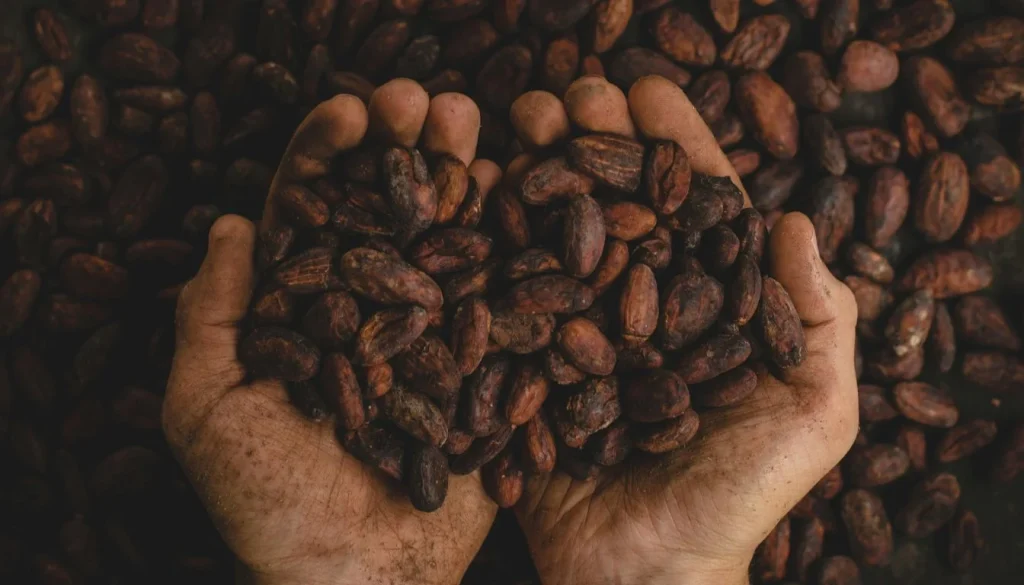
Ghana and Côte d’Ivoire are making new moves in order to strengthen cooperation in the world cocoa market, improve conditions for farmers, and decrease dependence on the volatile international commodity prices. Cocoa Alliance Ghana and Côte d’Ivoire,The actions, such as the Côte d’Ivoire–Ghana Cocoa Initiative and the extended Cocoa Value Addition Alliance (COPEC), will help to influence the pricing and increase local processing and value added in the cocoa market.
Even though the alliance may not affect cocoa prices similarly to OPEC in the oil market, closer cooperation may become beneficial for millions of farmers.
Why Are We Talking about the “Cocoa OPEC”?
Together, Ghana, Côte d’Ivoire, Nigeria, and Cameroon account for more than two-thirds of worldwide cocoa production, making the area powerful in terms of its effect on world supplies.
However, cocoa producers have never been strong players influencing international cocoa prices, which depend on global commodity markets. After experiencing severe fluctuations in prices following their peaks in late 2024, governments became increasingly interested in how to increase their bargaining power.
Instead of setting up prices themselves, the coalition is intended to boost cooperation in the cocoa production process.
Harmonizing Farmgate Prices to Minimize Competition
One of the priorities of the coalition will be aligning farmgate prices for the cocoa produced by farmers.
Thanks to coordinated dollarized producer prices, Ghana and Côte d’Ivoire will be able to minimize unhealthy competition between adjacent markets and prevent any attempts of using price disparities to one’s advantage.
This strategy may also allow for minimizing smuggling that has been affecting the production of cocoa in Western Africa for decades.
Synchronizing Harvest Seasons
There are also efforts underway to coordinate their cocoa growing seasons.
This includes synchronizing the official harvest season, which runs from 1 September to 31 August, to:
- Decrease the illegal cross-border trade of cocoa.
- Increase market transparency.
- Ensure a predictable global supply of cocoa beans.
Better coordination will also enhance their negotiation capabilities when dealing with foreign buyers.
Increasing Domestic Processing of Local Cocoa
The other very important goal is to stop selling the raw bean only.
Through the “bean-to-brand” approach, members want to process their raw material into products like:
- Cocoa butter.
- Chocolate.
- Cocoa powder.
- Confectionery components.
Domestic processing of their product will help producing countries benefit more from the cocoa global business and create jobs and investment opportunities.
What It Means for Farmers
For cocoa farmers, the organization mainly concentrates on increasing income predictability.
It includes:
- Implementing minimum farmgate prices.
- Improving the Living Income Differential (LID).
- Prevent fluctuations that are too much in international markets.
- Bring about sustainability in the cocoa industry.
Policy changes are being undertaken by COCOBOD in Ghana and CCC in Côte d’Ivoire.
Preparing for EUDR
Additionally, the partnership is assisting farmers in getting ready for the European Union Deforestation Regulation (EUDR), which is expected to become operational in January 2027.
Under this law, cocoa to be imported into the European Union should adhere to strict requirements in terms of sustainability and traceability, meaning that compliance with such measures will become ever-more necessary for producers wanting to participate in international trade.
Cocoa Alliance Ghana and Côte d’Ivoire
Enhanced cooperation between Ghana, Côte d’Ivoire, and other major producers of cocoa could contribute to increasing the role of Africa in the international market for this product. Although an OPEC-like coalition would be unable to regulate international cocoa prices, a policy on pricing, greater processing of the commodity at home, and assistance to farmers might ensure a steady income from this activity.
More Stories You Shouldn’t Miss
What drives Lagos fintech billions growth?
Explore why Lagos fintech startups are attracting massive global investments and shaping Africa’s financial future.
Which mobile wallets rival M-Pesa Africa?
Discover the top M-Pesa alternatives leading Africa’s mobile wallet wars in 2026 and beyond.
How FLEX zero fee payments impact?
Check how FLEX is transforming Nigeria’s mobile payments with zero fees and disrupting traditional systems.
Which African businesses deliver highest profits?
Explore the most profitable business opportunities across Africa for entrepreneurs and investors today.
Who are South Africa’s youngest entrepreneurs?
Discover the top young entrepreneurs in South Africa making waves and redefining success early.
